Children thrive when caring adults help them feel safe, heard, and valued—and they can also learn to notice and express appreciation for that support. Explore Bridging Cultures: Family Communication & Collaboration  Buy Now $55.00 to strengthen culturally responsive family partnerships, then use My Toolbox of Love Buy Now $0.99 as an affordable, hands-on way for children to create and share meaningful messages with someone special.
Why does recognizing supportive adults matter?
Young children depend on consistent relationships to feel secure enough to explore, communicate, and learn. Head Start identifies responsive relationships as the foundation for social-emotional growth, including understanding feelings, making friends, regulating emotions, and solving problems. When children recognize the adults who encourage and protect them, they are building emotional vocabulary, relational awareness, and a sense of belonging.
Recognition does not require children to make a formal speech or identify only one “special” person. Supportive adults may include parents, grandparents, foster caregivers, relatives, teachers, family friends, coaches, neighbors, or trusted community members. Families also define support differently across cultures and household structures. Providers should invite children’s perspectives rather than suggesting whom they must name.
These experiences matter because gratitude is most meaningful when it is connected to concrete actions. Instead of asking, “Who loves you?” try, “Who helps you when you feel worried?” or “Who listens when you have something to say?” Such prompts help children connect support with observable behaviors.
- Children practice #empathy by noticing how others help and care.
- Children strengthen #language as they describe people, feelings, and experiences.
- Children build #belonging when their important relationships are welcomed in the classroom.
- Children learn that appreciation can be expressed through words, art, gestures, or helpful actions.
How can educators introduce the idea of a supportive adult?
Begin with a developmentally appropriate conversation about adults who help children feel safe, respected, and cared for. Use familiar examples: an adult who prepares food, reads a story, gives a hug with permission, helps solve a problem, or listens carefully. Avoid presenting trust as obedience. A trusted adult respects boundaries, takes children seriously, and seeks help when a child is unsafe.
Books, puppets, photographs, and role-play can make the concept accessible. During a story, ask what a character’s adult did to provide support. Children may point, draw, gesture, or use their home language rather than answer verbally. Accepting multiple forms of expression is especially important for toddlers, dual language learners, and children who communicate differently.
Use open-ended prompts and allow children to pass:
- “Who helps you feel calm?”
- “Who celebrates when you try something new?”
- “What does a caring adult do?”
- “How can we show someone we appreciate them?”
Never require a child to disclose private family information or identify an adult they do not trust. Some children have experienced separation, loss, conflict, or unsafe relationships. Provide a broad definition of support and redirect gently: “You may think about someone who helps you, or you may draw a caring adult you would like to have.” Follow safeguarding procedures if a child shares information suggesting harm; state requirements vary - check your state licensing agency.
Which activities help children recognize supportive adults?
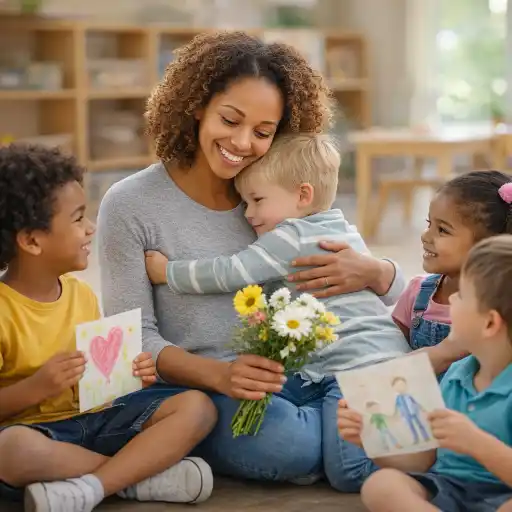
Meaningful activities combine reflection with a tangible way to communicate appreciation. The My Toolbox of Love Buy Now $0.99 resource offers a hands-on craft in which children write kind words, color, cut, and glue tools into a special toolbox for a father, grandfather, uncle, or another special person. Providers can broaden the activity so every child can represent a supportive adult or group of adults.
Before beginning, model several possibilities and offer adaptations. A child may dictate words to an adult, use drawings, select picture symbols, or create a toolbox for a teacher, sibling, caregiver, or community helper. The goal is authentic expression—not handwriting accuracy or a particular family role.
- 🧰 Toolbox of care: Invite children to add “tools” representing what a supportive adult does, such as listening ears, helping hands, a kind heart, or a reading book.
- Supportive-adult portraits: Children draw a person and dictate one action that makes them feel cared for.
- Kindness notes: Children create short messages such as “Thank you for helping me,” “You listen to me,” or “I feel safe with you.”
- Classroom gratitude mural: Children add anonymous or named examples of caring actions without requiring family disclosure.
Display work only with permission. A private card sent home may be more appropriate than a public display. Children should also be free to revise their choice or create a general appreciation message for “the grown-ups who care for me.”
How can family culture and language shape this learning?
Family identity is more complex than holidays, foods, or national symbols. Culture influences communication, caregiving routines, expectations for independence, ways of showing affection, and definitions of family. Providers should learn directly from families rather than assume that every child understands support or gratitude in the same way.
Invite families to share preferred names, home-language words for caring relationships, songs, stories, or everyday examples of encouragement. Participation should be optional and should not require families to perform their culture. A caregiver might provide a phrase for “thank you,” record a short message, or explain a comforting routine. These contributions help children connect classroom learning with real relationships.
Use multilingual labels and accept responses in any language. Children can create bilingual cards, dictate messages to family members, or use a combination of drawing, gesture, and speech. The Bridging Cultures course Buy Now $55.00 can help providers strengthen listening, intercultural communication, family collaboration, and strategies for representing families even when they cannot be physically present.
- Ask families how they prefer to communicate and participate.
- Include varied family structures in books, dramatic play, and classroom examples.
- Avoid assuming that physical affection, eye contact, or verbal praise means the same thing to every family.
- Use qualified interpretation for sensitive conversations and never rely on children to interpret confidential information.
When a child names several caregivers or describes a nontraditional support network, affirm the child’s experience: “You have people who care for you in different ways.” This communicates respect without ranking relationships.
How can providers extend appreciation beyond one craft?
A single product can be memorable, but children develop relational understanding through repeated experiences. Embed recognition of supportive adults into daily routines, classroom problem-solving, and family communication. During arrival, ask children who helped them get ready. During stories, identify caring actions. During conflicts, help children notice when a peer or adult offers assistance.
Providers can model appreciation without making children responsible for adult emotions. Say, “I noticed you put the blocks away so others could walk safely,” rather than expecting children to please adults. Teach that appreciation includes noticing, expressing, and receiving thanks. A child can say thank you, draw a picture, offer help, or simply acknowledge another person’s effort.
Directors can support consistency through staff reflection and family engagement:
- Invite staff to share examples of children recognizing support.
- Send home a short prompt: “Ask your child about someone who helped them this week.”
- Provide multiple communication formats, including translated messages and visual prompts.
- Review whether classroom materials represent children’s actual families and caregivers.
- Protect confidentiality and avoid public comparisons between families.
Common mistakes include treating gratitude as forced politeness, assuming every child has the same family experience, or praising a finished craft more than the child’s reflection. Avoid requiring children to hug, give away artwork, or name a person publicly. Offer choice, privacy, and authentic alternatives.
Summary: What is the most meaningful way to help children recognize supportive adults?
The most meaningful approach combines safe relationships, open-ended conversation, culturally responsive family partnership, and flexible creative expression. Children need opportunities to identify what support looks like, name the people who provide it, and communicate appreciation in ways that match their developmental abilities and family experiences.
Use My Toolbox of Love Buy Now $0.99 as one inviting classroom experience, while remembering that the deeper goal is relationship awareness—not a perfect craft. Pair the activity with stories, role-play, home-language resources, and daily moments of noticing care. When educators honor every child’s support network and protect children’s choice, they create a classroom where #relationships, safety, and gratitude can grow together.
FAQ
- What if a child cannot name a supportive adult?
Offer alternatives such as drawing a caring action, naming a classroom helper, or imagining qualities they would want in a safe adult. Avoid pressure and follow safeguarding procedures if concerns arise. - Can children create a toolbox for someone other than a parent?
Yes. Children may choose any trusted caregiver, teacher, relative, family friend, or group of supportive adults. - Should every child take the craft home?
Not necessarily. Ask permission, offer private storage, and provide a classroom-based alternative for children whose home circumstances make take-home projects uncomfortable. - How can this activity include infants and toddlers?
Use handprints, photographs with permission, simple picture choices, songs, and adult-dictated messages. Focus on responsive interactions rather than a finished product. - What professional learning supports this work?
Bridging Cultures: Family Communication & Collaboration Buy Now $55.00 offers focused training in culturally and linguistically responsive communication, listening, and family partnership.
Additional ChildCareEd courses:
- Connections That Count: Building Relationships in Child Care Buy Now $55.00 — strategies for trust, positive guidance, classroom climate, and family engagement.
- Social Foundations and Responsive Classrooms Buy Now $24.00 — practical support for social-emotional development, self-regulation, and responsive classroom practice.
- Building Bridges for Dual Language Learners Buy Now $25.00 — tools for language-inclusive environments and family communication.
- Open Ears: Listening in Child Care Buy Now $16.00 — active and empathetic listening strategies for diverse early care settings.
- CDA Home Visitor Subject Area 3 Part 3 Birth to 5
- Pediatric RSV First Aid & CPR/AED
- CDA Bridge Bundle: Family Child Care without Portfolio Review
- CDA Bridge Bundle: Infant/Toddler without Portfolio Review
- CDA Bridge Bundle: Preschool without Portfolio Review
- 45-Hour Infant and Toddler Curriculum
- Creating Environments that Nurture Growth and Community
- Texas Director Credential
- Bridging Cultures: Family Communication & Collaboration
- Strength in Differences: Cultural Diversity
- CDA Certification en Español: Recursos y Consejos para Educadores Bilingües
- Recursos en Español sobre el Sueño Seguro del Bebé
- Que es Título 22 en California?
- 10 Ejemplos de Cómo la Cultura Influye en el Desarrollo Infantil
- ¿Cómo solicito la licencia para una guardería en California?
- Regulaciones de Licenciamiento de Cuidado Infantil en California para Centros y Hogares de Cuidado Infantil Familiar
- Proporciones de Cuidado Infantil y Tamaños de Grupo por Edad en Nueva Jersey (Guía Rápida para Centros y Hogares)
- Proporciones de Cuidado Infantil y Tamaños de Grupo por Edad en Virginia (Guía Rápida para Centros y Hogares)
- Lista para Guardería en Casa en Illinois: Cómo Iniciar una Guardería en el Hogar
- Lista para Guardería en Casa en California: Cómo Iniciar una Guardería en el Hogar
- Retraso del Habla en la Guardería: Cómo Pueden Ayudar los Proveedores
- Cómo Trabajar en el Cuidado Infantil en California: Requisitos y Pasos
- Capacitación Previa al Servicio para Proveedores de Cuidado Infantil en Nevada
- Canciones, juegos y preguntas de círculo para niños
- What Are Age-Appropriate Ways to Teach Gratitude Before Thanksgiving?
- How Can Writing and Art Activities Help Children Name What They Appreciate?
- How Can Children Recognize and Appreciate the Supportive Adults in Their Lives?
- ¿Todos los niños deben participar en el tiempo de círculo?
- How Can Child Care Providers Support Children Who Dislike Applause or Public Recognition?
