Thanksgiving activities can build curiosity and connection without repeating simplified or harmful stories about Indigenous peoples. Explore the ideas below to plan developmentally appropriate experiences, and consider From Play to Planning: Building Culturally Competent, Child-Centered Curriculum  Buy Now $55.00 for practical strategies to adapt play-based curriculum with cultural responsiveness and anti-bias materials. You can also explore Strength in Differences: Cultural Diversity Buy Now $24.00 to deepen your understanding of inclusive classroom practice.
Why does a thoughtful approach to Thanksgiving matter?
Preschoolers are building ideas about who belongs, whose stories are valued, and how people differ. Classroom images, books, crafts, and dramatic play all communicate messages—even when educators intend only seasonal fun. A familiar classroom reenactment can unintentionally suggest that Native peoples exist only in the past or that diverse Indigenous nations share one culture.
A more considered approach does not require educators to solve every historical complexity with young children. It does ask us to avoid presenting myths as fact, acknowledge that families and communities relate to Thanksgiving differently, and center accurate, respectful representation. The Smithsonian National Museum of the American Indian’s guide to rethinking Thanksgiving celebrations through Native perspectives offers educators background and resources for a fuller understanding.
For child care teams, this is also a chance to practice strong curriculum planning: start with children’s development, examine materials critically, and make space for family perspectives. Consistent, thoughtful choices can nurture #belonging and curiosity well beyond November.
How can educators talk about Thanksgiving with preschoolers?
Young children learn best through concrete experiences and clear language. Rather than staging a “first Thanksgiving” reenactment, focus on what preschoolers can explore meaningfully: gratitude, family traditions, seasonal change, food origins, caring for the natural world, and the fact that people have different perspectives.
When Indigenous peoples come up, avoid broad claims that flatten many distinct nations into one group. If you refer to the historical gathering often associated with the holiday, identify the Wampanoag people specifically and explain that Indigenous peoples and nations are living communities today. Choose books and media created by Indigenous authors and knowledge holders, and review them before sharing. The Smithsonian’s Native Knowledge 360° materials and perspectives from Indigenous educators can support your preparation.
- Use simple, truthful wording: “Families remember and observe this day in different ways.”
- Invite children to share their own family practices only if they choose; never ask one child to speak for a whole culture.
- Be ready to acknowledge uncertainty and say, “Let’s learn from a reliable source.”
- Connect classroom discussions to fairness and respect in ways preschoolers can understand.
As NAEYC’s guidance on holidays in a diverse world emphasizes, learning about a holiday is not the same as assuming every child celebrates it. That distinction helps protect family choice and keeps the classroom welcoming.
Which Thanksgiving activities can replace stereotypes?
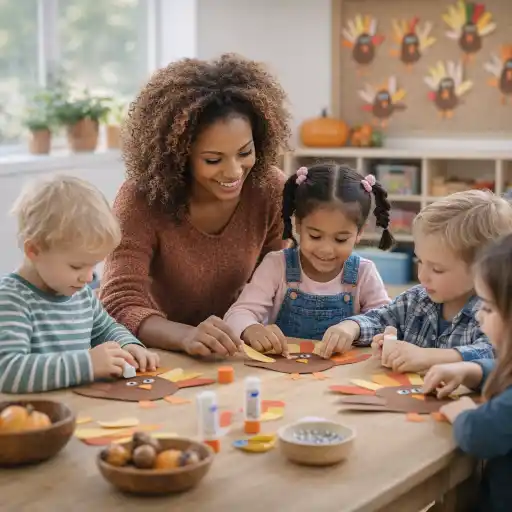
Choose activities that invite exploration and do not require children to imitate cultural identities. A gratitude collage, a nature walk, a read-aloud by an Indigenous author, or a conversation about how families express appreciation can all be engaging options. Keep the experience open-ended: children may draw, talk, move, observe, or pass.
A Thanksgiving maze can also be a useful seasonal learning tool when it is treated as a puzzle—not as a history lesson. The ChildCareEd Thanksgiving Themed Maze can provide a short opportunity to practice visual tracking, pencil control, persistence, and problem-solving. Before using any holiday printable, check its illustrations and wording. If it includes stereotyped characters or historical inaccuracies, select another resource or adapt the activity so the learning goal is independent of those images.
- 📚 Pair a maze or worksheet with a read-aloud that includes contemporary Indigenous voices and everyday life.
- Offer children choices of crayons, large markers, or verbal directions to make the activity more accessible.
- Extend the puzzle with a question such as, “What helped you decide which path to try?” rather than a holiday-history prompt.
- Explore seasonal foods, plants, and local ecosystems without claiming one menu or tradition represents everyone.
Short, playful activities can support fine-motor practice and reasoning; the Thanksgiving maze overview describes these possible skills. The key is to assess the specific material, then frame it thoughtfully.
How can providers review materials and avoid common pitfalls?
A quick materials review before the holiday can prevent a well-intentioned activity from reinforcing a stereotype. Look at children’s books, classroom displays, costumes, songs, printables, and dramatic-play props. Consider who is represented, how they are portrayed, and whether the resource presents Indigenous people as diverse and contemporary or as a single group frozen in the past.
Common pitfalls include dressing children as “Pilgrims” or “Indians,” crafting stereotyped headdresses, asking a Native child to represent all Indigenous peoples, or presenting the Thanksgiving story as a simple tale of friendship and shared celebration. Instead, use specific, carefully sourced information and contemporary work by Indigenous creators. If a resource has a harmful element, you can choose a different activity; you do not need to preserve a tradition simply because it is familiar.
- Review images and text for stereotypes, inaccuracies, and one-sided storytelling.
- Use Nation-specific names where relevant, and do not treat Indigenous identity as a costume or craft theme.
- Offer alternatives to holiday participation without singling out children or families.
- Discuss concerns with colleagues and directors before planning classroom events.
The Arkansas Early Childhood Association’s socially responsible teaching resource reinforces that anti-bias practice is an ongoing perspective, not a one-day activity. That reminder can guide decisions throughout the year.
How can programs partner with families and Indigenous communities?
Families bring valuable knowledge about children’s traditions, languages, and experiences. Invite their input in ways that are optional and respectful: a brief questionnaire, a translated note, or a conversation about what helps their child feel included. Ask what the program should know, rather than assuming every family celebrates Thanksgiving or wants to participate in a classroom event.
Directors can support teachers by setting a clear, shared approach to holidays. A written policy can explain how the program selects holiday activities, considers religious and cultural differences, and communicates with families. When seeking information about Indigenous communities, prioritize Indigenous-led organizations, Native authors and educators, and resources specific to the local area. Do not place the burden of educating the class on a child or family member.
- Share the learning goal with families in advance and invite feedback without requiring a response.
- Use trusted, Indigenous-authored books and resources; check the author’s and publisher’s context.
- Where appropriate, learn about the Indigenous nations connected to the place where your program operates.
- Revisit activities after the event: what did children learn, and whose perspectives were included?
For further professional learning, the ChildCareEd course From Play to Planning Buy Now $55.00 explores child-centered planning, cultural responsiveness, and anti-bias materials. State requirements vary - check your state licensing agency.
How can a team plan a respectful Thanksgiving experience?
A practical planning process helps busy teams make thoughtful choices without adding unnecessary complexity. Begin by naming the learning purpose: perhaps children will notice seasonal changes, practice gratitude, investigate a maze, or learn that families have varied traditions. Then choose activities that meet that goal without relying on costumes, caricatures, or a simplified historical script.
Before the activity, review the materials and invite family input where appropriate. Prepare a simple, accurate response to children’s questions, and provide different ways to participate. Afterward, reflect together. Did the activity support children’s development? Were families’ choices respected? Did the materials portray people with dignity and accuracy? These questions turn planning into a process of professional growth rather than a checklist.
- Purpose: Define one or two age-appropriate learning goals.
- Materials: Check language, images, representation, and accessibility.
- Participation: Provide choices, adaptations, and an easy opt-out.
- Reflection: Record what worked and what the team will change next time.
This approach supports #respectful practice while preserving the joy of play. A maze, for example, may simply be a fun problem-solving invitation; educators can keep its learning value and avoid attaching unsupported cultural or historical claims to it.
Conclusion: What should educators remember about Thanksgiving activities?
Preschool Thanksgiving activities can be warm, playful, and culturally respectful when educators avoid stereotypes, use accurate and specific resources, and recognize that families experience the holiday differently. Do not use costumes or reenactments that caricature Indigenous peoples, and do not treat Native nations as people of the past. Instead, make room for gratitude, nature, family stories, and authentic Indigenous voices.
Use seasonal printables such as a Thanksgiving maze with a clear developmental purpose, and review the content before bringing it into the classroom. Partner with families, plan with colleagues, and reflect afterward. These steady choices help children develop #curiosity, #empathy, and a more thoughtful understanding of the world. For deeper tools to translate these principles into curriculum, explore From Play to Planning: Building Culturally Competent, Child-Centered Curriculum Buy Now $55.00.
Additional ChildCareEd professional learning:
- Building Equity: Inclusionary Practices in Preschool
- Building Early Science Foundations
- Art from the Heart for Preschoolers: Open Ended Art Projects that Build Self-Esteem
- 45-Hour Infant and Toddler Curriculum
- Creating Engaging and Meaningful Learning Experiences
- Texas Director Credential
- Building Bridges for Dual Language Learners
- Wellness in Action: Teaching Healthy Habits to Children
- Enriching Education: Field Trips
- Montessori Cultural Activities: Exploring the World Through Play and Learning
- CDA Certification en Español: Recursos y Consejos para Educadores Bilingües
- Requisitos Para Ser Maestra Principal En Un Daycare: Lo Que Necesitas Para Empezar
- ¿Cómo puedo enseñar habilidades de primeros auxilios con escenarios de juego de roles?
- Actividades de Motricidad Gruesa que Desarrollan el Equilibrio, la Coordinación y la Fuerza
- 10 Ejemplos de Cómo la Cultura Influye en el Desarrollo Infantil
- Actividades de Fiesta para Niños de Preescolar y Primaria
- Proporciones de Cuidado Infantil y Tamaños de Grupo por Edad en Nueva Jersey (Guía Rápida para Centros y Hogares)
- Proporciones de Cuidado Infantil y Tamaños de Grupo por Edad en Virginia (Guía Rápida para Centros y Hogares)
- Cómo Celebrar el Día Nacional del Kindergarten
- Cómo Trabajar en el Cuidado Infantil en Carolina del Norte: Requisitos y Pasos
- Cómo Ser Maestra de Preescolar en Illinois
- Cómo Ser Maestra de Preescolar en Wisconsin
- Cómo Ser Maestra de Preescolar en Maryland
- Calabazas, hojas y manzanas: actividades de otoño para preescolares
- Celebrando la amistad en el cuidado infantil durante el Día de los Mejores Amigos
- Canciones, juegos y preguntas de círculo para niños
- Cómo simplificar la capacitación para sus empleados de daycare
- What Are Age-Appropriate Ways to Teach Gratitude Before Thanksgiving?
- What Should You Review Before Sending Home a Thanksgiving Activity?
- How Can Preschool Thanksgiving Activities Avoid Stereotypes?
