Young children do not need to perform gratitude on cue to begin noticing the care around them. With simple, choice-filled routines, providers can help children connect everyday kindness with feelings, relationships, and ways to respond; Brighter Futures: Social Emotional Development  Buy Now $16.00 offers focused learning on emotional development and appropriate interactions. Explore this course to strengthen your classroom practice and deepen the knowledge behind authentic appreciation.
Why does gratitude grow better through invitation than pressure?
Gratitude is more than a polite phrase. Children gradually learn to notice that someone has helped, recognize the effect of that help, and find a way to communicate appreciation. Those abilities draw on emotional awareness, empathy, language, and perspective-taking—all skills that are developing at different rates in early childhood.
When adults demand a thank-you, children may focus on satisfying the adult rather than understanding the kindness. Forced responses can make appreciation feel transactional or turn it into a test of obedience. By contrast, adults who notice real acts of care and describe them specifically give children meaningful examples to consider. Michigan State University Extension similarly emphasizes that genuine thankfulness takes time and repeated adult modeling, rather than reminders alone.
This does not mean providers should avoid teaching courteous language. It means courtesy works best alongside respect for a child’s pace and agency. A child may feel grateful and still be tired, disappointed, shy, or not ready to speak. Appreciation can coexist with difficult feelings; it should never be used to dismiss them.
In a trusting classroom, children can observe kindness before they are expected to explain it. This strengths-based approach supports social-emotional development while helping educators build relationships rather than compliance.
How can educators model and name everyday kindness?
Children learn a great deal from what adults do and say in ordinary moments. Rather than waiting for a special lesson, make kindness visible during arrival, meals, play, cleanup, and transitions. Name the action and its effect without assuming what a child feels: “You moved the basket so Kai could reach the blocks. That made it easier for him to join.”
Specific language helps children connect behavior to another person’s experience. It also avoids vague praise that can be hard for a young child to interpret. Try modeling appreciation yourself, including for small actions and experiences:
- “I appreciate that you helped put the books away. It made our reading corner ready for everyone.”
- “I noticed Jordan waited while I helped you. Thank you, Jordan.”
- “The rain helped our garden. I’m glad we can look at the plants together.”
- “I’m thankful you told me you needed help. Now we can solve this together.”
Be attentive to what counts as kindness in the moment. A child may offer a toy, make room, comfort a peer, share an idea, or simply listen. Avoid labeling a child as “the kind one”; describe the action instead, so kindness remains a choice and a skill everyone can practice.
Adult modeling also includes how staff treat colleagues and families. Children notice respectful greetings, patience, repair after mistakes, and appreciation for the work of others. These repeated examples help create a classroom where #kindness is part of the culture, not a performance reserved for circle time.
What are age-appropriate ways for children to express appreciation?
Children’s communication and social understanding develop over time, and no single response is right for every child. Infants experience appreciation within warm, responsive relationships; caregivers can narrate care and express gratitude without expecting a reply. Toddlers may show interest through a look, gesture, sound, sign, or emerging word. Preschoolers may begin connecting a person’s action to how it helped and may enjoy dictating a message or drawing a picture.
Offer several ways to participate, and make sharing optional. The Greater Good article on avoiding forced gratitude describes varied forms of expression and emphasizes invitation over pressure. Consider these classroom options:
- Invite a child to draw a picture of a helpful moment or a person who makes them feel cared for.
- Offer dictation: “Would you like to tell me what you want your picture to say?”
- Use puppets to act out a moment of helping, receiving help, and responding in different ways.
- Accept home-language words, gestures, signs, pointing, or private reflection as valid participation.
- Let a child pass or keep a reflection private; listening is also a way to take part.
Try concrete prompts such as “What kind thing did you notice?” or “Who helped us get ready for outdoor play?” These questions invite observation rather than searching for a single correct answer. Notice children’s readiness, and avoid pressing them to thank a particular person—especially if the relationship is complicated or the child does not feel comfortable.
How can a classroom display make kindness visible without becoming a scoreboard?
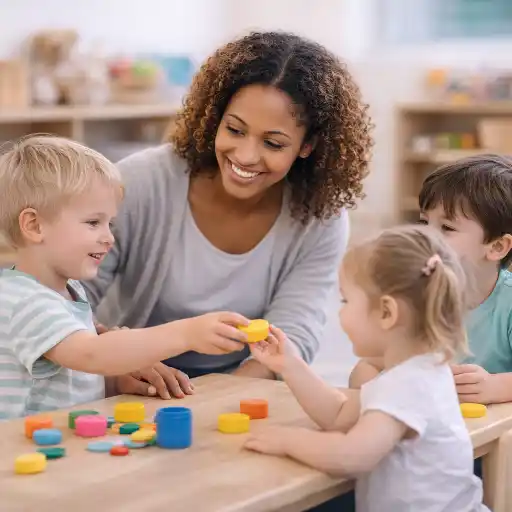
A display can help children revisit everyday moments and see that care takes many forms. The ChildCareEd guide to age-appropriate gratitude practices describes visual and creative opportunities, including gratitude walls and drawings. A display should be an invitation to notice, not a measure of which child is most generous or grateful.
The I Noticed Kindness Classroom Display and Drawing Pages Buy Now $0.00 resource can provide a practical starting point for collecting children’s observations and artwork. Keep it open-ended: a child might draw a friend sharing a toy, an adult helping with a zipper, a favorite story, or a sunny moment outdoors. Children can dictate words, add a mark or image, or simply choose whether to contribute.
To keep the display inclusive and useful:
- Use children’s own words when recording dictated observations.
- Ask permission before displaying a child’s work or identifying another child in it.
- Make participation voluntary and provide alternate ways to engage.
- Focus on the helpful action or shared experience, not a tally, reward, or ranking.
- Refresh the display periodically and invite children to revisit what they noticed.
Consider naming it “Kindness I Noticed” rather than “Our Gratitude Chart.” The first title centers observation and leaves room for different feelings and responses. A thoughtfully used display helps children see a shared community of care without implying that anyone owes a public answer.
How can providers honor children’s feelings, communication, and family traditions?
Gratitude should make room for a child’s whole experience. A child can appreciate a friend’s help and still feel frustrated about a toy; they can enjoy a classroom activity and miss their family. Respond with both warmth and honesty: “You liked building together, and you’re sad it’s time to stop. Both feelings can be true.” This validates emotion without turning appreciation into a demand for positivity.
Children and families express thanks in different languages and ways. Some children are comfortable speaking in a group; others communicate through movement, drawing, sign, a home language, or quiet observation. Use books, images, and examples that reflect varied family structures, cultures, abilities, and communication styles. Ask caregivers what expressions of appreciation feel familiar to their family, and welcome their perspectives without asking one family to speak for a whole culture.
Keep activities grounded in everyday care and belonging rather than assuming that all families celebrate the same holidays or share the same circumstances. Children can notice help from a friend, a caregiver, an educator, a community member, an animal, or the natural world. Avoid comparing children’s answers or implying that everyone has the same sources of comfort and support.
Providers can strengthen this work through relevant professional learning. Supporting Social Learning: Creating Classrooms that Care Buy Now $24.00 focuses on relationships, community-building, problem-solving, and open dialogue. State requirements vary - check your state licensing agency when selecting professional development or planning program practices.
What common pitfalls should educators avoid, and what can they try this week?
Well-intentioned gratitude routines can become uncomfortable when participation is mandatory or adults treat appreciation as proof of good behavior. A quick team conversation can help staff agree on language that supports children without pressuring them.
- Pitfall: “What do you say?” as a demand. Try: Model thanks and offer choices such as a wave, drawing, gesture, or words.
- Pitfall: Asking children to share something they are grateful for publicly. Try: Invite them to share, listen, draw, or pass.
- Pitfall: Praising only spoken answers. Try: Recognize nonverbal communication, quiet participation, and private reflection.
- Pitfall: Treating the display as a competition or behavior chart. Try: Describe real acts of care without counting, ranking, or rewarding them.
- 📝 Practical first step: During one routine this week, name a specific helpful action and its effect, then give children time to respond—or not.
Observe whether children begin to notice helpers, describe what makes a moment feel caring, or choose their own way to respond. These observations are for adjusting support, not grading children’s character. If a routine feels forced, simplify it and return to modeling.
For a broader foundation in emotional development and responsive interaction, explore the Brighter Futures: Social Emotional Development course Buy Now $16.00. It examines developmental stages and appropriate interactions, helping providers connect daily practice with children’s social-emotional growth.
Conclusion: How can we help children notice kindness authentically?
Help young children notice everyday kindness by modeling appreciation, naming concrete actions and their effects, and offering flexible, voluntary ways to express what they notice. Gratitude is not a scripted answer or a requirement to feel cheerful. It develops through relationships, repeated experiences, emotional safety, and opportunities that respect children’s voices and varied communication styles.
Start small: name one act of care during a routine, invite a drawing or observation for the classroom display, and let children choose whether and how to participate. When educators make room for honest feelings and authentic responses, children can gradually connect kindness with belonging and care. The goal is not to make children perform gratitude, but to help them recognize the good they encounter and respond in ways that feel meaningful to them.
- Healing Young Hearts: Stress and Grief
- Moving About the Classroom: Effective Transitions for Everyday
- Teacher-Child Interactions for Stronger CLASS® Outcomes
- What Makes Me Special: An Overview of Autism and ADHD
- Pediatric RSV First Aid & CPR/AED
- CDA Bridge Bundle: Family Child Care without Portfolio Review
- CDA Bridge Bundle: Infant/Toddler without Portfolio Review
- CDA Bridge Bundle: Preschool without Portfolio Review
- The Right Kind of Influence for Young Children
- Moving About the Classroom: Effective Transitions for Everyday
- CDA Certification en Español: Recursos y Consejos para Educadores Bilingües
- 🔍 ¿Qué ves cuando observas a un niño aprender?
- Proporciones de Cuidado Infantil y Tamaños de Grupo por Edad en Maryland (Guía Rápida para Centros y Hogares)
- Proporciones de Cuidado Infantil y Tamaños de Grupo por Edad en Nueva Jersey (Guía Rápida para Centros y Hogares)
- Proporciones de Cuidado Infantil y Tamaños de Grupo por Edad en Virginia (Guía Rápida para Centros y Hogares)
- Cómo Trabajar en el Cuidado Infantil en Carolina del Norte: Requisitos y Pasos
- Celebrando la amistad en el cuidado infantil durante el Día de los Mejores Amigos
- Canciones, juegos y preguntas de círculo para niños
- How Can Early Childhood Educators Teach Gratitude in Authentic, Age‑Appropriate Ways?
- What Are Age-Appropriate Ways to Teach Gratitude Before Thanksgiving?
- How Can Cooperative Play Help Young Children Learn Gratitude?
- How Can You Plan a November Preschool Curriculum Around Gratitude and Community?
- How Can Gratitude Activities Teach Kindness and Positive Behavior?
- How Can Teachers Help Children Express Gratitude and Understand Their Emotions?
- How Can Gratitude Activities Build Kindness and Teamwork in School-Age Children?
- How Can We Help Young Children Notice Everyday Acts of Care?
- How Can Family Partnership and Gratitude Support Infant-Toddler Development?
- How Can Child Care Providers Help Young Children Notice Everyday Kindness Without Forcing Gratitude?
- How Can Providers Model Meaningful Polite Language During November Routines?
- Beyond Saying Thank You: How Can We Teach Genuine Gratitude to Young Children?
