Small moments of appreciation can help turn everyday classroom interactions into opportunities for kindness, cooperation, and positive behavior. Explore practical ways to make gratitude authentic and developmentally appropriate, and consider Brighter Futures: Social Emotional Development  Buy Now $16.00 to deepen your knowledge of children’s emotional growth and supportive interactions. For a broader classroom focus, Supporting Social Learning: Creating Classrooms that Care Buy Now $35.00 offers strategies for building relationships and strengthening social learning.
Why can gratitude support kindness and positive behavior?
Gratitude helps children notice that another person’s actions can make them feel cared for, included, or supported. When educators make those connections visible, children have concrete opportunities to practice empathy, perspective-taking, and helpful behavior. Gratitude is not a shortcut to perfect behavior; it is one part of a warm, consistent environment where children can learn how their choices affect others.
Research with preschool-aged children found that gratitude can be associated with prosocial actions such as helping and sharing, particularly when children recognize another person’s intentions (Shoshani et al., “Grateful and Kind”). That finding supports an important classroom practice: move beyond asking children to repeat “thank you” and help them notice the relationship between an action, its effect, and how someone feels.
For example, an educator might say, “You brought the book while I was helping Mateo. That helped us get story time started.” This kind of specific acknowledgment recognizes a child’s contribution without turning kindness into a competition or a reward system. It also gives children language for the #kindness they observe and practice.
How can gratitude be taught in age-appropriate ways?
Children’s understanding and communication develop over time, so gratitude activities should offer different entry points. Infants learn through responsive care, warm tone, and repeated language. Educators can model appreciation during caregiving routines without expecting infants to respond verbally.
Toddlers benefit from immediate, concrete descriptions: “You passed the cup to Lila. That helped her.” Accept words, gestures, signs, home-language expressions, and approximations. A toddler who does not say “thank you” on cue is not failing a character lesson; adults can model the words while respecting the child’s autonomy.
Preschoolers can reflect on people, actions, and experiences with prompts such as “Who helped you today?” or “What made play feel fun?” Give children time to answer and multiple ways to communicate. A child may draw, dictate a sentence, use a puppet, point to a photograph, or share privately with an educator.
- Use simple language matched to children’s developmental level.
- Model appreciation naturally rather than demanding a scripted response.
- Offer choices in how children participate, including a choice not to share publicly.
- Connect gratitude to real experiences instead of abstract rules.
These strategies support emotional development and help children build #empathy alongside communication and relationship skills.
Which gratitude activities can build positive classroom behavior?
Choose activities that are brief, repeatable, and connected to real acts of care. A predictable routine gives children repeated practice, while flexible materials let different learners participate meaningfully.
- 🍂 Thankfulness tree: Invite children to draw or dictate something or someone they appreciate on a paper leaf. Add leaves over time and revisit them together.
- Gratitude jar or wall: Add a drawing, photo, or adult-written observation when children notice helpful actions. Focus on specific acts, not rankings.
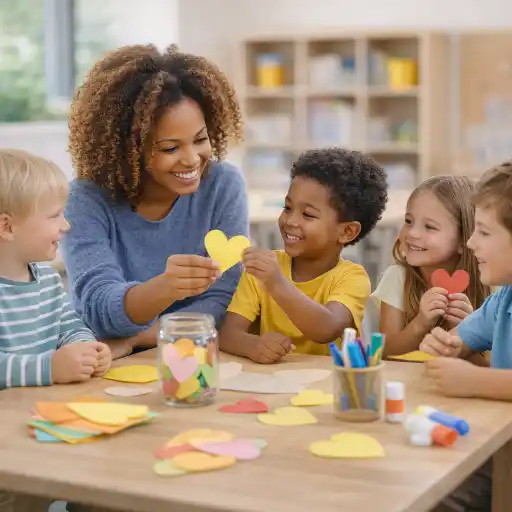
- Thank-you art: Provide open-ended art materials so children can create a picture for someone who has helped them. Write down the child’s dictated message if they wish.
- Puppet role-play: Practice offering help, asking for a turn, receiving help, and repairing a hurtful moment through short, playful scenarios.
- Classroom helper jobs: Rotate meaningful responsibilities such as passing materials or caring for shared supplies, then reflect on how the task supported the group.
Follow an activity with a gentle, specific prompt: “What did your partner do that helped?” or “How did working together feel?” The goal is reflection and connection, not a polished answer. ChildCareEd’s age-appropriate gratitude strategies offer additional ideas for making appreciation relational and practical.
How can educators weave gratitude into daily routines?
Gratitude does not need to be a separate lesson or seasonal theme. Arrival, meals, cleanup, outdoor play, and transitions all offer natural opportunities to notice care and cooperation. A brief reflection at snack or dismissal can be enough: “What is something helpful you noticed today?” Consistency matters more than elaborate activities.
Adults set the tone by naming their own appreciation and the action behind it. Instead of only saying “Good job,” try, “Thank you for putting the blocks away with your group; that helped make space for everyone.” This language clarifies the positive behavior and its impact, making it easier for children to understand what they can repeat.
During conflicts, do not ask a child to show gratitude or apologize before they are ready to understand what happened. First support safety and help children name feelings. Then guide them toward a constructive next step: “You both wanted the same truck. What could help us solve this?” If harm occurred, support a meaningful repair, such as checking whether a peer is okay or helping rebuild a structure.
Team consistency helps these practices become part of the classroom culture. Directors can invite staff to agree on a few shared phrases and discuss brief observations in team meetings. Simple notes about helping, sharing, or acknowledging a peer can guide reflection without turning children’s social growth into a scorecard. The aim is a supportive #classroom where positive behavior is taught through relationships, practice, and clear guidance.
How can programs include families and avoid common pitfalls?
Families may express gratitude in different languages, traditions, and everyday practices. Ask caregivers how appreciation is communicated at home, invite optional contributions, and avoid assuming that every family celebrates the same holidays. Keep activities centered on belonging, care, and helpful actions rather than a single seasonal or religious tradition.
Share a short note explaining the classroom activity and offer simple ways to participate: a home-language word for “thank you,” a family story, or a child-created drawing. Make contributions optional and provide alternatives. Children should not be asked to speak for an entire culture or to express appreciation about relationships that may be complicated or painful.
Common pitfalls are manageable when educators prioritize meaning and choice:
- Forcing children to say thanks: Model the words and accept gestures, art, signs, or private expressions.
- Making gratitude a one-time event: Embed small prompts into routines throughout the year.
- Using public comparisons or prizes: Notice specific efforts without labeling one child as “the kindest” or making care transactional.
- Expecting children to feel happy: Make room for mixed feelings; appreciation does not erase sadness, frustration, or unmet needs.
For professional learning, Opportunity for Growth: Emotional Development Buy Now $16.00 can strengthen understanding of emotional stages and social skills. Open Heart, Open Art Buy Now $16.00 explores open-ended art as a form of social-emotional expression, and Families, Communities, and Classrooms: Working Together for Children Buy Now $55.00 focuses on family and community partnerships. State requirements vary - check your state licensing agency.
Conclusion: What is the most practical way to begin?
Teaching kindness and positive behavior through gratitude activities means helping children notice care, understand its effects, and choose ways to respond that fit their development. Research and classroom practice point to the value of concrete, relational experiences—not forced words or one-off holiday crafts.
Start with one manageable practice this week: model a specific expression of appreciation during cleanup, add a daily question at snack, or invite children to create a gratitude leaf. Offer varied ways to participate, respect family perspectives, and recognize small acts of helping and cooperation. With warm adult modeling and steady opportunities to reflect, children can grow their #gratitude, strengthen relationships, and contribute to a more caring classroom community.
- Moving About the Classroom: Effective Transitions for Everyday
- CDA Home Visitor Subject Area 3 Part 3 Birth to 5
- From Tantrums to Triumphs: Equipping Preschoolers with Self-Regulation Skills
- The ABCs of Behavior: Turning Challenges into Learning Opportunities
- CDA: Special Needs: Understanding the Whole Child
- Connections That Count: Building Relationships in Child Care
- The Right Kind of Influence for Young Children
- Every Moment Matters: Schedules and Transitions
- Moving About the Classroom: Effective Transitions for Everyday
- Gift of Gratitude: Fostering Emotional Intelligence in Children through Acts of Kindness
- Deck the Halls with Emotional Wellness: Family Traditions That Foster Connection
- ¿Qué Calificaciones Necesitas para Trabajar en Cuidado Infantil?
- Proporciones de Cuidado Infantil y Tamaños de Grupo por Edad en Nueva Jersey (Guía Rápida para Centros y Hogares)
- Proporciones de Cuidado Infantil y Tamaños de Grupo por Edad en Virginia (Guía Rápida para Centros y Hogares)
- ¿Cuál es la Diferencia Entre la Crianza Respetuosa y la Crianza Permisiva?
- Ejemplos de Crianza Respetuosa vs. Crianza Permisiva
- Cómo Trabajar en el Cuidado Infantil en Carolina del Norte: Requisitos y Pasos
- Cómo Ser Maestra de Preescolar en Maryland
- How can rainy day indoor activities help preschoolers learn kindness and cooperation in Georgia?
- Celebrando la amistad en el cuidado infantil durante el Día de los Mejores Amigos
- How can childcare providers effectively teach gratitude to young children?
- How Can Early Childhood Educators Teach Gratitude in Authentic, Age‑Appropriate Ways?
- Mawlid Around the World: How Kids Can Explore Different Traditions and Celebrations
- How Can Fall Classroom Activities Teach Positive Behavior?
- How Can You Plan a November Preschool Curriculum Around Gratitude and Community?
- How Can Gratitude Activities Teach Kindness and Positive Behavior?
- How Can Gratitude Activities Build Kindness and Teamwork in School-Age Children?
- How Can Gratitude Activities Support Kindergarten Readiness?
- What Simple November Activities Build Cooperation and Social Skills?
