Introduction
Building #independence in young children is one of the best things a child care program can do. Small, daily routines give children clear steps to practice skills like dressing, cleaning up, and asking for help. When children try things on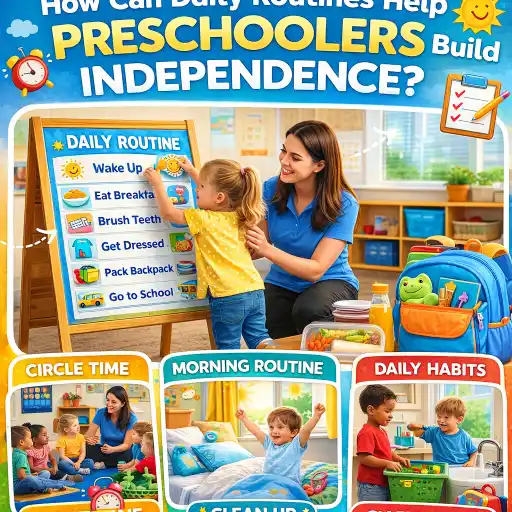 their own, they gain #confidence and feel proud. This article gives simple, practical routines and classroom ideas child care providers and directors can use right away.
Why it matters: children who practice self-help and follow routines learn faster, behave better, and move more easily into group activities. For more on how independence links to readiness and self-esteem see Building Independence and the overview on How can we build confidence and independence. Also see CDC tips on preschool development at CDC Positive Parenting Tips.
Why does independence matter for preschoolers?
Short answer: independence helps children learn, feel capable, and join the group. Here are clear reasons to focus on routines:
- Children gain a sense of achievement. When a child puts on a jacket or pours a drink, they feel proud. This builds #confidence and long-term self-worth (ChildCareEd: Building Independence).
- Routines make the day predictable. Predictable schedules reduce behavior problems and help children know what comes next (see CSEFEL: Routines and Schedules).
- Independence frees teachers to teach. When children can do simple tasks, teachers spend time coaching learning rather than doing tasks for kids (Supporting Children's Independence
 Buy Now $24.00).
 - Self-help skills support safety and health. Dressing, handwashing, and toileting are daily chances to practice important routines — and they tie to public health best practices (CDC).
Why it matters: When children practice steps in short, repeated routines they build motor skills, language, and the ability to follow directions. That helps them try new things and manage big feelings during the day.
What daily routines should I use to practice independence?
Choose 4–6 small routines and practice them every day. Short, repeated practice works best. Below are ready-to-use routines you can start tomorrow.
- 🔹 Morning self-care (getting dressed, brushing teeth): Break tasks into tiny steps and post picture steps near hooks. Use a visual morning chart like the ideas at ChildCareEd: How to Provide Routine and printable routine ideas from And Next Comes L.
- 🔸 Snack and lunch routines (wash hands, set napkin, pour simple items): Teach 3 steps and let the child do one or two. Offer child-sized pitchers and bowls so success is easier (Supporting Children's Independence Buy Now $24.00).
- 🔹 Toileting and hygiene: Make the bathroom easy to use with step stools, labeled visuals, and a routine chart. Repeat the same steps every time to build memory (see CSEFEL).
- 🔸 Clean-up time: Turn clean-up into a short game. Give each child 3 things to pick up or assign simple jobs (toy basket helper). Short tasks build responsibility and a habit of helping.
- 🔹 Transition practice: Use a 3-step picture board for moving from play to circle. Count down with a visual timer or sing a song. Visual schedules reduce anxiety and smooth transitions (visual schedule printables).
- 🔸 Classroom jobs and rotation (plant waterer, line helper): Give small tasks that rotate daily. Jobs help children practice responsibility and social skills (ChildCareEd guide).
Tip: Practice each routine for only 3–7 minutes several times a day. Short, frequent practice beats a long single lesson.
How can the classroom setup and teacher strategies support daily practice?
Your room and the way teachers talk to children matter as much as the routine itself. Here are practical changes that support everyday independence.
- 🌟 Physical setup for success: Use low hooks, labeled bins, child-sized tools (brooms, pitchers), and reachable toiletries. A prepared space invites work. See Montessori ideas in ChildCareEd: Montessori Method and setup tips from Montessori training (NAMC).
- 📷 Visual steps and charts: Post picture steps for each routine (3–5 pictures). Children check off steps as they finish. Visual schedules were recommended by CSEFEL for teaching routines (CSEFEL).
- ✅ Teacher strategies: Use small choices (two options) to build decision-making. Praise effort with specific language: “You zipped your coat — you kept trying!” For choice-making research see CSEFEL Brief on Choice.
- 🧩 Scaffolding steps: Model one step, prompt once, then step back. Gradually remove help so the child can do more each day. Training like Student Success: Expectations & Independence Buy Now $16.00 explains how to match help to the child’s level.
- ⚖️ Jobs and routines: Assign simple classroom jobs and rotate them. Jobs teach responsibility, social skills, and #selfhelp. ChildCareEd courses on supporting independence outline job ideas and rotations (Supporting Children's Independence Buy Now $24.00).
Note: state requirements vary - check your state licensing agency when you change room setup or add materials.
What common mistakes should I avoid and how do I fix them?
Here are frequent pitfalls and quick fixes so your routines actually help children become independent.
- 😕 Mistake: Doing tasks for the child when they could try. Fix: Pause and prompt once. Use smaller steps. Let the child try even if it takes longer. Celebrate the attempt (ChildCareEd guide).
- 🫧 Mistake: Too many choices at once. Fix: Offer 2 choices only. Fewer choices help children make a decision and follow through (CSEFEL choice brief wwb15).
- ⏰ Mistake: Long, boring practice sessions. Fix: Keep routines short (3–7 minutes) and repeat often. Use games for practice (see executive function games at Executive Function in Preschool).
- 🗣️ Mistake: Vague praise like “good job.” Fix: Tell exactly what the child did: “You buttoned three buttons — great work!” Specific praise builds a growth mindset (ChildCareEd).
- 😢 Mistake: Ignoring big feelings during practice. Fix: Co-regulate: get down to the child’s level, name the feeling, breathe together, then try one small step (Navigating Big Feelings).
How to avoid pitfalls in short bullets:
- Start with one routine and grow slowly.
- Use visuals and child-sized items to make tasks possible.
- Train staff to use the same words and steps so children get consistent messages.
Conclusion and FAQs
Summary: Daily, short routines plus a classroom set-up that supports trying build strong #routines and lasting #independence. Use visuals, child-sized tools, small choices, and specific praise. For more ideas and training, explore ChildCareEd courses like Supporting Children's Independence Buy Now $24.00 and Student Success: Expectations & Independence Buy Now $16.00.
Quick FAQs
- Q: How long will it take to see progress? A: Small wins appear in days; bigger habits take weeks. Practice daily.
- Q: What if a child refuses? A: Offer two tiny choices, use a peer helper, and try again later.
- Q: Can I use Montessori ideas? A: Yes — Montessori setups and practical life activities support independence (Montessori Method).
- Q: Where can staff get training? A: ChildCareEd online courses and zoom workshops offer practical steps and certificates (ChildCareEd).
Remember: small steps every day make big change. Keep routines short, use visuals, and celebrate effort. state requirements vary - check your state licensing agency.
Five words to track in this work: #independence #routines #preschoolers #selfhelp #confidence
- Building Equity: Inclusionary Practices in Preschool
- Pediatric RSV First Aid & CPR/AED
- CDA Bridge Bundle: Preschool without Portfolio Review
- Emergent Learning & Development
- Balancing Act: Schedules and Routines
- Texas Director Credential
- Environments That Inspire Independence and Exploration
- Every Moment Matters: Schedules and Transitions
- Supporting Children's Independence
- Ready, Set, Kindergarten!
- Cómo Trabajar en el Cuidado Infantil en Carolina del Norte: Requisitos y Pasos
- Child Care Daily Routine Examples for Infants, Toddlers, and Preschoolers
- Celebrando la amistad en el cuidado infantil durante el Día de los Mejores Amigos
- What are the most important school readiness skills for preschoolers?
- What skills do preschoolers need to be ready for school?
- How can child care programs help children build confidence and independence?
- How Does Singing Together Build Community in the Classroom?
- Can doodling and drawing build fine motor skills and creativity?
- How can we best prepare preschool children for kindergarten?
- How can we develop classroom routines that preschoolers can follow?
- How can I support preschoolers’ independence during daily routines?
- Preschool Classroom Rules: How to Teach Expectations Without Constant Reminders
- Preschool Classroom Routines: What Should You Teach During the First Week?
- Preschool Visual Schedule: What to Do When Kids Stop Looking at It
- How Can Child Care Providers Set Age-Appropriate Expectations for Young Children?
- What Is Co-Regulation and How Can Child Care Teachers Use It?
- How Can You Create a Daily Routine That Helps Preschoolers Feel Secure?
- How Can You Create a Visual Schedule Preschoolers Will Actually Use?
- When a Preschool Rule Expects More Self-Control Than Children Can Manage, What Should Educators Do?
