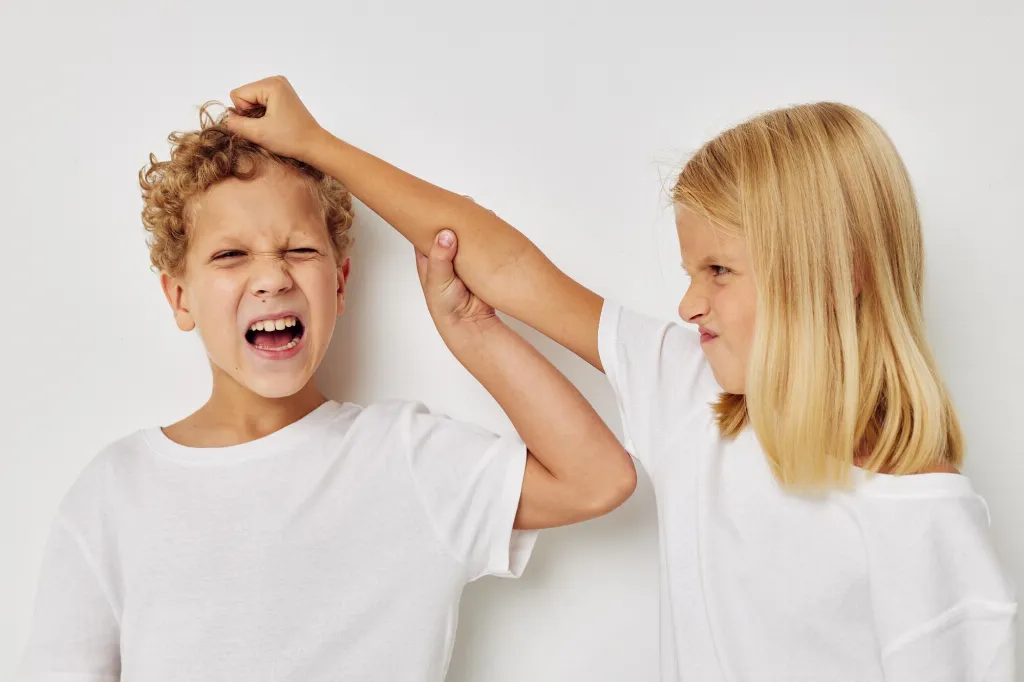
 Children will disagree. In a daycare room they test limits, learn words, and try out sharing. You can turn those moments into teaching times. This article gives simple, practical steps that directors and #teachers can use. The ideas come from short scripts, classroom setup tips, and ready-to-use resources from ChildCareEd and other trusted guides.
How can I stop fights before they start?
Prevention is the first and easiest step. A well-planned room and steady #routines reduce many conflicts. Try this 6-step checklist:
- 🪴 Make clear play zones. Low shelves and labeled bins help children choose toys without asking an adult. For ideas see How can I reduce classroom conflicts among toddlers?.
- 📋 Post a picture schedule so children know what comes next.
- 🧸 Limit how many toys are out. Rotate materials each week to keep interest and reduce grabbing.
- 👣 Create easy walking paths to cut down pushing and chasing.
- ⏳ Use timers and short turn rules for popular toys. Timers make turns fair and clear.
- 🪑 Offer a small peace spot with calm tools (books, feelings chart). ChildCareEd’s Peace Corner Buy Now $0.00 is a ready resource.
Also train staff to watch patterns. Note when fights happen (time, place, toy). That helps you change routines or add duplicates of a toy. Small room changes often stop repeating conflicts.
What quick steps can staff use during a fight?
🛑 Stop and make sure everyone is safe. Move gently between children if needed.
🧘♀️ Calm: Encourage one deep breath. Try a quick count or model breathing with them.
🗣️ Name the problem in one sentence: “You both want the red truck.”
💬 Give one short phrase to use: “Can I have a turn?” or “I don’t like that.” Teach “I feel” lines: \"I feel ___ when you ___\" (Teaching kids to solve problems with words).
🔁 Offer three fast choices: trade, take turns with a timer, or play together. Keep choices short so children can pick quickly.
🔧 Repair: Ask, “What can we do to make it better?” Offer fixes like “say sorry,” “return the toy,” or “help rebuild.”
State rules: state requirements vary - check your state licensing agency. Always follow safety and reporting rules for injuries.
Use quick tools like Conflict Resolution Solution Cards Buy Now $0.00 to make choices visible and teachable in the moment.
How do I teach children to solve problems on their own?
Children learn by copying and practicing. Use short, repeated lessons and fun practice. Here are easy steps to build independence:
🎭 Role-play for 2–5 minutes. Use puppets or helpers to act out a small fight. Let children suggest the words to use. See role-play ideas at Friendship Skills with Activities and Role-Play.
🗣️ Teach 3 power phrases and practice daily: “Stop,” “My turn,” and “Can I have a turn when you’re done?” Keep phrases short for young children.
⏳ Practice turn-taking with a timer. Make a game of swapping after the buzzer.
📚 Use stories and feeling charts. Pause stories and ask, “How does that child feel? What could they say?” (CSEFEL strategies).
🧩 Create small guided-play tasks that require teamwork. For example: build a bridge together and take turns at different roles.
🧾 Use visuals: post a short 4-step problem-solving poster at child height. Add photos to show the steps.
Practice when children are calm. Praise small wins: "You asked with words—that was helpful." Consistent staff language helps. Share the same scripts with families and in staff meetings so everyone uses the same words and routines. You can also use International Day of Peace classroom activities to practice kindness, empathy, and harmony.
Conclusion and Quick Checklist
Summary: Use prevention, short in-the-moment scripts, and steady practice. Teach simple words, set the room to reduce fights, and help children repair hurt feelings. Keep steps short so children can remember them.
Weekly checklist for your team:
- ✅ Post a picture schedule and teach it daily.
- ✅ Choose 3 power phrases to practice each week.
- ✅ Set up a Peace Corner with feelings tools (Peace Corner Buy Now $0.00).
- ✅ Use timers for turn-taking and duplicate high-demand toys.
- ✅ Train staff to use the same short scripts and note patterns.
Common mistakes and how to avoid them:
- 🚫 Too many rules at once — Fix: Teach 3 short rules and practice them daily.
- 🚫 Long lectures in the moment — Fix: Calm first, teach later when the child is calm.
- 🚫 Inconsistent staff words — Fix: Pick 1 script and rehearse it in staff meetings.
FAQ
- Q: How long to see change? A: Small steps in weeks; steady change in months with daily practice.
- Q: What if a child hurts others often? A: Track patterns, team-plan with families, and consult specialists if needed.
- Q: Are visuals helpful? A: Yes—pictures and cards help all children understand the steps (Solution Cards Buy Now $0.00).
- Q: Where to get lesson plans? A: See ChildCareEd courses and resource pages like You're Not My Friend Anymore resources.
You are doing meaningful work. Keep scripts short, practice often, celebrate tiny wins, and involve families. When your #teachers use kind words and steady #routines, children learn to solve #conflict with #empathy and grow into better friends.
- You're Not My Friend Anymore: Learning Conflict Resolution
- CDA Home Visitor Subject Area 3 Part 3 Birth to 5
- CDA Home Visitor Subject Area 2 Part 3 Birth to 5
- CDA: A Closer Look at Assessments
- CDA Infants/Toddlers: Lesson Planning Made Easy
- Pediatric RSV First Aid & CPR/AED
- CDA: Special Needs: Understanding the Whole Child
- Potty Training Made Simple
- Creating Environments that Nurture Growth and Community
- Technology as a Classroom Tool
- ¿Cómo incluir a niños con necesidades especiales en cuidado infantil? Guía práctica y sencilla
- Cómo ser director de cuidado infantil en Maryland
- Que es Título 22 en California?
- Cómo Solicitar una Licencia de Guardería en Texas
- ¿Cómo solicito la licencia para una guardería en California?
- Lista para Guardería en Casa en Illinois: Cómo Iniciar una Guardería en el Hogar
- Lista para Guardería en Casa en Texas: Cómo Iniciar una Guardería en el Hogar
- Cómo Trabajar en el Cuidado Infantil en California: Requisitos y Pasos
- How to Handle Daycare Conflicts in a Positive Way
- Daycare Conflict Resolution: Helping Children Get Along
- How can New York child care programs teach conflict resolution and sharing?
- How Can School-Age Programs Teach Conflict Resolution That Actually Works?
- Team-Building Games for Preschoolers That Teach Cooperation
- Daycare Team-Building Activities That Encourage Cooperation
- How Can Teachers Encourage Sharing Without Forcing It?
- How Can Child Care Providers Teach Sharing Without Forcing It?
- How Can Teachers Help Children Rejoin Play After a Conflict?
- How Can Child Care Providers Help Children Repair a Conflict Beyond “Say Sorry”?
- How Can Preschool Teachers Encourage Children to Use Words During Conflict?
