Circle time can become the heart of an early childhood program—a predictable, joyful gathering where children strengthen language, social skills, attention, self-regulation, and a sense of belonging. This article gives child care providers and directors practical, research-informed strategies for creating short, focused circle-time routines that include clear visuals, songs, movement, interactive stories, meaningful choices, and opportunities for every child to participate. It also explains how to adapt group experiences for different ages, abilities, attention spans, languages, and sensory needs while avoiding common challenges such as long wait times or expecting every child to sit still. To strengthen staff practice, explore ChildCareEd’s self-paced online course Reading Aloud and Storytelling  Buy Now $16.00, which helps educators use engaging, age-appropriate stories and interactive read-aloud techniques to build communication, comprehension, vocabulary, and early literacy. Remember that state requirements vary, so always check with your state licensing agency.
What is a meaningful #circletime and why does it matter?
1) Definition: A meaningful circle is short, predictable, and interactive — not a lecture. It balances greeting, one focused learning target, and a closing ritual. See practical starting ideas in Circle Time Ideas That Keep Young Children Engaged.
2) Why it matters:
- 🧠 Development: Builds language, memory, and self-regulation (use songs & props).
- 🤝 Community: Teaches turn-taking and empathy; daily rituals build belonging (Daily Rituals).
- 🔁 Instructional leverage: A short target at the circle can launch center work and repeated practice (Plan Like a Pro).
3) Evidence snapshot: CSEFEL briefs show circle and large-group routines are powerful moments for teaching social skills and transitions (What Works #8).
How long and how should I structure my circle to boost #engagement?
1) Timing rules of thumb:
- 🔹 Toddlers: 3–8 minutes.
- 🔹 Preschoolers: 10–20 minutes.
- 🔹 Split longer content into 3–4 micro‑chunks (greeting → activity → movement → closing).
2) A simple 3-part routine (use daily):
- 🎶 Start (30–60s): Attention cue + greeting song (see Best Songs for Circle Time).
- 📚 Main (5–12 min): One focused target — story with prop, mystery bag, counting task, or an action song (Songs, Games & Questions).
- 🏁 End (30–60s): Helper job + goodbye ritual to close on success.
3) Quick tips to hold attention:
- 🔁 Repeat favorites for several days — repetition builds competence.
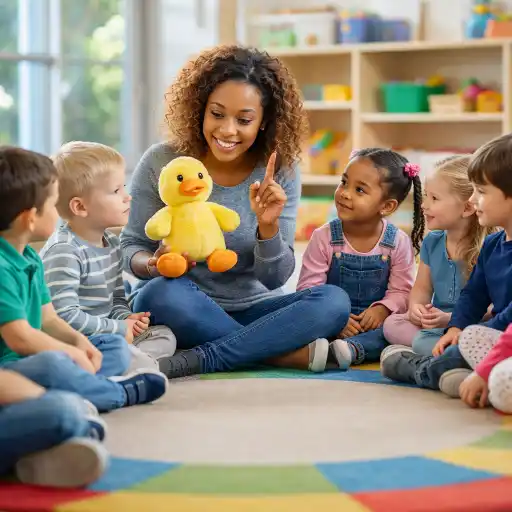
- 🎭 Use props, puppets, or felt pieces to make stories active (props & mystery bag).
- 🔔 Change voice, add a 60‑second movement break when attention dips.
Which activities and songs best support learning, social skills, and #inclusion?
1) High-impact activity types (rotate and enumerate):
- 📖 Interactive read-aloud with 1–2 props (children touch or pass a prop).
- 🔎 Mystery Bag: tactile guessing + vocabulary practice (three-step routine: feel → clue → guess).
- 🎵 Action songs & fingerplays for motor + language integration (see Sing Play Create and ChildCareEd song l
 ists).
 - 🗣️ Turn-taking games: talking object (shell, mic) to teach voice control and waiting.
- 🧭 Linking: After a book about apples, move apple activities to centers so children practice the same concept hands-on (linking circle to centers).
2) Use UDL strategies for broad access: multiple means of engagement, representation, and expression — e.g., visuals + gestures + movement — as described in the UDL preschool science literature (UDL in Preschool Classrooms).
3) Cultural and community relevance: include books, songs, and visuals that reflect families in your program (see ChildCareEd’s guidance on community building and diversity). For activities that build social skills, consider CSEFEL role-play strategies taught during circle (What Works #8).
How do I adapt circle time for diverse learners and manage behavior while teaching #routines?
1) Plan inclusively (enumerated supports):
- 🖼️ Visuals: picture schedules at child height and emotion cards.
- 🪑 Flexible seating: cushion, chair with back, standing spot, carpet square.
- ✋ Multiple response modes: say, point, sign, or hold a picture.
- 🔁 Jobs & peer supports: rotate helper roles so children practice leadership.
2) Behavior supports & transitions: teach attention signals, give 2‑minute and 30‑second warnings, and embed rehearsal of cues (see Transition Routines and CSEFEL What Works #4).
3) Concrete classroom tools: elapsed timers, visual volume scales, and talking objects reduce blurting and help self‑monitoring (see behavior supports like those described at Speech Room News).
4) Family and licensing notes: adapt language and materials to home languages; involve families in ritual choices; and remember state requirements vary - check your state licensing agency when using food, allergy-sensitive props, or licensing-related staff ratios.
How do I plan effectively, avoid common mistakes, and measure circle-time success for my #children?
1) Planning checklist (numbered steps):
- 📝 Pick one learning target for the session (vocabulary, turn-taking, counting).
- 🎒 Prep materials the day before (small tub with props, song chart, visual schedule).
- 🔁 Rehearse the sequence with staff so cues and language are consistent.
- 📣 Decide two ways children can respond (verbal + nonverbal).
2) Common mistakes & fixes:
- 🚫 Too long? ✅ Cut to 1–2 activities and end on a win.
- 🚫 Teacher-centered monologue? ✅ Make it interactive: ask prediction questions, pass a prop, or use a movement break.
- 🚫 No visuals? ✅ Add a one-line visual schedule and a helper chart.
3) Quick measures of success (3 checks):
- Observation: How many children follow the attention cue within 3–5 seconds?
- Target check: can a child name the session’s target word or perform the target action?
- Reflection: staff notes one win + one tweak at day’s end.
4) FAQ (quick answers):
- Q: How often should we repeat a song? A: Daily across several days to build mastery.
- Q: What if a child refuses to join the circle? A: Offer a helper job or a nearby quiet role; gradually increase participation (Toddler circle tips).
- Q: Can circle-time learning link to centers? A: Yes—place related materials in centers after circle for hands-on practice (link strategies).
- Q: How long to practice a new routine? A: 1–2 weeks of short daily practice usually shows improvement (Transitions article).
Summary
1) Keep the circle short, predictable, and child-centered. 2) Use props, songs, and movement to make learning active and memorable. 3) Design for inclusion up front — visuals, seating choices, and multiple response modes work wonders. 4) Measure success with quick, practical checks and make small weekly tweaks. For many ready-to-use ideas and printable supports, start with ChildCareEd’s circle-time collection like Circle Time Ideas That Keep Young Children Engaged and the related activity and transitions articles linked above. You’re building community and lifelong skills in small, meaningful moments—one short circle at a time.
- Balancing Physically Active Play in Child Care
- Positive Attention: Interactions and Supervision of Infants and Toddlers: For Workforce Solutions
- 45 Hour School Age Methods and Materials
- 24 Hour Texas Pre-Service
- Positive Attention: Interactions & Supervision for Infants & Toddlers
- Texas Director Credential
- Balancing Active Play in Child Care
- Montessori Cultural Activities: Exploring the World Through Play and Learning
- Bridging Cultures: Family Communication & Collaboration
- Gift of Gratitude: Fostering Emotional Intelligence in Children through Acts of Kindness
- Canciones, juegos y preguntas de círculo para niños
- How can I create meaningful circle-time experiences that engage every child?
- How can we create classrooms where every child feels represented?
- How Can You Prepare Your Classroom for Fall While Prioritizing Safety, Health, and Learning?
- Mixed-Age Daycare Schedule: How to Plan a Day for Different Age Groups
- Preschool Schedule That Works: When to Plan Centers, Circle Time, and Outdoor Play
- Field Trips for Elementary Students: 15 Adventures That Bring Learning to Life
- How Can Cut, Sort, and Glue Activities Strengthen Early Learners’ Development?
- Common After School Activities Kids Get Bored With—and What to Try Instead
- Beyond “How Are You?” Circle Time Questions Kids Actually Want to Answer
- Glow and Grow for Teacher Self-Reflection: What Went Well—and What Will You Try Next?
- Circle Time Topics Beyond Weather, Days of the Week, and the Calendar
- How Can Child Care Providers Turn Everyday Routines into Learning Opportunities?
- How Can Themed Activity Bundles Simplify Weekly Planning?
- How Can Providers Create an Inclusive Classroom for Every Child?
- How Can You Manage Large-Group Time When Young Children Have Short Attention Spans?
- How Can One Material Spark Different Discoveries for Infants and Toddlers?
- What Should Teachers Do When a Child Refuses to Join Group Activities?
