From diaper changes accompanied by gentle songs to simple music during circle time, everyday musical moments do much more than entertain—they help shape the developing infant and toddler brain. During the first five years, neural pathways are especially responsive to patterned sound, movement, repetition, and warm social interaction. Early #music experiences can support #brain development by strengthening language and communication pathways, encouraging social connection, improving attention and executive-function skills, and developing the rhythm-based timing abilities that support later learning. This article translates research into practical, classroom-ready strategies that child care providers and directors can use immediately, including low-cost ways to incorporate singing, rhythm, instruments, and movement throughout the daily routine.
To explore the connection between music and early development more deeply, take ChildCareEd’s self-paced online course Mind’s Medicine: Music in Early Childhood  Buy Now $16.00. This training helps child care professionals understand the developmental benefits of early music exposure and create meaningful musical experiences for young children. State requirements vary, so always check with your state licensing agency.
How does music change the young brain?
- Auditory sharpening: repeated musical sounds refine frequency and timing processing.
- Multimodal integration: singing + movement links auditory, motor, and visual networks.
- Executive practice: games that require stop-start and switching exercise inhibitory control and cognitive flexibility.
What specific skills does music boost in the first five years?
- 🎵 Language & phonological awareness — rhythm and pitch activities support syllable, rhyme,e and sound discrimination (see ECRP literacy review and the Helsinki playschool study: playschool improves vocabulary).
- 🧠 Auditory processing — short-term music lessons alter brain responses to complex sounds even years later (Northwestern).
- 🧭 Executive function & self-regulation — rhythm programs show improved attention and impulse control in preschoolers (QUT).
- 🤝 Social skills & prosody — group singing fosters turn-taking, shared attention and emotional attunement (Mind's Medicine: Music in Early Childhood Buy Now $16.00).
- ⚖️ Motor planning and timing — movement-to-music practices improve coordination and sequencing (see ChildCareEd movement resources: practical program ideas).
What types of music activities work best in early childhood settings?
- 🎶 Daily routines: short hello/goodbye songs, transition chants and clean-up jingles embed predictability and language exposure (classroom-ready examples).
- 🥁 Rhythm-and-movement blocks: use 5–15 minute sessions that combine steady beat practice, stop-start games, and slow-down mindfulness (RAMSR model).
- 🧩 Integrated literacy games: rhyme hunts, syllable stomps, and sung story retells target phonological awareness (see the ECRP review for evidence: music & emergent literacy).
- 📚 Circle-time with actions: combine songs, props, and predictable patterns to maximize attention and vocabulary learning (best circle songs).
- 🔁 Low-cost instruments and body percussion: shakers, scarves and hand-clapping provide embodied timing practice without heavy investment (ChildCareEd resources).
Design note for directors: train all staff in short, replicable routines; nonmusical teachers can successfully deliver effective rhythm lessons with brief coaching (QUT).
How can programs implement music safely, inclusively, and in ways that meet licensing and learning goals?
Implementation needs to be practical, equitable and compliant. Start small and scale using these steps:
- 🔧 Infrastructure: create a consistent music corner stocked with simple props (scarves, shakers, laminated song cards). Keep volume reasonable for sensory-sensitive children.
- 👩🏫 Staff development: provide short modular training—ChildCareEd's Mind's Medicine Buy Now $16.00 course is designed for early childhood staff.
- 🤝 Inclusion strategies: offer multiple entry points (sing, sign, plaan y instrument, or move). Adjust tempo/volume and provide quiet zones. State requirements vary - check your state licensing agency.
- 📋 Curriculum integration: align music blocks with language goals, social objectives and motor milestones documented in program plans (use measurable targets: e.g., ‘child imitates two-note melody’ or ‘stops on cue 3/4 times’).
- ✅ Safety & licensing: keep instrument parts large, supervise movement space, and follow ratios during active music times; document lesson plans for observers and licensing reviews.
For classroom scripts, short playlists and printable song cards, see ChildCareEd lesson packs and free resources (free resources). You can also extend classroom learning and family engagement by organizing or participating in community music events such as Make Music Day, which offers kid-friendly public activities that showcase children's songs and encourage community participation.
How do we measure impact and avoid common mistakes?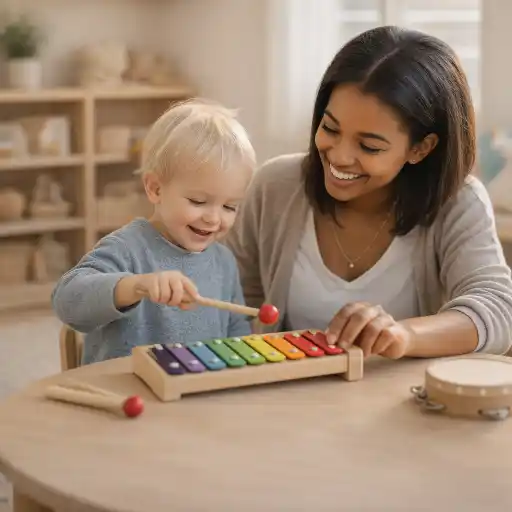
Measurement and fidelity matter. Use simple, regular checks rather than complex testing.
- 📈 Measurement tips:
- Weekly teacher checklist: record participation, attention to task, and stop-on-cue success.
- Monthly milestone notes: track vocabulary growth tied to songs, number of rhymes recognized, and turn-taking frequency.
- Periodic program review: compare classroom notes to published program outcomes (e.g., RAMSR reported executive gains after 16–20 sessions — see study).
- 🚫 Common mistakes and fixes:
- 🚫 Too-long sessions — Fix: keep music blocks 5–15 minutes depending on age.
- 🚫 One-size-fits-all activities — Fix: offer choices (sing, move, play) and adapt volume/space.
- 🚫 Expecting immediate academic transfer — Fix: focus on domain-specific goals (phonological awareness, self-regulation) and monitor over months.
Conclusion — What should we prioritize right now?
Prioritize brief, daily, socially interactive music experiences that combine predictable songs, beat-based movement and language-rich narration. 1) Train staff in brief, repeatable routines; 2) embed music in transitions and circle time; 3) document simple milestones and iterate. The strongest evidence supports rhythm-plus-movement for self-regulation (RAMSR), group playschool music for vocabulary and phonology (Helsinki) and that even brief early lessons change auditory encoding long-term (Northwestern). Keep activities joyful — children learn best when they are engaged, moving and connected.
FAQ
- Q: How much music exposure is enough? A: Daily short sessions (5–15 minutes) plus musical transitions add up; studies show benefits from weekly playschool over years and from short intensive blocks (compare program models in cited studies).
- Q: Do we need a music specialist? A: No. Research shows well-designed rhythm lessons can be delivered by general teachers with brief training (QUT); ChildCareEd courses offer practical coaching resources.
- Q: Will music make measurable gains in language? A: Yes—group music programs improve vocabulary and phonological skills over months to years (Helsinki, ECRP review).
- Q: What about children with sensory sensitivities? A: Offer lower-volume instruments, visual cues, and quiet participation options; provide advance notice and a calm-down area.
- Q: How do we justify cost and staff time? A: Emphasize low-cost tools (scarves, shakers), short daily routines, and alignment with language and self-regulation goals — a few minutes daily is high-return.
Further reading and practical courses: ChildCareEd's Mind's Medicine: Music in Early Childhood (course Buy Now $16.00) and the free resource library (resources) offer ready-to-use materials for staff coaching and lesson planning.
- 45 Hour Child Growth and Development
- Basic Health & Safety and Breastfeeding Awareness
- Birth to Five CDA Credential with Portfolio Review
- Brain Building
- Self-Regulation & Change: Helping Children Cope
- Texas Director Credential
- CDA Infants/Toddlers: Brain Development and Gene Expression
- 45 hour Growth and Development Birth-age 12 ONLINE
- Mind's Medicine: Music in Early Childhood
- CDA Certification en Español: Recursos y Consejos para Educadores Bilingües
- Boosting Language Through Play
- 🌙 ¿Cómo afecta el tiempo frente a las pantallas el sueño y el comportamiento infantil? 😴
- Cómo Abrir Una Quardería En Casa Sin Dinero?
- 10 Ejemplos de Cómo la Cultura Influye en el Desarrollo Infantil
- ¿Cómo solicito la licencia para una guardería en California?
- Lista para Abrir una Guardería en Casa en Dakota del Norte: Cómo Empezar
- Lista para Guardería en Casa en Texas: Cómo Iniciar una Guardería en el Hogar
- Cómo Trabajar en el Cuidado Infantil en California: Requisitos y Pasos
- Cómo Ser Maestra de Preescolar en Maryland
- Capacitación Previa al Servicio para Proveedores de Cuidado Infantil en Nevada
- Why Do the First Five Years Matter for Michigan Children?
- How can music and movement strengthen early childhood programs in North Dakota?
- Canciones, juegos y preguntas de círculo para niños
- Cómo simplificar la capacitación para sus empleados de daycare
- How can North Dakota child care programs lay reading foundations the right way?
- How Does the Brain Develop During the First Five Years?
- How and Why Does Music Boost Brain Development in the First Five Years?
- How Does the Brain Develop During the First Five Years?
