The World Cup offers a lively, shared opportunity to introduce young children to different countries, communities, traditions, and ways of life while emphasizing respect and belonging. This guide helps child care providers and directors plan short, developmentally appropriate lessons that connect excitement about sports with hands-on learning through maps, music, flags, stories, movement, food traditions, and family contributions. Educators can deepen this work through ChildCareEd’s self-paced online course Strength in Differences: Cultural Diversity  Buy Now $24.00, which explores cultural competency, diverse perspectives, acceptance, and inclusive learning environments. The self-paced online course Engaging Families for Child Success Buy Now $55.00 can also help programs invite family voices and build respectful partnerships around children’s cultural experiences. Keep family sharing optional and practical, and use #WorldCup activities that help #preschoolers develop curiosity, empathy, and a sense of belonging while partnering with #families to promote #multicultural #inclusion. State requirements vary, so always check with your state licensing agency.
How can I introduce the World Cup theme respectfully and simply?
- 🎫 Classroom passport: a paper passport with a photo or self-portrait; add a sticker for each country visited — see Passport to Fun.
- 🗺️ Child-level map: let children point to host countries and family origins; label with photos and simple words (use real images rather than costumes) — ideas in How Can I Bring the World Cup into a Multicultural Preschool Classroom.
- 🎵 One greeting or short song: teach a 10–20 second greeting at circle time and repeat for a few days to build comfort.
Why keep it small? Young children learn best through repetition and predictable routines. Event-based global learning links the tournament to geography and empathy rather than caricature; for a program-level perspective, see event-based ideas in Globe Trottin' Kids.
What hands-on centers and activities work best for young children?
- 🎨 Art — Flag patterns & classroom banner
- Offer shapes, paper strips, and collage materials; emphasize color and patterns, not accurate replication; see Multicultural Games and Activities.
- 🔤 Literacy — Postcards & passports
- Sentence starters: "Hello from ____"; children draw and add stickers to passports; ideas at Passport to Fun.
- 🌊 Sensory bin — Market or ocean
- Use photos, labeled items, and pretend food (avoid allergy issues) — see Fun Multicultural Activities for Preschoolers.
- 🎶 Music & movement — Fan and player moves
- Play short music clips from different regions and ask, "Fast or slow?" Use scarves for movement and rhythm practice.
- 🏟️ Dramatic play — Mini stadium
- Pretend tickets, binoculars, postcards, and stuffed "fans" create safe role play (no cultural dress-up required).
Keep centers accessible: pictorial labels, home-language words when families agree, and calm options for children who need a break.
How can I include families and support dual language learners?
- 📬 Simple invites: one short note: "This week we’ll explore countries A and B. If you’d like, send a photo, a short greeting, or a song title (optional)." Use templates from How Can I Bring the World Cup into a Multicultural Preschool Classroom.
- 🗣️ Home-language support:
- Post two-word labels (English + home word) in centers; accept recorded greetings if families prefer audio. Resources on including home languages are in Cultural Activities for Preschoolers.
- 🤝 Family options:
- Photo, drawing, or recipe card (no real food required). If you plan tasting, follow allergy rules and get permissions — state requirements vary - check your state licensing agency.
Tip: Make a short family wall or classroom book of contributions so children see home reflected daily. Thank families publicly (in the way they prefer) to build trust and repeat contributions.
Why does teaching about countries during the World Cup matter?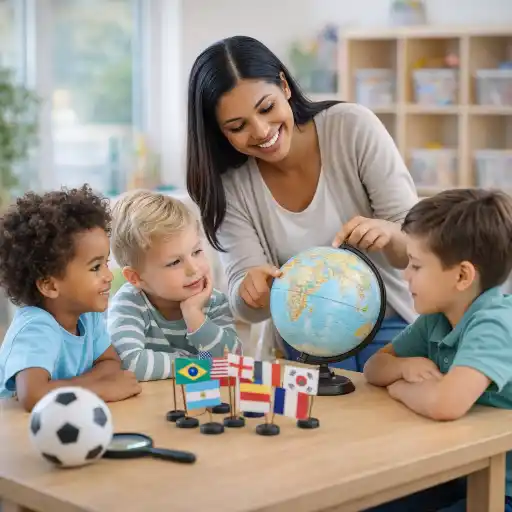
1) Social-emotional and civic outcomes: Linking a familiar event to people and places builds empathy, perspective-taking, and respect. Children practice kind language and see peers’ families honored; these small experiences support later global citizenship (see Exploring the World). For a broader framework on developing cultural awareness and critical thinking in young learners, see Global Education.
2) Cognitive and language outcomes: Activities support emergent geography (map skills), vocabulary, counting (sticker passports), and dual-language exposure. Event-based learning makes geography concrete because countries are tied to players and stories — a strategy described in event-based lessons like World Cup Activities for Kids.
Keep expectations realistic: short, repeated exposures beat a single "culture day." Use the World Cup as a doorway to people’s stories, not as a checklist of stereotypes.
How do I avoid common mistakes and measure whether the theme is working?
Common pitfalls are easy to prevent with a few rules and quick checks.
- ⚠️ Common mistakes to avoid:
- 🚫 Don’t make culture a costume: avoid "dress-up as a country" events. Use everyday photos and stories instead (Fun Multicultural Activities for Preschoolers).
- 🚫 Don’t ask one child to represent their whole country; invite families to share instead.
- 🚫 Avoid foods or props that exclude by allergy, religion, or cost — prefer photos, pretend food, or smell jars.
- ✅ Quick success checks (use a one-line noteare excludedcklist):
- 1) Did children join voluntarily? 2) Did you observe kinder words or sharing? 3) Did families respond to the optional invite?
- 📸 Documentation ideas:
- 1) Take photos of center work with short captions. 2) Keep passport pages. 3) Note one social-emotional win each week.
Use short staff reflections after circle time to adjust pacing. If an activity overwhelms children, shorten it or offer a calm alternative. For ready-made games and detailed lists, see Simple Multicultural Games.
Summary and practical next steps
- Start small: pick one country, one song, one passport activity this week.
- Invite families with a single, optional contribution (photo, greeting, or short audio).
- Use real photos, child-level maps, and repeat short greetings daily.
- Watch for social wins: more greetings, kinder play, and children pointing to family photos.
- Document briefly and iterate with your team — and remember: state requirements vary - check your state licensing agency.
FAQ — quick answers:
- Q: Can we include food? A: Use photos or pretend food; supervised tasting is optional with permission and allergy checks.
- Q: What age is this best for? A: Adaptable: toddlers get songs/sensory play; preschoolers enjoy passports/postcards; school-age can do map research.
- Q: How long should this run? A: One to three days per country is child-friendly; extend by interest.
- Q: Where to find lesson packs? A: Start with ChildCareEd resources like Passport to Fun and Multicultural Games and Activities.
Your calm, curious leadership will turn World Cup excitement into meaningful learning: small, repeated gestures build belonging and global awareness. Thank you for creating classrooms where every child and family feels #seen, respected, and connected to the wider world.
- 45 Hour Child Growth and Development
- Money Matters in Medicine
- Children at the Wheel: Emergent Curriculum
- Key Elements of an After School Program
- Lesson Planning to Meet School Age Needs
- Texas Director Credential
- Wellness in Action: Teaching Healthy Habits to Children
- Montessori Cultural Activities: Exploring the World Through Play and Learning
- Theories on How I Grow
- CDA Certification en Español: Recursos y Consejos para Educadores Bilingües
- 🥦✨ ¿Cómo apoyar a los niños selectivos a probar nuevos alimentos sin presión?
- ❄️ ¿Qué actividades al aire libre funcionan bien para los niños de Illinois en cada estación? 🌷🍂
- 👶 ¿Cuáles son las proporciones y grupos requeridos en Dakota del Norte? 🏫
- Recursos en Español sobre el Sueño Seguro del Bebé
- ¿Cómo afecta la dopamina a los niños: señales, efectos e influencias diarias?
- 10 Ejemplos de Cómo la Cultura Influye en el Desarrollo Infantil
- Cómo Empezar una Guardería en Casa: Requisitos y Pasos
- Proporciones de Cuidado Infantil y Tamaños de Grupo por Edad en Nueva Jersey (Guía Rápida para Centros y Hogares)
- Lista para Abrir una Guardería en Casa en Dakota del Norte: Cómo Empezar
- Temas y Actividades para el Día Nacional del Kindergarten para Proveedores
- Retraso del Habla en la Guardería: Cómo Pueden Ayudar los Proveedores
- Cómo Trabajar en el Cuidado Infantil en Carolina del Norte: Requisitos y Pasos
- Cómo Ser Maestra de Preescolar en Illinois
- Celebrando la amistad en el cuidado infantil durante el Día de los Mejores Amigos
- Canciones, juegos y preguntas de círculo para niños
- How Can I Bring the World Cup into a Multicultural Preschool Classroom in New York?
- Cómo simplificar la capacitación para sus empleados de daycare
- How can I integrate the World Cup into my daycare program in an inclusive, safe, and developmentally appropriate way?
- How can I teach kids about different countries during the World Cup?
