Everyday play can teach big skills. This article shares simple, playful games child care leaders can use to boost #preschoolers listening, speaking, and early reading. You will find numbered steps, short group games, tips for including families and learners with different needs, and ways to check progress. Try small moves that fit your day — and remember: state requirements vary - check your state licensing agency.
We focus on five ideas you can use this week: #language #play #vocabulary #phonics #preschoolers.
What simple games help teach language during play?
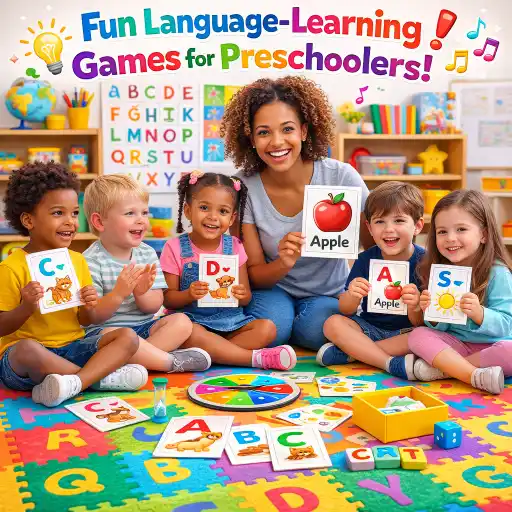
These short, repeatable games work in centers, circle time, or transitions. Each idea is easy to set up and fun for children.
- 🎲 Roll & Rhyme: Roll a die and find a picture that rhymes. Great for rhyming practice and quick to prep (see a sample rhyming game like Roll & Rhyme).
- 📚 Story Stones: Use stones or picture cards. Numbered steps:
- Show 1–3 stones.
- Child tells one sentence for each stone.
- 👐 Fingerplay & Nursery Rhymes: Short songs like 'Itsy Bitsy Spider' build sound patterns and memory. See nursery rhyme ideas at Nursery Rhyme Activities.
- ✋ Sign-and-Say: Add basic sign language for key words so nonverbal or shy children can join. Try sign games from Sign Language Activities. You can also use activities and family engagement ideas from our article on International Day of Sign Languages to highlight sign language and cultural diversity in your classroom.
- 🔎 Word Hunts in Centers: Hide letter or picture cards in sensory bins for quick, noisy play that teaches sounds and words (How can play help preschoolers learn to read and write?).
Why these games work: they are short, repeatable, and tied to real play so children practice language in meaningful moments (Playful Learning).
How do I run short group games that build phonological awareness?
- 🕵️♀️ Rhyme Race (3–5 minutes): Say a word; ask children to touch a picture that rhymes. Quick turns keep attention.
- 👏 Syllable Stomp (2–4 minutes): Say a child’s name and stomp syllables together (Da-vid = 2 stomps). Repeat with snacks or toys. This builds sound chunks (Phonological Awareness guide).
- 🎶 Sound Basket (5 minutes): Pull an item and name its first sound. Children say other items that start the same way. Use real objects for richer talk (Boosting Language Through Play).
- 📦 Letter Sensory Bin: Hide plastic letters; child finds one, names the sound, and makes the sound in a sentence. Rotate letters weekly to scaffold learning.
Tips for success:
- 1) Keep games under 5 minutes for group wide focus.
- 2) Repeat favorites — repetition helps memory.
- 3) Use gestures, props, and movement so games are multisensory and inclusive .
How can I include diverse learners and families in language games?
- 📣 Invite family words: Ask families for 2–3 favorite words or songs in the home language and add them to your circle time list. This builds bridges between home and classroom (Talk, Read, Sing).
- 🧩 Offer multiple ways to respond: speaking, signing, pointing, drawing. Use basic sign language and visuals so every child can join (Sign Language Activities).
- 🌍 Use diverse books and props: Include books that show different cultures and families and props that reflect children’s lives; this helps children connect words to their world (Build Early Literacy).
- 🤝 Pairing and scaffolds: Pair children for peer modeling, and give one simple prompt per child so they can succeed. Slow your questions and give wait time for answers.
- 📬 Family handout (one step): Send a simple home activity — read a short page, sing one rhyme, or play a 2-minute sound game. Family involvement boosts outcomes.
State rules and funding differ — state requirements vary - check your state licensing agency. Small changes make big differences for inclusion and family trust.
How do I track learning and avoid common mistakes?
Track growth with short, practical methods and avoid a few frequent pitfalls.
- 📷 Collect quick samples: Photo of a child acting out a story, a snapshot of pretend writing, or a short audio clip of a child rhyming. These make good notes for conferences.
- 📝 Use brief observation notes: 1–2 lines per week: words used, attempts at sounds, and favorite games. Keep this in the child’s folder.
- ✅ Simple checklist: Letter recognition, rhyme attempt, 1–3 word sentence, and story retell (first, next, last). Check monthly.
Common mistakes and fixes:
- ❌ Mistake: Too long or adult-led activities. ✅ Fix: Keep games short and let children decide during play (Playful Learning).
- ❌ Mistake: Teaching too many new words at once. ✅ Fix: Introduce 1–3 new words and reuse them in play and routines (Everyday Literacy).
- ❌ Mistake: No family connection. ✅ Fix: Send one simple activity home and ask for words from families.
FAQ (short answers):
- Q: How long should a language game be? A: 2–7 minutes for whole group; 5–15 minutes in small groups.
- Q: What if a child is shy? A: Offer signing or a drawing response and pair with a peer.
- Q: Need low-cost materials? A: Use recycled boxes, pictures, and household items — no fancy supplies needed.
- Q: Where to learn more? A: Check Language Development in Early Childhood
 Buy Now $16.00 for deeper training.
Summary
Start small: pick one short game this week, repeat it, and add family words. Use simple tracking and celebrate small wins. Playful, short language games build early #language, #vocabulary, and #phonics in ways that feel natural and fun. For more tools and printable activities, explore resources like Boosting Language Through Play and course offerings on ChildCareEd. You’re already doing the most important work: talking, playing, and listening with children every day.
Inclusive language play honors children’s cultures, home languages, and communication needs. Use these numbered steps to plan inclusive play.Phonological awareness (hearing and playing with sounds) is a top early reading skill. Use small, active games that let children move and talk.- CDA Home Visitor Subject Area 3 Part 3 Birth to 5
- 45 Hour Preschool Methods and Materials
- Language and Literacy Foundations in Pre-K
- Working Together: Teachers & Preschoolers
- CDA Bridge Bundle: Family Child Care without Portfolio Review
- CDA Bridge Bundle: Preschool without Portfolio Review
- Texas Director Credential
- Moving About the Classroom: Effective Transitions for Everyday
- Phonological Awareness
- Language and Literacy Preschool Curriculum
- Mathematical Skill Development
- 🎉STEM-sational Fun: How Can You Spark Preschoolers’ Curiosity with Engaging STEM Activities? 🔬🧪🔢
- What are play-based learning approaches?
- What are fun language-learning games preschool teachers can use?
- How can music and movement strengthen early childhood programs in North Dakota?
- Circle Time Songs, Games, and Questions for Kids
- Canciones, juegos y preguntas de círculo para niños
- Sign Language Activities That Help Children Communicate
- Teaching Sign Language Through Songs, Games, and Play
- How Can I Use Fun Math Activities for Preschoolers Every Day?
- Classroom Resources to Help Child Care Teachers Save Time
- How can school-age daycare use outdoor activities to teach, play, and stay safe?
- What are fun, practical school-age daycare activity ideas for teachers?
- Be a Kid Again Day: Play-Based Learning Ideas for Teachers
- What Can Child Care Providers Learn from Children's Favorite Games?
- How Can Fun Bingo Games Teach Colors, Shapes, and Animals to Preschoolers?
- How Much Structured Learning Do Preschoolers Really Need?
- How Can Teachers Support Children Who Become Upset When They Lose a Game?
