Planning a preschool program can feel big, but you can do it step by step. This guide helps directors and child care providers design a practical, flexible, and joyful #preschool program that supports children's #development. You will find easy steps, checklists, links to helpful ChildCareEd articles on preschool curriculum, and ideas you can use today.
Why it matters:
1) Young children build learning habits early. A clear plan gives children routines and goals that help them feel safe and curious. 2) Good planning supports staff, helps families see progress, and keeps your program focused on real learning. For tools and templates look at the Head Start weekly lesson plan template Buy Now $0.00 and the ChildCareEd courses like 45-Hour Preschool Curriculum  Buy Now
 $399.00$275.00 and Lesson Planning for Preschoolers Buy Now $24.00.
What are the core parts of a strong preschool curriculum?
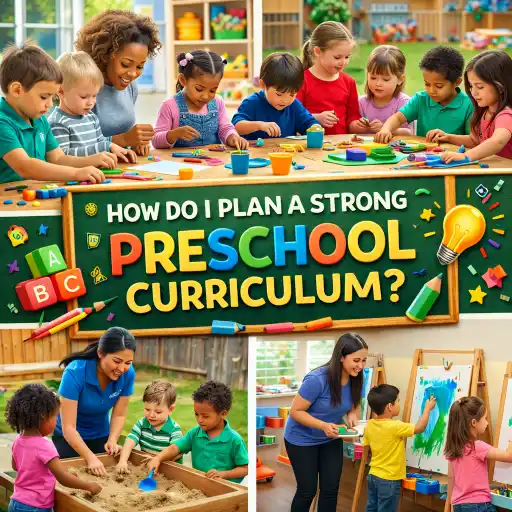
A solid curriculum is a roadmap. It tells you what children should learn and how you will teach and check progress. For a comprehensive curriculum guide that covers goals, learning domains, and program-wide planning, see Curriculum. Key parts include:
- Goals and standards — What do children need to learn? Link goals to early learning standards and your program values. See the ChildCareEd overview of types of preschool curriculum for examples.
- Daily routines and schedule — Predictable times for circle, centers, outdoor play, meals, and rest help children feel secure.
- Lesson plans and activities — Short, clear plans for group and small-group work. Use templates like the Head Start template Buy Now $0.00.
- Learning environment — Centers for blocks, art, sensory play, literacy, and dramatic play. The environment should invite choices and show learning materials. Include a math or number center and try hands-on arithmetic activities that teach addition and subtraction through creative play, such as this preschool arithmetic activity.
- Assessment and documentation — Simple notes, photos, and work samples tell you what children can do and what to teach next.
Each part should be flexible. A quality plan is a guide, not a script. ChildCareEd explains how curriculum must stay responsive to real children in Preschool curriculum.
How do I plan lessons that are developmentally appropriate and flexible?
Make lesson planning simple and useful. Follow these steps to write plans that match children's ages, strengths, and interests.
- 🔍 Observe first. Spend a short time watching children at play to find interests and needs. Notes guide your goals.
- 🎯 Choose 1–2 clear learning goals. Keep goals small (e.g., practice counting to 10, use scissors safely, take turns).
- 📋 List materials and set-up. Prepare centers and any visuals before children arrive.
- 🧩 Offer layered choices. Plan one main activity and two easier/harder options so all children can join.
- 📸 Assess simply. Take one photo and one sentence note after the activity. Use that to plan next steps.
Use developmentally appropriate practice (DAP). DAP means meeting children where they are, then giving a small challenge they can manage. For practical tips and templates see the ChildCareEd piece How can I create developmentally appropriate lesson plans? and the course Lesson Planning for Preschoolers Buy Now $24.00.
Quick checklist for a lesson plan:
- Theme and 1–2 goals
- Materials and set-up
- Step-by-step activity with timing
- Questions to ask (open-ended)
- Space for assessment notes
How can I include play, projects, and emergent learning while meeting standards?
Play and projects are powerful learning tools. You can balance child-led work with program standards by following simple steps.
- 📚 Start with a theme or question, but stay open. Themes (seasons, animals, plants) let you connect math, language, art, and science.
- 🎨 Make room for play each day. Free play shows you children’s interests and gives you ideas for projects. ChildCareEd’s article Play, Explore, Grow has many hands-on ideas.
- 🔬 Use the Project Approach for deep learning. Start with children’s questions, gather materials, explore, document, and share results. Read teacher findings on the project approach at ECRP.
- 🌿 Try emergent curriculum moves: observe, note interests, and add activities that follow children’s lead. See a practical how-to at No Time for Flash Cards.
- ✅ Map play and projects to standards. Keep a short note in each lesson plan that shows which early learning standard or goal you address.
Remember: state requirements vary - check your state licensing agency. Balancing child-led learning with standards helps children stay engaged while meeting program expectations. For more support, ChildCareEd offers curriculum courses like the 45-Hour Preschool Curriculum Buy Now $399.00$275.00 to help staff align play and learning goals.
How do I assess, reflect, and improve my curriculum over time?
Assessment in preschool is mainly watching and recording. Keep it simple and regular so your curriculum grows with the children.
- 📸 Document: Take short notes, a photo, or a child work sample each week. Use a small binder or digital folder.
- 📝 Track progress with a 1–2 line checklist: engaged? needed help? ready for more? Tools and ideas for assessments are listed at Pearson Early Childhood.
- 🔁 Reflect weekly with staff: What worked? What did children love? What will we repeat or change?
- 📣 Share quick notes with families. One sentence about a child’s success helps build partnerships and consistency at home.
- 🎓 Keep learning: use professional development to refresh ideas. See ChildCareEd courses like 45-Hour Preschool Curriculum Buy Now
$399.00$275.00 and Lesson Planning for Preschoolers Buy Now $24.00.
Common mistakes and how to avoid them:
- 😕 Overplanning — Keep plans short and flexible. Focus on 1–2 goals.
- 😴 One-style teaching — Mix songs, movement, art, and play for different learners.
- 📋 Skipping observation — Set a daily 10-minute watch time to inform plans.
- 📱 Relying on screens — Use tech sparingly as a support, not the focus.
Final practical steps you can take this week:
- Pick one theme for 2–3 weeks and plan books, art, and a project around it.
- Introduce simple emotion visuals in circle time to support social learning.
- Refresh one learning center with new materials tied to your theme.
- Observe children for 10 minutes each day and note one idea for next week.
For templates, training, and more tools, visit ChildCareEd's resources at Resources and course pages like 45-Hour Preschool Curriculum Buy Now $399.00$275.00.
Summary:
- Plan with clear goals, simple routines, and flexible activities.
- Use short lesson plans that include layered choices so all children can join.
- Blend play, projects, and emergent moments with standards and documentation.
- Assess with quick notes and photos, reflect weekly, and adjust.
Your next small step: pick one idea above and try it tomorrow. Small changes make big differences in your #classroom and in how your #children learn. If you want further training, consider ChildCareEd courses like Lesson Planning for Preschoolers Buy Now $24.00 or the 45-Hour Preschool Curriculum Buy Now $399.00$275.00. Good planning helps teachers and children thrive.
- 45 Hour Child Growth and Development
- CDA Preschool Credential with Portfolio Review
- 45 Hour Preschool Methods and Materials
- Birth to Five CDA Credential with Portfolio Review
- CDA Bridge Bundle: Preschool
- CDA Bridge Bundle: Family Child Care without Portfolio Review
- CDA Bridge Bundle: Infant/Toddler without Portfolio Review
- CDA Bridge Bundle: Preschool without Portfolio Review
- Texas Director Credential
- What you need to be a Preschool Teacher in Child Care
- The Essential Guide to Preschool Curriculum
- Play, Explore, Grow: Fresh Curriculum Ideas to Spark Joy in Your Preschool or Daycare
- 👶 ¿Cuáles son las proporciones y grupos requeridos en Dakota del Norte? 🏫
- Early Childhood Education in Texas
- Texas Preschool Lesson Planning: Simple Daily Schedules That Work
- Recursos en Español sobre el Sueño Seguro del Bebé
- Curso de Comunicación de 9 Horas de Maryland
- Should Preschools Use Worksheets?
- Capacitación en Salud y Seguridad Preventiva en Línea para Proveedores de Cuidado Infantil
- Lista para Abrir una Guardería en Casa en Virginia: Cómo Empezar
- Lista para Abrir una Guardería en Casa en Carolina del Norte: Cómo Empezar
- Lista para Guardería en Casa en Illinois: Cómo Iniciar una Guardería en el Hogar
- Lista para Guardería en Casa en Texas: Cómo Iniciar una Guardería en el Hogar
- Cómo Ser Maestra de Preescolar en Dakota del Norte
- Cómo Ser Maestra de Preescolar en Illinois
- Cómo simplificar la capacitación para sus empleados de daycare
- Preschool Curriculum Types: Play-Based, Montessori, Reggio, and More
- What Do I Need to Become a Pre-K Teacher? 7 Things to Have Ready Before You Apply
- How Can Child Care Providers Build a Strong Preschool Curriculum?
