Active listening helps teachers and directors build trust, calm the room, and teach social skills. This short guide shows simple steps you can use today. You will see why #listening matters, practical steps for teachers, ways to teach kids to listen, and how to bring families and staff together. Links offer extra tools and trainings for busy programs.
What is active listening and why does it matter?
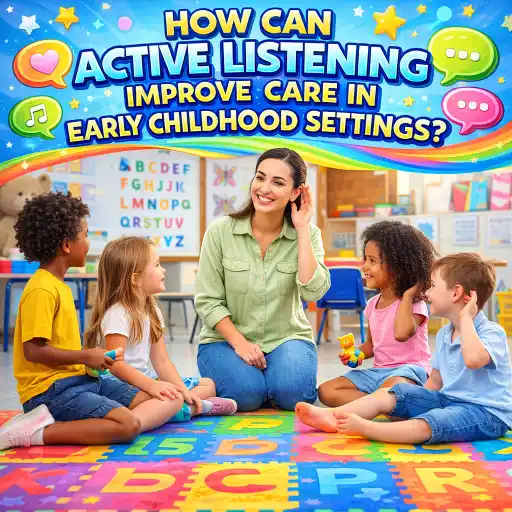
1. Active listening means giving a child your full attention. You stop what you are doing, make eye contact, get down to their level, and reflect back what you heard. This idea is explained clearly by the CDC tips for active listening.
2. Why it matters:
- Children feel safe when adults listen. Safe kids learn more and take part in class.
- Listening helps children learn words and feelings. When you repeat their words, you add new words for them to use.
- Strong teacher-child bonds lower behavior problems and build social skills. See tips at CSEFEL on positive relationships.
3. Quick proof: programs that train adults in listening and #communication see better child behavior and stronger family trust. For practical training, check Listening and Communicating on ChildCareEd.
Use these simple habits every day: pause, look, repeat, and ask one short question. These small moves are powerful for the #children in your care.
How can we practice active listening with young children?
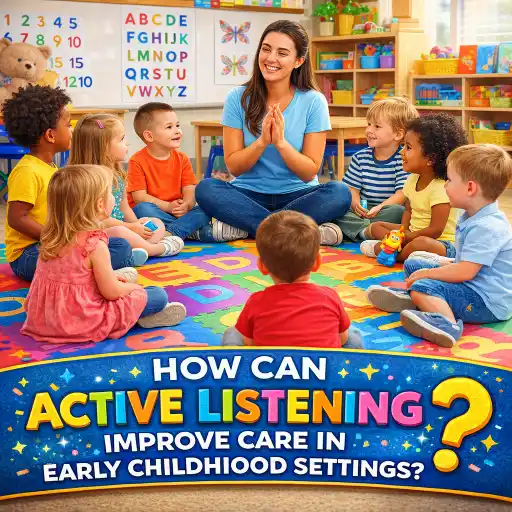
1. Four easy steps to practice right now (short and repeatable):
- 😊 Get down: Bend or sit so you are eye level with the child.
- 🧭 Pause and look: Stop other work, put away papers, and give your attention.
- 🔁 Reflect: Repeat back what you heard. Example: Child: "Truck!" Adult: "You want the red truck?"
- ❓Ask one small question: "What does the truck do?" Give wait time (count to five).
2. Use simple phrases that teach listening. ChildCareEd offers a list of short, kind phrases that help children follow directions and learn to listen. See Teaching children to listen: simple phrases that work.
3. Try quick classroom routines that build #caregivers and children skills: a daily 2-minute "listening game," a circle time listening job, or a partner drawing game where one child describes and the other draws. These games practice paying attention and following steps. Games ideas like this are used in many classrooms and work well for children learning English too.
4. Track progress: note one win each day for each child and share it with families. Small wins add up.
How do we teach listening skills and avoid common mistakes?
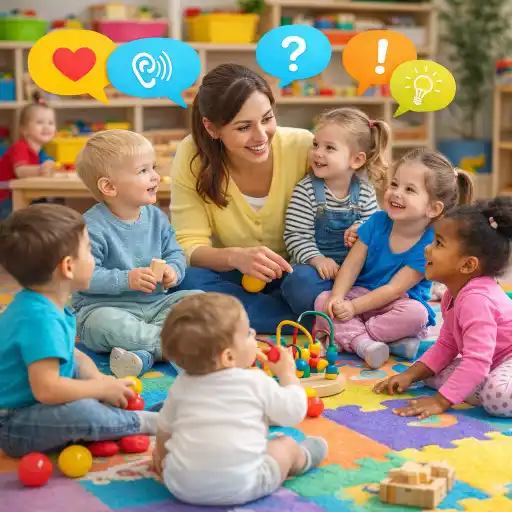
1. Teach, model, and praise. Children learn by watching adults. Use short lessons and role play. Use the SOLER ideas (Sit square, Open, Lean in, Eye contact, Relaxed) so kids see what listening looks like.
2. Common mistakes and how to avoid them:
- ⚠️ Mistake: Giving directions with too many steps. Fix: Break directions into 1 step at a time ("First pick up one block.").
- ⚠️ Mistake: Ignoring a child who needs help switching activities. Fix: Give a 2-minute warning and a simple phrase: "First clean up, then story."
- ⚠️ Mistake: Only calling families for problems. Fix: Share small positives often so families trust you.
- ⚠️ Mistake: Talking while a child is upset. Fix: Use silence, sit close, and reflect feelings first ("You seem sad"). The CDC Watch Me! module shows how to talk with families about development and use listening skills: Watch Me! Module 4.
3. Teach listening with routines and jobs. Simple daily jobs (passing out cups, snack helper) create many chances for peer talk and listening. CSEFEL explains how routines can boost peer interaction: Using classroom activities & routines.
4. Make supports for children who need extra help: visuals, gestures, one-step directions, and extra wait time. Use ChildCareEd resources like the Open Ears course and checklists for listening skills: Open Ears resources.
How do we involve families and staff so listening stays strong?
1. Work as a team. Share the same short phrases with staff and families so children hear the same words everywhere. ChildCareEd shows easy steps for staff training and family communication.
2. Simple family steps:
- 📣 Send one quick note each day: mood, nap, one listening win.
- 🤝 Invite families to try one phrase at home: "Eyes on me."
- 📆 Offer one short demo at pickup: show 2 steps and a praise line.
3. Staff supports to keep listening strong:
- 🧠 Do a 5-minute morning huddle to name one listening goal for the day.
- 📚 Use role-play in staff meetings to practice hard conversations with families and each other. ChildCareEd offers training like the 9-Hour Communication Course.
- 📝 Document patterns, not single moments. If a child shows repeated trouble, note examples and next steps and share with the family.
4. Remember: state requirements vary - check your state licensing agency when you change routines, screen a child, or make referrals.
5. FAQ (short answers):
- Q: When should I screen a child for communication concerns? A: If trouble lasts weeks and affects play, eating, or sleep. Use a checklist and consult families. See ChildCareEd resources for screening tools.
- Q: How long to spend on a listening lesson? A: 2–5 minutes often works best for young children.
- Q: What if a family resists a referral? A: Listen, share observations, offer options, and follow up with support.
For more tools and printable checklists, see ChildCareEd Listening and Communicating and the Open Ears resources. Small, steady steps from all adults make big changes for the #children you care for and for the whole program.
Conclusion
1. Practice the four quick steps: get down, pause, reflect, and ask one question.
2. Use short phrases, daily jobs, and games to teach listening.
3. Train staff, share wins with #families, and document patterns. For ready-to-use courses and free resources, visit ChildCareEd: Open Ears & resources. Your calm attention and simple words build trust, help children learn words and feelings, and make the classroom a kinder, safer place.
- 45 Hour Child Growth and Development
- Professional Presence in Early Childhood
- 45 Hour Preschool Methods and Materials
- TEAM: Together Everyone Achieves More
- Open Ears: Listening in Child Care
- Texas Director Credential
- CDA: Communication: Keep It Simple
- A Guide to Effective Communication
- Equity-Centered Communication in ECE
- Having a Heart-to-Heart
- The Power of International Sign Language in Early Childhood Education
- CDA Certification en Español: Recursos y Consejos para Educadores Bilingües
- Cómo Trabajar en el Cuidado Infantil en Carolina del Norte: Requisitos y Pasos
- Can simple indoor movement games teach listening and cooperation to preschoolers in Oklahoma?
- How can active listening improve care in early childhood settings?
- How can music and movement strengthen early childhood programs in North Dakota?
- How Can Child Care Providers Help Children Develop Memory and Attention Skills?
- How Can Your Program Effectively Support Autistic Children?
- Talk, Listen, Connect: Build Stronger Child Care Relationships in 9 Hours
- Want to Become a Daycare Assistant? Start With These Essential Training Skills
- After School Activities for Elementary Kids Who Finish Homework Early
- How Can Child Care Providers Strengthen Young Children’s Listening Skills?
- How Can Child Care Programs Prevent Common Playground Injuries?
- Why Is Outdoor Play Important in Early Childhood Education?
- How Can Preschoolers Learn to Make Safer Classroom Decisions?
- What Can Unfinished Enrollment Applications Teach Child Care Programs?
- How Can You Maintain Active Supervision During Indoor Play?
