Running a child care program in #Washington means balancing care, teaching, and paperwork. This article gives si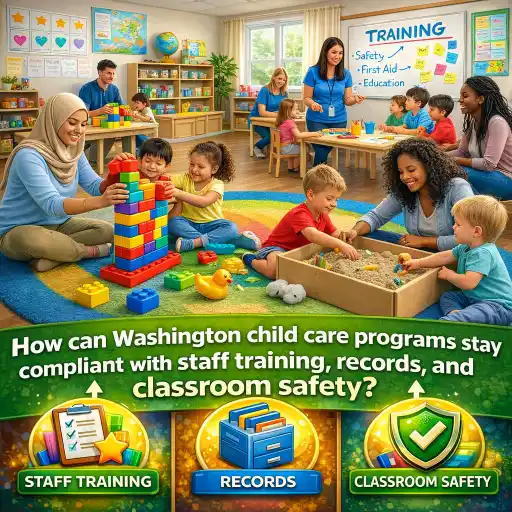 mple, practical steps for directors and providers to meet training rules, keep clear #records, and keep classrooms #safe. State requirements vary - check your state licensing agency.
Why it matters:
1) Children are safer when staff know what to do in an emergency. See why CPR and first aid matter at ChildCareEd — CPR and First Aid. For program-level planning to ensure staff are certified and scheduled before term starts, see Getting Ready for the New School Year: Prioritizing Safety with First Aid and CPR Training.
2) Good records make licensing visits calm and fast. Tools like the ChildCareEd STARS guide help you pick approved training and log MERIT hours.
1) What training does staff in Washington need right away?
Quick answer: new hires need orientation plus health & safety training (including CPR/First Aid) and mandated reporter training. Use these steps:
- 👩🏫 Within 0–14 days: complete basic health & safety modules and mandated reporter training. ChildCareEd explains required topics in Basic Health & Safety.
- 🩺 Within 30–90 days: get CPR/First Aid certification from a recognized provider (for example, the Red Cross blended course) and finish any role-specific STARS courses listed at Childcare Courses in Washington. You can also consider the Spooktacular CPR Safety course for a timely, Halloween-themed CPR and First Aid certification option that emphasizes pediatric skills.
- 🔁 Keep re-certifications current: set reminders for CPR, background checks, and yearly refreshers.
- 📌 Tip: Prioritize training that will be recorded in MERIT; the ChildCareEd guide on choosing STARS courses helps you confirm this: Best Online STARS Training.
Why it works: these steps match what licensors check—health & safety, CPR, mandated reporting, and approved course records. state requirements vary - check your state licensing agency.
2) How should we organize and store staff training records so they pass audits?
Short answer: simple, consistent systems. Use both paper and digital copies and a one-page tracker for each person. Try this 6-step system:
- 📁 Create a staff file for each person: hire form, background check, health forms, certificates.
- 💾 Save digital backups: scan certificates and put them in a secure drive. ChildCareEd suggests central record systems in How to Prepare for a Licensing Visit.
- 📝 Keep a one-page tracker per staff with: course name, date, hours, expiration, and MERIT or STARS status.
- 🔍 Verify MERIT reporting: if the trainer reports directly to MERIT, note the MERIT entry date; if not, attach the certificate for manual upload. See STARS/MERIT info at ChildCareEd STARS guide.
- 📅 Set calendar alerts: 90, 30, and 7 days before expirations.
- 🗂️ Keep a program training binder with group reports, drill logs, and the director's dashboard or admin view for quick access—learn more at ChildCareEd Group Admin.
Common mistakes to avoid:
- ⚠️ Buying courses without checking state acceptance — always confirm STARS/DCYF approval.
- 📭 Losing certificates — scan and save immediately.
- ⏰ Forgetting renewals — use shared calendar alerts.
3) What practical steps keep classrooms safe and ready for inspections?
Short answer: Use checklists, practice drills, and clear classroom rules. Follow this 7-step checklist:
- 🧯 Emergency plans: post-evacuation maps, reunification points, and staff roles. ChildCareEd offers free emergency plan templates at Emergency Preparedness.
- 🧼 Cleaning & disinfecting: follow CDC guidance for ECE settings to clean, sanitize, and disinfect appropriately—see CDC cleaning guidance.
- 👀 Active supervision: post duty charts and position/zoning rules so every adult knows who watches which children.
- ⚠️ Playground & water safety: follow the ChildCareEd playground and water safety guide: Playground & Water Safety Buy Now $0.00.
- 🧴 Health checks: keep illness exclusion and medication logs visible and follow safe medication templates from ChildCareEd resources.
- 🔁 Drills: run drills regularly, document date/time/notes, and debrief to improve the plan—see drill practices at Emergency Drills.
- 📣 Family communication: share your emergency and illness policies in the family handbook so parents know the plan.
Why it matters: inspectors look for visible plans, clean spaces, and practiced staff. Simple, repeated practice keeps children calm and staff confident.
4) How do we prepare staff and the program for licensing visits and audits?
Short answer: build systems that make every day inspection-ready. Follow these steps:
- 📆 Maintain a licensing calendar with renewal dates, inspection windows, and training expirations. Put reminders at 90/30/7 days.
- 🔎 Do weekly quick audits: check staff files, emergency postings, meds log, and ratio charts.
- 👥 Coach staff: short pre-visit meetings to remind about routines—don’t change routines just for the visit. See tips at Preparing for Licensing Visits.
- 🧾 Keep a licensing binder: past inspection notes, drill logs, staff training trackers, and building/health certificates.
- 💻 Use admin tools: dashboards that show everyone’s training status help directors answer questions quickly—try ChildCareEd Group Admin: Group Admin.
- ✅ Practice a director walk-through a few days before inspection to fix small items (light bulbs, postings, attendance sheets).
Common pitfalls:
- ❌ Staging a "perfect" day — licensors want to see normal routines.
- ❌ Missing files — have duplicates: one paper binder and one secure digital copy.
Conclusion and FAQ
Keep your plan simple: train staff early, track #training and #records carefully, and practice safety steps often. Use trusted ChildCareEd resources for templates and Washington-specific courses: ChildCareEd and the Washington course list at Childcare Courses in Washington.
FAQ:
- Q: Do online courses count for Washington STARS? A: Some do—verify DCYF/STARS approval and MERIT recording first. See ChildCareEd STARS guide.
- Q: How long keep training records? A: Follow state rules, but keep current year files handy and backups for several years; check local licensing guidance.
- Q: What if a staff member’s CPR expires during the year? A: Temporarily reassign duties if your policy requires current certification, and schedule re-certification ASAP.
- Q: Who reports to MERIT? A: Approved trainers often upload completions; if not, save the certificate for manual entry—read more at the ChildCareEd STARS guide.
You’re not alone. Take small steps: set a calendar, pick 1–2 reliable training providers, and make a shared folder for certificates. That steady work keeps children safer and makes licensing visits easier. #staff #safety
- CDA Certification en Español: Recursos y Consejos para Educadores Bilingües
- Recursos en Español sobre el Sueño Seguro del Bebé
- Regulaciones de Cuidado Infantil en Maryland para Centros y Hogares de Cuidado Infantil Familiar
- Proporciones de Cuidado Infantil y Tamaños de Grupo por Edad en Maryland (Guía Rápida para Centros y Hogares)
- Proporciones de Cuidado Infantil y Tamaños de Grupo por Edad en Nueva Jersey (Guía Rápida para Centros y Hogares)
- Proporciones de Cuidado Infantil y Tamaños de Grupo por Edad en Virginia (Guía Rápida para Centros y Hogares)
- What do Washington child care licensing requirements mean for early childhood educators?
- How can Washington child care programs stay compliant with staff training, records, and classroom safety?
- How do I start a daycare in Washington, D.C. as a new provider?
- What new child care news in DC should providers know and how can training help?
- How Can Washington Early Childhood Educators Practice Professionalism with Children, Families, and Staff?
- How can Washington classrooms be more inclusive using nature, play, and community?
- How can Washington early childhood programs stay safe with CPR and AEDs?
- How Can Washington Child Care Providers Stay Stable When Early Learning Budgets Are Delayed?
- La mejor manera de hacer seguimiento a la capacitación de su equipo de daycare How to Organize Staff Training for Your Child Care Center Cómo organizar la capacitación del personal para su centro de cuidado infantil
- Cómo simplificar la capacitación para sus empleados de daycare
- How can Washington providers use state training dollars to build a stronger early learning team?
- Washington Daycare Center Standards: What Providers Need to Know
- How to Become a Childcare Worker in Washington: Requirements and Steps
- Free Online Child Care Training in Washington: Earn a Certificate
