Many toddlers light up outdoors. Nature walks give little ones big chances to move, learn words, and calm down. This article helps child care providers and directors plan safe, simple nature walks in #Minnesota that meet learning goals for #toddlers and honor #safety and #supervision. State requirements vary - check your state licensing agency. Below you will find practical steps, safety checks, easy activity ideas, and ways to train staff and involve families.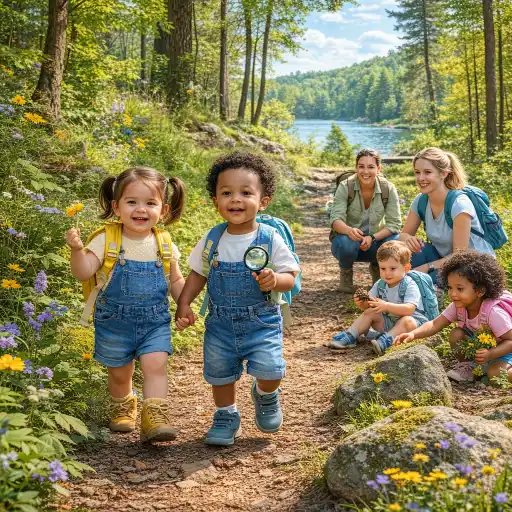
1) Why should we take toddlers on nature walks in Minnesota?
- Outdoor time helps bodies and brains. Short walks and outdoor play boost gross motor skills and attention, as explained in ChildCareEd’s overview of why outdoor learning matters: Why Does Outdoor Learning for Toddlers and Preschoolers Matter?.
- Nature lowers stress and supports social play. The Minnesota DNR encourages teaching outside because being outdoors creates multi-sensory learning moments: How to teach outside.
- Sensory learning grows quickly in Minnesota’s seasons. ChildCareEd’s seasonal ideas show how spring, summer, fall, and winter each give different hands-on chances: How can we use nature-based learning through Minnesota's outdoor seasons?.
Practical benefits you will see:
- Children use more movement words and new vocabulary.
- Short outdoor blocks often improve behavior after transitions.
- Children practice observation and early science skills.
2) How do we keep toddlers safe, healthy, and comfortable on Minnesota walks?
- 📝 Before you go: do a hazard scan and weather check. ChildCareEd’s guide to outdoor hazards lists common risks to watch for: Creating Safe Outdoor Play Environments for Children.
- 👀 Supervision plan: use active supervision—scan, count, and position staff so there are no blind spots. See active supervision strategies at ChildCareEd: Active Supervision.
- 🧥 Clothing & comfort: dress in layers, bring spare clothes, use hats and sunscreen, and carry water. Minnesota weather changes quickly—state guidance on physical activity recommends checking wind chill and heat limits: MN Dept. of Health: Early Care and Education Physical Activity.
- 🦟 Tick & insect checks: use EPA‑registered repellents on clothing or permethrin-treated gear (not on skin), and do daily tick checks. See Minnesota’s tick prevention tips: Preventing Tickborne Disease and CDC guidance: Preventing Tick Bites.
- 🩺 Health & permissions: collect parent permissions, note medical needs, and carry a first-aid kit and phone.
Keep directions short and practiced: 1) hold hands or rope, 2) stay with your buddy, 3) stop for listening. Repeat rules often so toddlers remember.
3) What developmentally appropriate activities work for toddlers on walks?
- 🍃 Scavenger picture hunt (3 items): give each child a laminated picture card to find things like a leaf, smooth rock, or flower. Use one goal per walk so toddlers stay calm.
- 🔎 Senses stop: pause and do a 2‑minute listening or smelling game. Ask children to show one finger when they hear a bird or smell a flower. Caregivers can model and prompt listening through simple prompts and reflections — see Listening and Communicating for active-listening techniques to scaffold toddlers' responses.
- 🌱 Touch table: collect safe, small natural items and let children explore at a table with magnifiers—this idea links to sensory board lessons like the Nature Sensory Board (Nature Sensory Board).
- 🎨 Nature art: make sticky bracelets (duct tape sticky-side-out) and add small bits of nature, or do leaf rubbings to build vocabulary and fine motor skills.
- 🏃 Movement breaks: play follow‑the‑leader, hop to a tree, count steps between two points to blend gross motor and math.
Adaptations for all children:
- Use visuals and gestures for children with language delays.
- Give quiet corners or a short indoor break for children who need less stimulation.
- Rotate materials to match interests and reduce overstimulation.
For seasonal ideas, see ChildCareEd’s Minnesota seasons article: How can we use nature-based learning through Minnesota's outdoor seasons?.
4) How can programs train staff, include families, and avoid common mistakes?
Planning, training, and clear family communication make walks steady and joyful.
- 👩🏫 Staff training and roles:
- Assign roles: head counter, zone supervisor, and floater.
- Train on active supervision and hazard mapping. ChildCareEd offers free resources and courses on supervision and outdoor classrooms: Active Supervision and seasonal outdoor learning.
- 👀 Outdoor safety and supervision: To build staff confidence in managing hazards and maintaining active supervision on walks, ChildCareEd's Everyday Safety: Creating Healthy Environments
 Buy Now $55.00 is a 6-hour online course covering how to anticipate risks, set up safe environments, and maintain consistent health and safety routines — a strong foundation for the pre-walk checklists and supervision plans described in this guide.
 - 🌿 Natural outdoor classroom: For staff who want to strengthen how they plan and facilitate outdoor learning experiences, ChildCareEd's Creating the Natural Outdoor Classroom Buy Now $16.00 is a 2-hour online course covering how to design engaging nature-based learning opportunities that are safe, developmentally appropriate, and easy to repeat — directly supporting the nature walk activities and seasonal learning ideas outlined here. Programs interested in Montessori-aligned strategies for using nature and everyday materials to build independence, sensorial learning, and environmental awareness can consult our Focus on Nature and Real-World Experiences in Montessori Education article for practical guidance and examples.
- 📣 Family communication:
- Send short notes or photos after walks with one vocabulary word and a clothing reminder.
- Ask families to label layers and give permission for sunscreen or repellent as needed.
- ⚠️ Common mistakes and fixes:
- ❌ Forgetting a weather check. ✅ Fix: make weather check part of the morning routine.
- ❌ Skipping permission forms. ✅ Fix: collect forms in advance and confirm by phone.
- ❌ Overlong walks. ✅ Fix: keep walks 15–30 minutes for toddlers and set a single goal.
Use short staff huddles before each walk to confirm roles and checklists. State requirements vary - check your state licensing agency for ratio and outdoor rules.
Conclusion
Quick next steps you can use tomorrow:
- 📋 Plan one 15–20 minute walk with one learning goal (scavenger hunt or listening stop).
- 👀 Do a quick hazard and weather check; assign roles and pack a small kit (water, first-aid, spare clothes).
- 📣 Tell families what to send and share one photo and word after the walk.
Nature walks in Minnesota are low-cost, high-value learning moments. Start small, use clear routines, and lean on ChildCareEd and Minnesota resources for guidance: seasonal ideas, safety guidance, and MN DNR teaching outside. Enjoy watching toddlers grow through #nature, movement, and wonder.
Why it matters: Use a quick, repeatable safety routine before every walk. Follow active supervision and hazard checks so you can focus on learning. Pick one small learning goal for each walk. Short tasks keep toddlers focused and successful.- CDA Infants/Toddlers: Abuse and Neglect Reporting Requisites
- 45-Hour Infant and Toddler Curriculum
- CDA Infants/Toddlers: Brain Development and Gene Expression
- Texas Director Credential
- CDA Infants/Toddlers: Health and Safety
- CDA Infants/Toddlers: Stages of Development
- CDA Infants/Toddlers: Classroom Setup
- CDA Infants/Toddlers: Smart Nutrition & Feeding
- CDA Certification en Español: Recursos y Consejos para Educadores Bilingües
- Recursos en Español sobre el Sueño Seguro del Bebé
- ¿Cuáles son los pasos, requisitos y opciones en línea para la certificación de 90 horas en cuidado de Infantes/Toddlers en Maryland?
- 10 Ejemplos de Cómo la Cultura Influye en el Desarrollo Infantil
- Capacitación en Salud y Seguridad Preventiva en Línea para Proveedores de Cuidado Infantil
- Normas de Licenciamiento de Cuidado Infantil en Virginia para Centros Diurnos Infantiles y Hogares Diurnos Familiares
- Proporciones de Cuidado Infantil y Tamaños de Grupo por Edad en Maryland (Guía Rápida para Centros y Hogares)
- Proporciones de Cuidado Infantil y Tamaños de Grupo por Edad en Virginia (Guía Rápida para Centros y Hogares)
- Horas de Capacitación Anual para Proveedores de Cuidado Infantil en Maryland
- Cómo Trabajar en el Cuidado Infantil en Carolina del Norte: Requisitos y Pasos
- Can Toddlers Do STEM in the Sandbox at Minnesota Daycares?
- How can we safely take toddlers on nature walks in Minnesota?
- Fall Sensory Activities for Toddlers and Preschoolers
- Celebrando la amistad en el cuidado infantil durante el Día de los Mejores Amigos
- Canciones, juegos y preguntas de círculo para niños
- Cómo simplificar la capacitación para sus empleados de daycare
- How can you turn summer days into learning moments at your Minnesota program?
- How can I build gross motor skills indoors and outdoors for the children in my program?
- How can childcare programs create high-quality outdoor classrooms and nature-based care?
- Reglas y regulaciones de guarderías en Minnesota 2026: Requisitos actuales y próximos cambios
