When a toddler asks for the same story, game, or block tower again, they may be practicing a skill, testing an idea, or finding comfort in something familiar. The All About My Toddler: Family Information Form Buy Now $1.49 can help you learn about favorite toys, routines, and comfort strategies at home, giving you context for the repetition you notice in care. The course The Best Promotion is Play Buy Now $35.00 can help you connect repeated play with development and plan responsive classroom experiences. Read on for ways to recognize what a child is exploring and support their interest in doing it again.
Why does repetition matter so much to toddlers?
To adults, repetition can feel like a loop with no new information. For toddlers, each return offers another chance to notice details, anticipate what comes next, and try a slightly different approach. The same tower may fall differently; the familiar song may invite a new gesture; a repeated phrase may become easier to say or understand. Repetition is active learning, not necessarily a sign that a child is stuck.
Research on learning describes how repeated experiences contribute to developing and refining skills. A study of children ages 6–12 found improvements in performance on motor and cognitive procedural tasks after repeated trials; although those participants were older than toddlers, the findings illustrate how practice can support skill acquisition. For toddlers, everyday play and routines provide meaningful, age-appropriate opportunities to practice movement, language, attention, and problem-solving.
Familiarity also supports emotional security. When a child knows a story or routine, they can use less effort figuring out what will happen and more attention engaging with it. Head Start guidance emphasizes that responsive relationships and environments help infants and toddlers feel secure and support learning in culturally and linguistically appropriate ways.
- Repeated attempts build coordination and persistence.
- Familiar words, songs, and books give children a low-pressure setting to participate.
- Predictable routines can help toddlers feel settled and ready to explore.
What looks like “again” to an adult can be a child’s way of saying, “I’m still figuring this out.”
What might a toddler be learning through repeated play?
Look closely at the action, not just how often it happens. A toddler who repeatedly drops a spoon may be exploring movement and cause and effect. A child who fills and empties containers may be investigating capacity, space, and control. Repeatedly lining up cars or carrying objects across the room can reflect sustained interest in position, order, or transporting.
Educators sometimes use the term play schemas for recurring patterns of exploration. Schemas are useful as observation lenses, not as diagnoses. Notice whether the child repeats an action with different materials, changes their strategy, adds words, or invites another person into the play. Those small shifts can reveal growing understanding even when the central activity stays the same. ChildCareEd describes these patterns and their educational value in its guide to repetitive play and play schemas.
- Trajectory: dropping, rolling, or pouring; exploring direction and cause and effect.
- Transporting: carrying or delivering objects; exploring movement and place.
- Enclosing or enveloping: covering, wrapping, or hiding; exploring boundaries and space.
- Connecting or rotating: joining pieces or spinning wheels; exploring how objects relate and move.
Use the pattern as a starting point for curiosity: “What changes when the cup is bigger?” or “Where are the cars going?” You do not need to turn every play episode into a lesson. Attentive observation helps you recognize what the child may be investigating and choose a respectful next step.
How can providers support repetition without taking over?
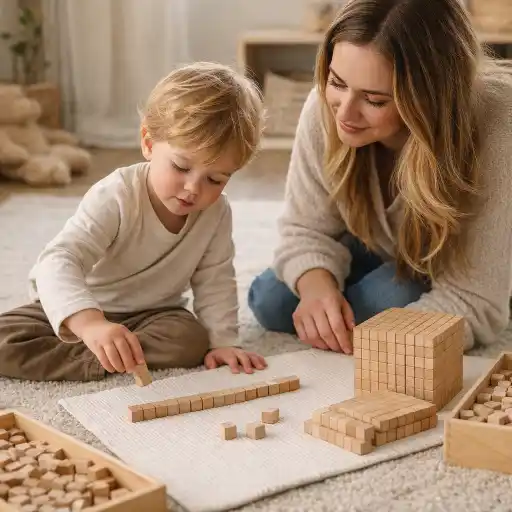
Start by allowing enough uninterrupted time for the child to repeat an activity, provided it is safe and does not prevent others from participating. Join the play only when your presence can add connection or possibility. A descriptive comment—“You rolled the ball down the ramp again”—can show attention without directing the child’s next move.
When the child seems ready, make one small change while preserving the original idea. Offer a ramp with another height, a container with a different opening, or a scarf to cover and uncover toys. Add a word or concept naturally: “That one rolled farther,” “The block is inside,” or “What do you think will happen?” Pause afterward; toddlers need time to act, process, and respond in their own way.
- Follow the child’s lead before offering a new material or question.
- Keep some familiar materials available while adding modest variation.
- Repeat a favorite book or song and invite movement, pointing, prediction, or a new sound.
- Offer accessible, age-appropriate materials and actively supervise, especially around small objects, water, or climbing.
- Make room for peers to watch or join, while respecting the child’s choice to continue independently.
🔁 Try changing just one feature at a time—such as the size, texture, or location of an object—so the child can compare outcomes without losing the thread of their investigation. If they ignore the invitation, step back; their response is useful information, not a failed activity.
What should educators observe and share with families?
Brief, objective notes can make repeated play easier to understand and support thoughtful planning. Record what you saw rather than labeling the child. For example: “During outdoor play, Leo rolled cars down the ramp several times, moved one car to a higher starting point, and said, ‘Fast!’” This captures the action, a change in strategy, and communication without assuming a motive.
Across several observations, look for changes in complexity, materials, communication, flexibility, or social participation. Does the toddler try a new way to reach the same result? Use a gesture or word to share the discovery? Continue the pattern in another area of the room? Share concise examples with families and invite their perspective; a familiar interest may also appear at home or carry meaning in a family routine.
Milestone information can offer context, but development varies from child to child. The CDC’s guidance for toddlers ages 1–2 and ages 2–3 describes broad developmental skills and ways adults can encourage exploration and communication. Use milestones as one source of information—not as a diagnosis or a substitute for conversation with families and qualified professionals.
Keep observations confidential and follow program procedures for documentation and family communication. State requirements vary - check your state licensing agency.
When might repeated behavior need closer attention?
Repetition by itself does not establish that a toddler has a developmental concern. Many children repeat actions, words, songs, or routines as part of typical learning and play. Consider the whole child and the broader context rather than judging one behavior in isolation.
Closer attention may be appropriate when a pattern is consistently associated with significant distress, creates a safety risk, severely limits participation in daily routines or social opportunities, or occurs alongside concerns such as loss of previously acquired skills or limited progress in communication and play. These observations are reasons to document and collaborate—not to label or diagnose. The CDC encourages caregivers with developmental concerns to discuss them with the child’s health care provider and seek appropriate screening guidance.
A supportive response can include:
- Writing down specific examples, contexts, and changes over time.
- Sharing strengths-based observations with the family and asking what they notice.
- Considering whether sensory, communication, cultural, or environmental factors may be relevant.
- Following program procedures and collaborating with families, specialists, or health professionals as appropriate.
For teams seeking more focused ideas for inclusive play, ChildCareEd’s Play with Purpose: Supporting Children with Autism  Buy Now
 $55.00$40.00 course addresses play-based approaches, communication, engagement, and sensory regulation. It can supplement individualized collaboration; it is not a diagnostic tool or a replacement for professional guidance.
Conclusion: How can we make “again” a meaningful opportunity?
A toddler’s request to do it again is often an invitation to practice, predict, explore, and feel secure. Repeated play can support developing movement, language, problem-solving, and confidence, while giving educators a meaningful view into children’s interests. The adult’s role is not to eliminate repetition, but to notice its purpose, keep play safe, and offer thoughtful extensions without taking control.
Observe specific actions over time, make small changes when they fit the child’s interest, and share concrete examples with families. When repetition is distressing, unsafe, highly restrictive, or accompanied by developmental concerns, document what you see and collaborate with families and appropriate professionals. With patient attention, “again” can become a valuable moment of connection and learning.
For further professional learning, consider these relevant English-language ChildCareEd courses:
- The Best Promotion is Play Buy Now $35.00 — explore the role of play in development and ways to support it in child care settings.
- Playful Spaces for Infants & Toddlers Buy Now $24.00 — consider materials and environments that encourage exploration and play.
- Baby Play: Planning Infant and Toddler Activities Buy Now $16.00 — connect age-appropriate activities with individual planning.
- Language Development in Early Childhood Buy Now $16.00 — strengthen everyday strategies for supporting communication.
- Play with Purpose: Supporting Children with Autism Buy Now
$55.00$40.00 — learn inclusive, play-based approaches for supporting engagement and communication.
- 45 Hour Child Growth and Development
- 45 Hour Infant and Toddler Methods and Materials
- Pediatric RSV First Aid & CPR/AED
- CDA Infant/Toddler Credential with Portfolio Review
- CDA Bridge Bundle: Infant/Toddler
- 45-Hour Infant and Toddler Curriculum
- CDA Infant/Toddler: Parent Relationships
- 45 hour Growth and Development Birth-age 12 ONLINE
- 😤💬 “What Should I Say to a Child Who Just Bit Someone?
- Reading Aloud in Child Care: Best Practices for Language Development
- Sensory play for infants: simple, safe setups with everyday items
- March Madness in Child Care: Simple Activities for Big Energy Days
- Earth Day Classroom Activities: Reuse, Recycle, and Have Fun
- Capacitación en Salud y Seguridad Preventiva en Línea para Proveedores de Cuidado Infantil
- Lista para Abrir una Guardería en Casa en Virginia: Cómo Empezar
- Capacitación Previa al Servicio para Proveedores de Cuidado Infantil en Dakota del Norte
- How can reading aloud build literacy in New York toddler rooms?
- Cómo simplificar la capacitación para sus empleados de daycare
- When a Child Hits Again and Again: What Should Daycare Teachers Try Next?
- 45 Hour Infant and Toddler Certification: Is 45 Hours Enough to Be a Lead Teacher in Maryland?
- How Do Classroom Jobs Build Responsibility and Confidence in Toddlers?
- Why Does a Toddler Need to Do It Again—and Again?
- How Can Child Care Providers Look Beyond Support Needs to See a Child’s Interests and Strengths?
- What Does a Toddler Block Area Need for Real Experimentation?
- How Can Toddler Sensory Play Become a Science Investigation?
- How Can Providers Safely Explore Objects That Roll and Slide with Toddlers?
- How Can You Help an Infant Resume Exploring After Care Interrupts Play?
- How Do Infants Explore Familiar Objects in Different Places?
