A toddler block area can be much more than a place to stack and topple—it can be an inviting setting where children test ideas about balance, space, and cause and effect. Start with the Classroom Supply Inventory Resource Guide Buy Now $1.49 to review the materials you have, then consider whether their variety, accessibility, and suitability for toddlers support experimentation. For practical guidance on toddler development, block-area setup, and stages of block play, explore Teacher & Me Playtime  Buy Now
 $24.00$19.00. To deepen your approach to early science, consider Tomorrow’s Einsteins: Infant and Toddler Science Buy Now $16.00. Read on for ways to arrange the space and support children as they build, test, and try again.
Why does experimentation belong in a toddler block area?
For toddlers, experimentation is not a formal lab procedure. It is the repeated, self-directed work of acting on materials, noticing what happens, and trying again. A child who bangs two blocks together, drops one, carries several across the room, or stacks a tower is exploring sound, weight, movement, and cause and effect. These early investigations deserve time and respect even when they do not yet look like conventional construction.
Block play also gives children concrete encounters with spatial relationships and emerging mathematical and scientific ideas. Stacking introduces “on” and “under”; placing blocks side by side creates opportunities to notice length, shape, and arrangement. As NAEYC describes in its discussion of block construction in toddler settings, children’s block play can grow from sensory exploration into stacking, bridges, and more complex problem-solving when they have repeated opportunities.
A well-prepared area does not demand a finished product. Instead, it offers sturdy, reachable materials, enough room to work, and attentive adults who protect children’s time to test their own ideas. That combination supports #curiosity, confidence, and persistence—while helping toddlers experience themselves as capable thinkers.
Which blocks and accessories invite meaningful testing?
Offer a manageable range of blocks with distinct properties. Infants and younger toddlers may explore a few soft, lightweight blocks; mobile toddlers can use larger quantities and a wider variety as their skills and interests develop. Options may include foam or fabric blocks, lightweight blocks in assorted shapes and sizes, large cardboard blocks, and sturdy interlocking blocks. Older toddlers may be ready for larger hollow blocks or unit blocks with close supervision and appropriate space.
Accessories can give children reasons to compare, combine, and represent ideas. Add a small selection of familiar figures, animals, vehicles, and containers for filling and dumping. A toy car might prompt a child to test a road or ramp; a basket invites carrying and sorting; a person or animal can turn a structure into a home or habitat. Rotate materials in response to children’s play rather than changing everything on a fixed schedule.
- Choose materials that are sturdy, age-appropriate, and easy for toddlers to grasp and carry.
- Keep small parts, damaged items, and objects that present choking or other hazards out of reach.
- Pair blocks with a few open-ended props instead of filling shelves with every accessory at once.
- 🔎 Notice which materials children return to, combine, or investigate in new ways.
These choices make the block area an invitation, not a prescribed activity. For more professional learning about inquiry and exploration in toddler classrooms, see Building Early Science Foundations Buy Now $16.00.
How should the space be arranged for exploration and safety?
Toddlers need room to move blocks, build at floor level, and revisit a structure without frequent interruption. Locate the area away from the busiest traffic paths and wheeled-toy routes when possible. A rug or clearly defined floor surface can help mark the play zone, soften sound, and offer a comfortable place to kneel or sit. Low, stable shelving makes materials accessible and can create a boundary without closing children off from adult supervision.
Plan for both quiet, concentrated play and energetic group play. Some children may carefully line up blocks by themselves; others may carry, stack, and knock down structures with peers nearby. A small nook or a second nearby building spot can help different play styles coexist. Ensure pathways remain clear, structures are built on stable surfaces, and adults can see and reach children easily.
Store blocks in consistent, accessible locations. Picture labels or simple outlines on shelves can help toddlers find materials and participate in cleanup. Keep heavy blocks low, and avoid placing objects where children may climb unstable furniture or shelving. Make safety checks part of regular routines: inspect blocks for cracks or splinters, consider the size of every accessory, and supervise active use.
Inclusion matters in the layout, too. Make pathways accessible, provide blocks that accommodate different grip and movement abilities, and allow children to participate by watching, pointing, carrying, or building alongside a peer. For practical guidance on developmentally appropriate block-area choices, CDA Infants/Toddlers: Classroom Setup Buy Now $24.00 is a relevant course option. State requirements vary - check your state licensing agency.
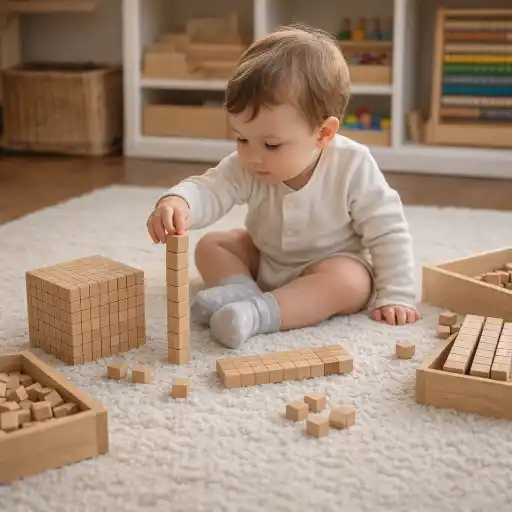
How can educators encourage experimentation without taking over?
The educator’s first move can be to observe. Watch what the toddler is trying, how they respond when a structure falls, and whether they repeat or change an action. A descriptive comment can make the child’s process visible without replacing it: “You put the long block across the two blocks,” or “It fell when you added another one.” This kind of language connects action with outcome and introduces spatial words naturally.
Use brief, open prompts when they fit the moment: “What do you notice?”, “What could go underneath?”, or “I wonder what happens if this block goes here.” Then wait. Toddlers may respond through movement, gesture, sound, or another attempt rather than a spoken explanation. Their actions are meaningful evidence of thinking.
Demonstrate only when a brief model may help a child begin, access a material, or understand a safety boundary. For example, you might slowly place one block on another, narrate the action, and then return the materials to the child. Avoid building the “right” structure for them or correcting every unstable design. A tower that falls can be an invitation to explore, not a problem adults need to solve.
- Describe what the child does instead of evaluating the result.
- Use spatial and comparison language: “beside,” “under,” “higher,” “longer,” and “heavy.”
- Give children time to repeat, revise, and watch one another’s attempts.
- Step in promptly for safety, then help the child return to exploration.
For additional support in connecting play with early #STEM inquiry, explore Enhancing STEM Education for Infants and Toddlers Buy Now $16.00.
How can block play grow from exploration into deeper problem-solving?
Block play develops through children’s interests and repeated experiences, not through a single age-based checklist. A toddler may first carry, bang, fill, dump, or knock down blocks; later, the child may stack, line them up, or place one block across two supports. Offer challenges as invitations rather than requirements. “Can the car travel across?” or “What might help the tower stay up?” can spark investigation while leaving children in charge of their choices.
Small changes to the materials can create fresh questions. Add a few ramps or broad boards to explore height and movement, or introduce containers to compare what fits. Offer figures and vehicles when children show interest in pretend play. For a child who watches rather than builds, a nearby peer’s structure or an adult’s brief model may offer an entry point—without pressure to copy.
Make space for sustained play. A build may need to remain available for later exploration, provided it is stable and does not create a hazard or block pathways. Photographing a child’s structure, with appropriate program and family permissions, can help document how ideas change over time. A short observation might note what materials the child selected, what they tried, and what they did after a structure shifted or fell.
Keep expectations responsive to individual development. Children may show different interests and abilities at the same age, and exploration does not need to follow a set sequence. The Purdue ELM overview describes infant-toddler experiences as flexible and responsive to individual interests and developmental differences; this is a useful orientation for planning block invitations as well.
What common pitfalls can providers avoid?
Even a thoughtfully stocked area can lose its value when adult expectations or room conditions narrow children’s choices. One common pitfall is treating a tower, bridge, or particular design as the goal. When adults prioritize a finished product, toddlers may have fewer chances to make discoveries through their own attempts. Focus instead on the child’s strategy, attention, communication, and willingness to try again.
Another pitfall is offering too many materials at once. Crowded shelves and overflowing bins can make it harder for toddlers to choose, find, and return materials. Begin with a focused selection, observe how children use it, and adjust in response. Likewise, short, interrupted play periods can break a child’s concentration just as an idea is developing. Protect uninterrupted time when the schedule allows.
- Over-directing: Replace step-by-step instructions with one observation or open question.
- Ignoring safety: Inspect materials, consider choking risks, and actively supervise children’s use of blocks and props.
- Expecting identical participation: Offer varied ways to engage, including watching, carrying, pointing, and building.
- Focusing only on the finished structure: Notice attempts, revisions, language, and persistence.
Directors can support consistent practice by reviewing the block area during routine environment checks and providing time for staff to share observations. A brief note or photo can help the team decide which materials to add, remove, or adapt. Keep the focus on meaningful exploration rather than buying more equipment: thoughtful selection, accessible setup, responsive supervision, and patience are the essential ingredients.
Conclusion: What does a toddler block area need for real experimentation?
A toddler block area needs safe, reachable materials with varied properties; a defined, spacious setting; a few meaningful accessories; and adults who observe, narrate, and step in thoughtfully. Toddlers experiment by handling, stacking, carrying, filling, knocking down, and rebuilding. Each action can help them investigate space, balance, movement, and cause and effect.
Start with a manageable collection, provide time to explore, and follow children’s interests as play develops. Use simple spatial language and open questions, while resisting the urge to fix every wobbling tower or direct every build. These practices make the area a place where children can take initiative and learn through repetition.
The central question is not whether toddlers are “building correctly,” but whether the environment lets them safely test ideas and try again. When providers pair thoughtful setup with responsive support, block play becomes a rich, everyday opportunity for discovery, connection, and growing confidence.
- Basic Health & Safety and Breastfeeding Awareness
- Teacher & Me Playtime
- CDA Infant/Toddler Credential
- CDA Infants/Toddlers: Benefits to Observing
- Pediatric RSV First Aid & CPR/AED
- CDA Infant/Toddler Credential with Portfolio Review
- CDA Bridge Bundle: Infant/Toddler without Portfolio Review
- CDA Bridge Bundle: Infant/Toddler
- 45-Hour Infant and Toddler Curriculum
- Spaces that Support Discovery
- 😫🧸 ¿Qué hacer cuando un bebé no quiere dormir la siesta en el aula?
- 👧 ¿Cómo iniciar y abrir una guardería en Texas? Lo que necesitas saber
- Qué capacitación se requiere para ser director de cuidado infantil en Texas?
- Cómo Abrir Una Quardería En Casa Sin Dinero?
- ¿Cuáles son los pasos, requisitos y opciones en línea para la certificación de 90 horas en cuidado de Infantes/Toddlers en Maryland?
- ¿Qué preguntas aparecen en el examen CDA para bebés y niños pequeños?
- Capacitación en Salud y Seguridad Preventiva en Línea para Proveedores de Cuidado Infantil
- Normas de Licenciamiento de Cuidado Infantil en Virginia para Centros Diurnos Infantiles y Hogares Diurnos Familiares
- Lista para Abrir una Guardería en Casa en Virginia: Cómo Empezar
- Capacitación Previa al Servicio para Proveedores de Cuidado Infantil en Dakota del Norte
- What’s Happening Outside? Fall Science Adventures for Preschoolers
- What Toddler Activities Encourage Language and Communication?
- What Is Developmentally Appropriate Practice—and What Does It Look Like?
- When Should Educators Demonstrate and When Should Children Experiment?
- How Can Teachers Help Two Children Build Together When They Disagree on the “Right” Way?
- How Can Toddlers Contribute to Classroom Jobs Without Turning Them into Rewards?
- What Does a Toddler Block Area Need for Real Experimentation?
- How Can Preschool Teachers Turn Children’s Mistakes Into Opportunities for Learning?
- Screen Time in Preschool: How Can Teachers Tell Whether Technology Supports Learning?
