A toddler’s “too heavy” moment can become a rich investigation when we make room for safe, self-directed experimenting. Explore Playing with a Purpose: Infant/Toddler Lesson Planning  Buy Now $24.00 to strengthen your planning for developmentally appropriate experiences, and use the practical ideas below to support children’s curiosity about carrying, weight, and problem-solving.
Why is adjusting a load meaningful learning?
When a toddler fills a bucket, tries to lift it, removes an object, and tries again, the child is doing more than moving classroom materials. The child is testing a problem: how does changing the amount or contents affect what the body can carry? Through repeated attempts, toddlers explore weight, quantity, movement, and cause and effect. That process also draws on persistence, coordination, and emerging decision-making.
Trial and error is a normal route to learning. The ECE Resource Hub’s infant-toddler problem-solving guidance encourages adults to provide space for children to explore and attempt solutions independently, while remaining available to help. Head Start explains that perceptual, motor, and physical development enables children to explore and interact with objects and people. Carrying a manageable load connects these domains in a tangible way.
For providers, the goal is not to teach a formal lesson on mass. It is to recognize the child’s question, prepare a safe opportunity to investigate it, and notice the strategies the child chooses. A bucket that becomes lighter after one item is removed offers immediate, understandable feedback—an ideal starting point for #curiosity and #problem-solving.
How can you prepare a safe, inviting load-adjustment activity?
Begin with a small set of large, sturdy, age-appropriate objects and containers. Offer a light bucket or basket and a nearby collection of safe items that toddlers can add or remove. Soft blocks, large fabric pieces, and other easily grasped objects can provide useful contrasts without requiring children to lift heavy materials. Avoid small parts, damaged items, sharp edges, and objects that are unsafe for children who mouth materials.
Set up the activity on a stable surface with a short, clear route—or let children test the load in place by lifting the container slightly with adult supervision. Keep the container small enough that children can see over it and grip it securely. Introduce the idea simply: “You can put some blocks in the basket and see how it feels.” The Michigan State University fill-and-dump activity likewise recommends familiar containers and toys, time for children to explore, and adults narrating what they see.
- Offer only a few objects at first, so the child can make a clear comparison.
- Keep the floor and carrying path clear; supervise closely throughout.
- Choose a container with manageable handles or sides and a stable base.
- 🪣 Make a lighter option available, such as carrying one item at a time.
State requirements vary - check your state licensing agency, and follow program policies for supervision, materials, and choking-hazard prevention.
How can you support trial and error without taking over?
Observe first. Notice how the toddler approaches the basket: Do they use two hands, pause, remove an object, or ask for help? These actions are meaningful problem-solving strategies. Resist the impulse to immediately fill or lighten the container for the child, provided the attempt is safe. A brief pause gives the toddler time to decide what to try next.
Use specific language that reflects the child’s actions rather than judging the outcome. Try, “You took one block out. Now you’re lifting the basket,” or, “You put in two more, and it feels different.” Words such as heavy, light, more, fewer, full, and empty give children useful language for their experience. If the toddler is ready, wonder aloud: “What could you change?” Then wait for a response, which may be a gesture or another attempt rather than spoken words.
NAEYC’s article on persistence and problem-solving recommends giving children choices, avoiding the urge to fix the problem, and offering gentle guidance when frustration begins. Use that balance here: acknowledge effort, help stabilize the basket if needed, or suggest removing one object—but let the child make the next move. Notice and respect different ways children communicate and participate. An adult’s supportive presence can sustain the challenge without turning it into a test.
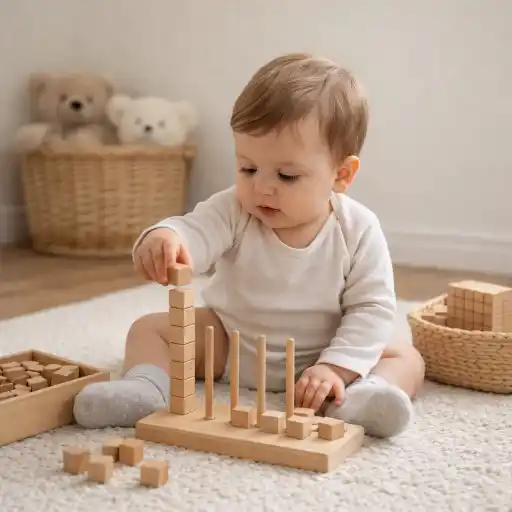
How can you adapt the experience for individual children?
Children differ in strength, coordination, mobility, sensory preferences, communication, and willingness to carry. The learning goal is investigation—not lifting a particular weight or completing a route. Adapt the task so each child can make choices and observe a change. A child who is not ready to carry can add or remove objects while the basket stays on the floor, compare two containers by touching them, or watch a peer and indicate a choice.
Consider changing one feature at a time: the number of objects, the container’s size, the distance moved, or the kind of material. Use familiar objects and predictable routines, and offer tools or adult assistance when they increase access. If a child avoids touching a material, provide a scoop or let them direct an adult. If the child communicates through gestures, picture choices, sounds, or movement, treat those as valid ways to show a prediction or preference.
- Start with an empty or lightly loaded container; add objects only if the child chooses.
- Use a nearby destination, a two-handed basket, or a stable surface for testing.
- Offer “carry,” “push,” “add,” and “remove” as equally meaningful ways to participate.
- Stop or adjust when a child shows strain, distress, or loss of balance.
These adaptations protect agency while making the invitation more inclusive. The Head Start guide to perceptual, motor, and physical development underscores the role of movement and sensory experience in children’s exploration. Use observation, family insight, and any individual care plans to guide your choices.
What should providers observe, and which pitfalls can they avoid?
Keep documentation brief and objective. Note the materials, the child’s actions, and any communication: “Sam placed three large blocks in the basket, lifted it with two hands, removed one block, and tried again.” This description helps the team identify the child’s strategy and plan a responsive next step without labeling the child or assuming what the child intended.
Avoid turning the experience into a competition or expecting every toddler to carry the same amount. “Who can carry the most?” can shift attention from safe exploration to performance. Avoid using containers or objects that are too heavy, blocking the child’s view, or asking a child to persist through strain. Also avoid over-directing: repeated questions and adult solutions can interrupt the child’s own investigation. If frustration rises, acknowledge it and offer one small, optional hint.
- Do not equate a larger object with a heavier object; help children compare by feel.
- Do not insist on spoken explanations; actions and gestures can reveal thinking.
- Do not confuse independence with leaving a child unsupported or unsupervised.
- Do repeat the invitation on another day if interest continues, adjusting one variable at a time.
For an easy planning structure, use the ChildCareEd guide to play-based toddler lesson plans to connect observations with a realistic next step. The companion light-and-heavy activities guide offers further ideas for introducing comparison language through play.
Conclusion: How can toddlers learn to adjust a load through trial and error?
Toddlers learn by acting, noticing what happens, and trying again. A thoughtfully prepared bucket activity gives children a safe, concrete way to explore how adding or removing objects changes a load. Keep the challenge manageable, supervise actively, and allow children time to choose their own strategies.
Describe what you observe, welcome different ways of participating, and use brief notes to guide future planning. The central question is not whether a toddler can carry a heavy bucket; it is how the child investigates a problem and what support makes that exploration accessible and safe. For a deeper foundation in age-appropriate infant-toddler planning, consider the linked Playing with a Purpose course Buy Now $24.00.
- CDA Infant/Toddler Credential
- Baby Play: Planning Infant and Toddler Activities
- 45 Hour Infant and Toddler Methods and Materials
- CDA Infant/Toddler Credential with Portfolio Review
- CDA Bridge Bundle: Infant/Toddler without Portfolio Review
- CDA Bridge Bundle: Infant/Toddler
- 45-Hour Infant and Toddler Curriculum
- Baby Steps to Milestones ONLINE
- CDA Infants/Toddlers: Smart Nutrition & Feeding
- Playing with a Purpose: Infant/Toddler Lesson Planning
- CDA Certification en Español: Recursos y Consejos para Educadores Bilingües
- Cómo Abrir Una Quardería En Casa Sin Dinero?
- Recursos en Español sobre el Sueño Seguro del Bebé
- Que es Título 22 en California?
- ¿Cuáles son los pasos, requisitos y opciones en línea para la certificación de 90 horas en cuidado de Infantes/Toddlers en Maryland?
- ¿Cómo puedo enseñar habilidades de primeros auxilios con escenarios de juego de roles?
- 10 Ejemplos de Cómo la Cultura Influye en el Desarrollo Infantil
- Capacitación en Salud y Seguridad Preventiva en Línea para Proveedores de Cuidado Infantil
- Proporciones de Cuidado Infantil y Tamaños de Grupo por Edad en Maryland (Guía Rápida para Centros y Hogares)
- Proporciones de Cuidado Infantil y Tamaños de Grupo por Edad en Nueva Jersey (Guía Rápida para Centros y Hogares)
- Proporciones de Cuidado Infantil y Tamaños de Grupo por Edad en Virginia (Guía Rápida para Centros y Hogares)
- Cómo Trabajar en el Cuidado Infantil en Carolina del Norte: Requisitos y Pasos
- Cómo Ser Maestra de Preescolar en Maryland
- Celebrando la amistad en el cuidado infantil durante el Día de los Mejores Amigos
- Canciones, juegos y preguntas de círculo para niños
- Cómo simplificar la capacitación para sus empleados de daycare
- How Can You Create a “Yes Space” Where Infants and Toddlers Explore Safely?
- When Children Can Reach Materials but Cannot Carry Them Safely, What Should Providers Do?
- Where Does a Bridge Bend First—and How Can Children Spot Structural Weaknesses?
- How Can Toddlers Safely Adjust a Load Through Trial and Error?
