Care routines are essential, but a diaper change, feeding, or comfort break can interrupt an infant’s absorbing exploration. With a calm, responsive return-to-play routine—and a simple planning tool such as the Baby Play: Planning Infant and Toddler Activities course  Buy Now $16.00—you can reconnect play to the infant’s cues and strengthen individualized classroom practice. The course supports providers in planning meaningful, developmentally appropriate activities; keep reading for strategies you can put to work today.
Why does a thoughtful return to play matter?
For an infant, play is not a scheduled task to complete; it is a self-directed process of looking, reaching, listening, touching, and testing what happens. A necessary care routine may pause that process, but the pause does not mean the learning has been lost. How an adult helps the infant return can preserve the child’s sense of agency and continuity.
Responsive caregiving means noticing an infant’s signals and adjusting the adult’s response. Head Start’s guidance on responding to infants and toddlers based on observation emphasizes using what educators learn about children’s interests, needs, and abilities to individualize experiences. In practice, this may mean returning a familiar object to view, waiting, and following the infant’s next cue rather than restarting an adult-led activity.
This small transition matters in busy infant rooms. Consistent, warm interactions help infants feel secure with caregivers, while flexible routines respect differences in alertness, appetite, comfort, and attention. The goal is not to make every baby resume play immediately. It is to make exploration available again when the infant is ready, while keeping care and safety first.
How can you tell whether the infant is ready to explore again?
Begin with the infant, not the lesson plan. After a care routine, pause and observe the child’s state. A baby who is calm and awake may look toward a familiar toy, scan the room, reach, kick, vocalize, or turn toward a caregiver’s voice. These can be invitations to reconnect. A baby who is yawning, turning away, fussing, becoming tense, or losing focus may need comfort, a quieter space, or rest instead.
Read cues as a pattern and in context. A single yawn does not always mean the infant is finished, and each child communicates differently. Consider what happened before the routine, whether the infant is comfortable, and what the family has shared about the child’s preferences. Infants with disabilities, sensory differences, or individualized care plans may communicate readiness in ways that benefit from collaboration with families and specialists.
- Pause at the child’s level and use a calm voice to re-establish connection.
- Look for signs of ease and interest, such as relaxed movement, gaze, reaching, or sounds.
- Offer one familiar play cue, then wait for the infant’s response.
- Respect signals to stop; a break or cuddle is a meaningful response, not a failed activity.
Providers do not need to interpret every signal perfectly. The professional skill is to notice, respond gently, and observe whether the response helps the infant settle or re-engage.
What steps help an infant return to play without pressure?
A predictable, flexible sequence makes the transition easier for both the infant and the caregiver. Once the care task is complete and the child is comfortable, restore a familiar element of the play experience. That might be the same soft book, a safe grasping toy, a caregiver’s face, or the open floor space the infant was using. Keep the setup simple so the adult can respond without creating a new demand.
Try this brief sequence:
- Finish care attentively. Complete the routine safely and communicate simply about what is happening.
- Reconnect. Offer eye contact, a familiar phrase, or a moment of quiet closeness.
- Reintroduce the play context. Return a familiar material or position, if it is safe and suitable.
- Wait. Give the infant time to look, move, vocalize, or decline.
- Follow the child’s lead. Continue, simplify, or pause according to the infant’s cues.
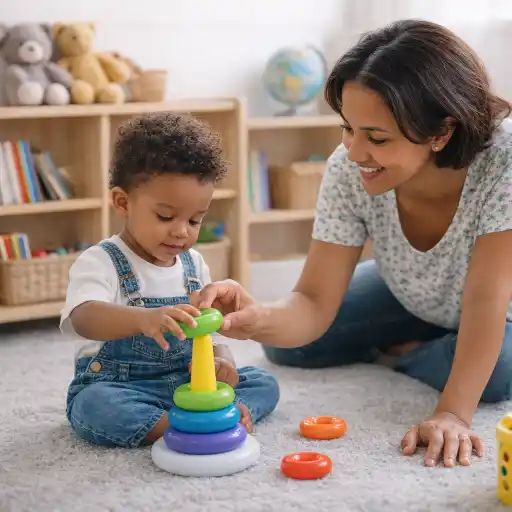
For example, after a diaper change, a caregiver might place the infant back on the clean play mat, set a familiar rattle within reach, and say, “Your rattle is here.” The adult then waits instead of shaking it repeatedly or placing it in the baby’s hand. UNICEF’s learning activities for babies and toddlers offer ideas that can be adapted to a child’s ability and interest. Use only appropriate, clean materials and maintain active supervision.
How can routines and play plans work together?
Care and play are not competing parts of the day. Feeding, diapering, dressing, and settling can offer connection and language, while a flexible play plan helps staff remember a meaningful next opportunity. The sequence should remain responsive to individual needs rather than forcing infants into a synchronized timetable. The Virtual Lab School’s guidance on schedules and routines likewise describes consistent yet flexible rhythms that adapt to each child.
Planning sheets can help the team keep this approach manageable. The infant lesson planning guide recommends concise goals, materials, routine connections, and brief observations. Adapt that structure for interrupted play:
- Interest or goal: What has the infant been exploring?
- Possible return cue: Which familiar material, position, or interaction could reconnect the infant?
- Care context: What routine may interrupt play, and what must happen first?
- Response to watch: What might engagement or a need for a pause look like for this child?
For a practical team aid, explore the Infant and Toddler Weekly Lesson Plan Template Buy Now $0.00 and adapt its planning approach to your program. Use the Baby Play course resource page to browse related handouts. Keep the plan short enough to use during a real classroom day, and share relevant details at staff handoff.
How can educators document and improve return-to-play practice?
Brief, objective documentation helps caregivers learn what supports each infant without turning ordinary play into a paperwork burden. Note the context, the infant’s observable response, and what the adult did. For example: “After diapering, Leo returned to the mat. He looked at the fabric book, reached toward one page, then turned away. I paused and held him.” This is more useful than labeling the child “uninterested,” because it records what actually happened.
Over time, observations may reveal patterns: a baby may prefer a familiar object after care, need a quiet reconnection before floor play, or show renewed interest after a longer pause. Share useful notes with colleagues and families respectfully, following your program’s privacy and documentation policies. Family insight can help staff understand a baby’s favorite songs, ways of being comforted, and familiar play cues.
Directors can support consistency by discussing infant cues during team meetings, making planning sheets easy to access, and ensuring that staff understand how care plans and safety procedures guide routines. State requirements vary - check your state licensing agency for applicable supervision, care, and documentation requirements. For added professional learning, the Playful Learning: Infant & Toddler Activities course Buy Now $25.00 focuses on individualized, age-appropriate activity planning.
What common pitfalls should providers avoid?
It is understandable to want to help a baby return quickly to an activity, especially when the room is busy. Yet an adult’s good intentions can accidentally make the transition feel rushed. Keep the infant’s comfort, communication, and safety at the center, and treat play invitations as opportunities rather than expectations.
- Restarting too quickly: Allow time for the infant to settle after care before offering materials.
- Overprompting: Avoid repeatedly moving a toy, calling the child’s attention, or placing objects in the infant’s hands. Offer once, then wait.
- Assuming a pause means loss of interest: The infant may need a brief transition before returning to the same exploration.
- Using a rigid schedule: Protect necessary routines, but allow the timing and length of play to reflect individual cues.
- Prioritizing the activity over care: Never delay feeding, comfort, hygiene, or rest to preserve a play episode.
- Overlooking safety: Check materials and the play area, and maintain active supervision, especially after a change in position or location.
These adjustments are small, but they show respect for infants as active participants. A calm invitation and a few seconds of waiting can be more supportive than an elaborate activity that ignores the child’s readiness.
Conclusion: How can you help an infant resume exploration?
Help an infant resume exploration by completing care safely, reconnecting warmly, restoring a familiar play cue, and waiting for the child’s response. Read readiness as an individual pattern, not a fixed timetable; follow signals to engage, change direction, or rest. Keep plans concise, document objective observations, and share what works with the team and family.
Most importantly, do not measure success by how quickly the infant returns to a toy. Success is a responsive transition in which care remains central and exploration becomes available again when the baby is ready. The Baby Play: Planning Infant and Toddler Activities course Buy Now $16.00 offers further support for planning individualized experiences that fit the realities of infant care.
Explore five relevant ChildCareEd courses:
- Baby Play: Planning Infant and Toddler Activities Buy Now $16.00
- Playful Learning: Infant & Toddler Activities Buy Now $25.00
- Meaningful Lesson Planning for Infants/Toddlers Buy Now $24.00
- Balancing Act: Schedules and Routines Buy Now $16.00
- CDA Infants/Toddlers: Benefits to Observing Buy Now $16.00
- Positive Attention: Interactions and Supervision of Infants and Toddlers: For Workforce Solutions
- 45 Hour Infant and Toddler Methods and Materials
- Pediatric RSV First Aid & CPR/AED
- CDA Infant/Toddler Credential with Portfolio Review
- CDA Bridge Bundle: Infant/Toddler
- Positive Attention: Interactions & Supervision for Infants & Toddlers
- Self-Regulation & Change: Helping Children Cope
- Texas Director Credential
- Supporting Breastfeeding Practices In Child Care
- CDA Certification en Español: Recursos y Consejos para Educadores Bilingües
- 💛🧩 ¿Cómo puedo hacer que mi enseñanza sea inclusiva para los niños con autismo?
- ¿Cómo pueden los equipos de cuidado infantil practicar habilidades rápidas de primeros auxilios en situaciones reales?
- ¿Cómo empiezo mi certificación CDA en Florida en línea?
- 10 Ejemplos de Cómo la Cultura Influye en el Desarrollo Infantil
- Cómo Iniciar el Proceso de Obtención de la Licencia de Cuidado Infantil
- Proporciones de Cuidado Infantil y Tamaños de Grupo por Edad en Nueva Jersey (Guía Rápida para Centros y Hogares)
- Proporciones de Cuidado Infantil y Tamaños de Grupo por Edad en Virginia (Guía Rápida para Centros y Hogares)
- Lista para Abrir una Guardería en Casa en Carolina del Norte: Cómo Empezar
- Lista para Abrir una Guardería en Casa en Dakota del Norte: Cómo Empezar
- Lista para Abrir una Guardería en Casa en Georgia: Cómo Empezar
- Lista para Guardería en Casa en Illinois: Cómo Iniciar una Guardería en el Hogar
- Cómo Trabajar en el Cuidado Infantil en Carolina del Norte: Requisitos y Pasos
- Capacitación Previa al Servicio para Proveedores de Cuidado Infantil en Dakota del Norte
- Celebrando la amistad en el cuidado infantil durante el Día de los Mejores Amigos
- Canciones, juegos y preguntas de círculo para niños
- Cómo simplificar la capacitación para sus empleados de daycare
- Power Outage at Daycare: Safety, Licensing, and Next Steps
- What Should You Say in a Daycare Interview If You Have No Experience?
- How Can You Help an Infant Resume Exploring After Care Interrupts Play?
