Why does a toddler insist on pouring sand, lining up cars, or spinning a lid again and again?
Repetitive play isn’t a nuisance — it’s a window into how young minds test ideas, build mental models, and master skills. If you supervise or direct early childhood programs, learning to recognize and respond to play #schemas can make your practice more intentional and boost children's learning. For practical next steps, consider ChildCareEd’s course The Best Promotion is Play  Buy Now $24.00 (helps you translate observation into curriculum and may count toward professional training hours), and for children who show very constrained repetition, see Play with Purpose: Supporting Children with Autism Buy Now
 $55.00$40.00 for targeted strategies to scaffold social and symbolic play.
Introduction (observe without labeling): Repetitive actions — the same scooping motion, constant lining up, or persistent covering and uncovering — are not simply habits to stop. In early childhood research and practice, these patterns are often called schemas: recurring ways children explore physical and conceptual relationships (e.g., trajectory, transporting, rotation, enveloping). When adults learn to see the intent in repetition, they can design environments and interactions that extend inquiry rather than suppress it. Use observation, documentation, and respectful curiosity to honor the child’s agenda; state requirements vary - check your state licensing agency. Integrating schema-aware planning improves classroom relevance, strengthens relationships, and supports each child’s executive and representational growth. Below are practical answers to the questions child care leaders ask most when they notice repetitive play.
What are play schemas and how do they reveal children’s thinking?
Play schemas are consistent patterns of action that reflect how a child is trying to understand key relationships in the world (for example: space, motion, containment, connection). Instead of viewing repetition as a behavior problem, schema theory treats it as cognitive work: children repeatedly perform actions to test hypotheses, refine motor control, and map cause–effect relations. Schemas are grounded in early sensorimotor learning (Piagetian roots) and supported by contemporary neuroscience that links repeated, meaningful practice to synaptogenesis and strengthened neural pathways. Observational markers include persistence over time, transfer across materials (the same pattern with different objects), and incremental complexity (a child who initially dumps will later measure, sort, or transform). Recognizing a child’s schema helps you design provocations and scaffolded extensions that keep the child in a productive zone of challenge without disrupting engagement.
- Common schema types: trajectory (throwing, dropping), transporting (carrying, delivering), rotation (spinning), enclosing/enveloping (wrapping, hiding), connecting/disconnecting (linking, joining).
- Why schemas matter: they underpin representational thought, support later symbolic and narrative abilities, and are practice for academic skills like measurement and sequencing.
- Practical indicator: watch for the #pattern of choice across materials and contexts — a sign of deep investigation.
How should teachers observe and document repetitive play to plan better learning?
Observation is the tool that turns repetition into curriculum. Start with focused, short observations over several days: note what the child repeats, with which materials, and in whose company. Record exact actions (rather than interpretations) and any language the child uses. Next, look for progressions — does the child change strategy, add details, or invite peers? Use documentation to answer: Is this exploratory practice, skill rehearsal, or an expression of unmet needs (sensory regulation, anxiety, or limited materials)? Practical documentation steps:
- 🔁 Collect 3-5 brief time-sampled notes showing the same action in different contexts.
- List materials used and possible affordances (e.g., water + cups = measuring emergent math).
- Map next-step provocations: small, low-cost changes to deepen the inquiry (add ramps for a trajectory schema; introduce boxes and scarves for enveloping).
Use those notes to set short-term goals (one week) and to inform families about what learning you’re seeing. This makes documentation a communication tool for both curriculum and family partnerships.
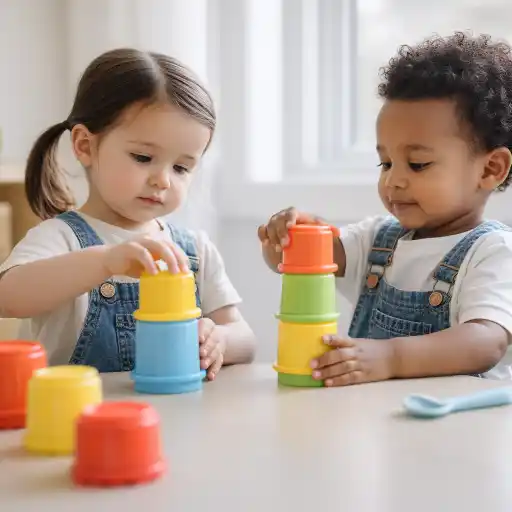
What practical strategies extend repetitive play into richer learning without taking over?
Extend rather than interrupt. Children repeat because the activity is meaningful; your job is to preserve that meaning while opening new angles for learning. Strategies that work:
- Follow the child’s lead — join in to match energy and play frame, then subtly add a new affordance (a ramp, a marker, a measuring cup).
- Introduce variation: change material size, texture, or scale to prompt new outcomes without disrupting the core action.
- Create mini-challenges: if a child loves lining up, offer sorting cards, counting stickers, or story prompts that ask “Where are they going?”
- Plan small group invitations so peers can co-construct scripts and practice perspective-taking; adults coach turn-taking and language for pretend roles.
For children with very narrow repetition or sensory needs, collaborate with specialists and consider targeted courses such as ChildCareEd’s Play with Purpose Buy Now $55.00$40.00 for autism-informed scaffolds. Remember that for licensing and training you may earn contact hours for courses that connect observation to curriculum planning (e.g., The Best Promotion is Play Buy Now $24.00).
How do schemas relate to inclusion, special needs, and when should you be concerned?
Most repetitive play is developmentally appropriate and beneficial. Concern arises when repetition is rigid, prevents social interaction, or coincides with communication loss or regression. Children on the autism spectrum often show constrained symbolic play; research highlights that symbolic play differences can be early indicators and targets for intervention. Use a tiered response:
- Tier 1 – Enrich the environment and scaffold: offer parallel materials and peer models.
- Tier 2 – Intentional small-group or individual play invitations: adult models symbolic acts, uses open questions, and fades prompts.
- Tier 3 – Specialist referral and family collaboration when the pattern limits development across domains.
Practical signs to monitor: lack of progression after repeated, scaffolded opportunities; absence of social sharing around the interest; or repetitive actions tied to distress rather than curiosity. When in doubt, document and discuss with families and specialists; state requirements vary - check your state licensing agency for referral guidance.
How can directors and providers avoid common mistakes when working with repetitive play?
Common mistakes and how to avoid them:
- Reacting by stopping the play. Avoid interruption unless safety is at risk; instead, offer an extension that preserves the child’s intent.
- Labeling the child (e.g., “obsessed” or “difficult”). Keep observations behavior-focused and strengths-based.
- Over-structuring. Too many adult-imposed rules can extinguish curiosity; scaffold gently and let the child lead the inquiry cycle.
- Failing to communicate with families. Share observations and invite family examples — schemas often show up at home, too, and family insight is invaluable.
Quick avoidance checklist:
- Observe first, interpret later.
- Add small, purposeful materials rather than replace the child’s favorites.
- Document progress and adjust scaffolds weekly.
Summary
Repetitive play is purposeful investigation: children use #schemas to explore consistent relationships in the world and to practice cognitive, motor, and social skills. For child care professionals, the practical path is clear — observe closely, document precisely, extend with small provocations, and collaborate with families. When repetition is extreme or blocking other development, follow a tiered approach and consult specialists. By reframing repetition as inquiry rather than a nuisance, providers can design richer, more inclusive learning experiences that honor each child’s curiosity and support long-term #learning, #development, and joyful discovery.
FAQ
Q: How long should I allow a child to repeat the same play before intervening?
A: Monitor for progression across days or weeks. If the child is adding complexity or skill, continue to support. Intervene when repetition prevents social engagement, causes safety issues, or shows no developmental change after scaffolded opportunities.
Q: Are schemas the same across cultures?
A: The basic forms of exploration (trajectory, transporting, enclosing, etc.) appear widely, but cultural materials and routines shape how they appear. Always consider family context and cultural meaning.
Q: Can repetitive play be harmful?
A: Not usually. It becomes harmful when it isolates the child, leads to injury, or prevents acquisition of communication and self-help skills. Those are cues to increase scaffolding and supports.
Q: How do I explain schemas to parents?
A: Use simple, strength-based language: "He’s exploring how things move/fit/stack. Repeating helps him test ideas and build skill. We’ll add some new materials so he can take the next step." Invite examples from home.
Q: What professional development helps staff learn this approach?
A: Look for play-focused courses that teach observation-to-planning workflows, such as The Best Promotion is Play Buy Now $24.00, or inclusion-focused courses like Play with Purpose Buy Now $55.00$40.00. These help translate schema observation into practical curriculum and documentation.
- 45 Hour Child Growth and Development
- Early Mathematics Through Play
- The ABCs of Behavior: Turning Challenges into Learning Opportunities
- Play Safe, Think Big: Literacy Through Play
- 45 Hour Infant and Toddler Methods and Materials
- Pediatric RSV First Aid & CPR/AED
- Texas Director Credential
- CDA: Stand With Respect and Professionalism
- CDA Certification en Español: Recursos y Consejos para Educadores Bilingües
- 🪁¿Cómo puede el juego apoyar de manera poderosa a los niños con autismo?🧩
- 🥦✨ ¿Cómo apoyar a los niños selectivos a probar nuevos alimentos sin presión?
- ❄️ ¿Qué actividades al aire libre funcionan bien para los niños de Illinois en cada estación? 🌷🍂
- 🍑 ¿Qué capacitación requiere DECAL cada año para el personal de cuidado infantil en Georgia?
- Juegos de Motricidad Gruesa
- ¿Cuáles son las mejores actividades del Día de la Tierra para niños en casa o en el aula?
- ¿Cómo puedo usar escenarios de juego de roles de primeros auxilios en mi aula?
- 10 Ejemplos de Cómo la Cultura Influye en el Desarrollo Infantil
- Regulaciones de Licenciamiento de Cuidado Infantil en California para Centros y Hogares de Cuidado Infantil Familiar
- Actividades de Otoño Fáciles para Preescolares esta Temporada
- Lista para Guardería en Casa en Illinois: Cómo Iniciar una Guardería en el Hogar
- Consejos de Supervisión Activa para Salones de Preescolar y el Juego al Aire Libre
- Cómo Ser Maestra de Preescolar en Illinois
- Las Mejores Ideas de Excursiones para Guarderías en Texas
- Canciones, juegos y preguntas de círculo para niños
- Cómo simplificar la capacitación para sus empleados de daycare
- Why Do Children Repeat the Same Actions? Understanding Play Schemas and the 'Why' Behind Repetitive Play
- Why Do Children Repeat the Same Play—and Why Should Educators Let Them?
- Why Does a Toddler Need to Do It Again—and Again?
