Why does reading aloud build #language-skills?
When children hear stories again and again, their brains start to connect sounds, words, and meaning. Shared reading also builds a close, safe relationship with the adult reader, which supports learning.
Reading aloud can help children:
- Learn new words (vocabulary)
- Practice listening and paying attention
- Understand how stories work (beginning, middle, end)

- Learn how a book works (turning pages, reading left to right)
- Feel calm and connected with a caring adult
How often should child care providers read aloud?
Short, daily read-alouds are better than one long story once a week. The American Academy of Pediatrics encourages shared reading starting at birth, and you can bring that same idea into child care with daily story times.
Try these simple routines:
- Infants: 2–5 minutes, a few times a day (board #books, songs, lap stories)
- Toddlers: 5–10 minutes, 1–2 times a day (repeat favorites!)
- Preschoolers: 10–20 minutes, daily (plus short books during transitions)
If children ask for “one more book,” that’s a great sign.
What books work best for different ages?
The “best” book is one children enjoy and understand. Still, some types of books are extra helpful for language growth.
For infants and young #toddlers:
- Sturdy board books
- Big, clear pictures
- Simple words and repeating lines (“Brown bear, brown bear…”)
For older toddlers and #preschoolers:
- Stories with problems and solutions
- Books with new “story words” (gigantic, tiny, brave)
- Nonfiction books (animals, #weather, trucks) for content words
Also try to include books that show:
- Different families, #cultures, and #languages
- Children with different abilities
- Feelings and friendship skills
How do you do an interactive read-aloud (not just “read and done”)?
Interactive read-alouds are like a friendly conversation with a book in the middle. This kind of “talking while reading” (often called dialogic reading) can help children’s language grow.
Before you read:
- Read the book once by yourself
- Pick 2–3 words to teach (example: “enormous,” “disappear,” “whisper”)
- Plan 2–3 simple questions (Who? What happened? Why?)
During the first read:
- Keep it moving so children understand the story
- Stop only a few times for quick talk
During later reads (yes, reread!):
- Pause more often
- Let children “tell” parts of the story
- Ask more questions and listen to their ideas
What should you say and do during the story?
Small teaching moves make a big difference. Here are best practices you can use right away.
Start strong
- Show the cover: “What do you think this book is about?”
- Point to the title: “This is the name of our book.”
Use “serve and return” talk
When a child points, makes a sound, or says a word, respond and build on it. This back-and-forth helps the brain grow language connections.
Examples:
- Child: “Dog!”
- Adult: “Yes, a dog! The dog is running fast. Where is it going?”
Explain new words in simple ways
- “Enormous means very, very big.”
- Act it out with your arms or face
Ask easy questions (and wait!) 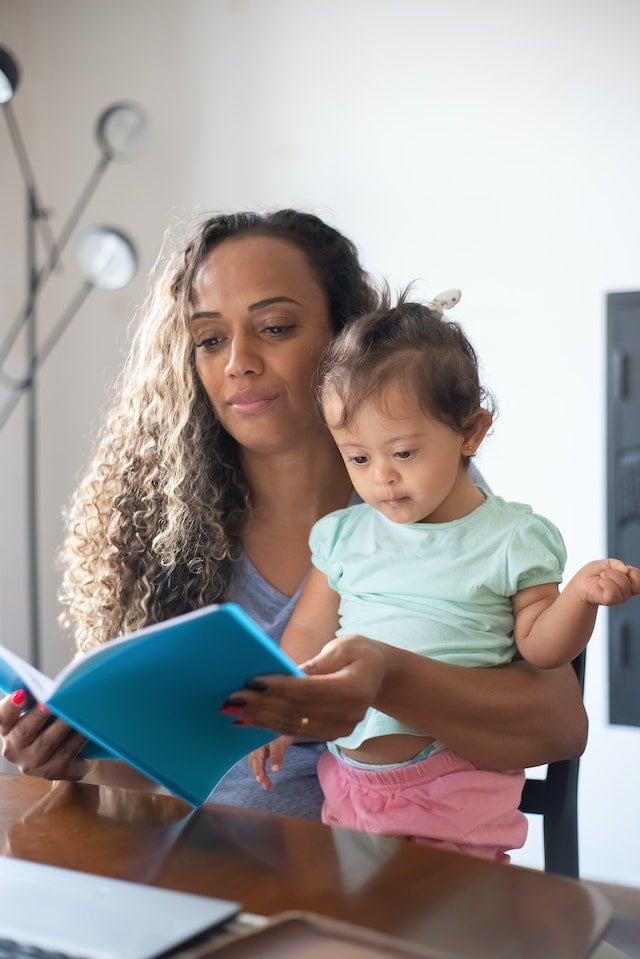
- “What do you see?”
- “How does she feel?”
- “What do you think will happen next?”
Connect the book to real life
- “Remember when it rained on the #playground?”
- “Have you ever felt scared like that?”
How can you support children who are learning two languages?
Reading aloud is great for dual language learners when you make it welcoming and clear. Strong skills in a child’s first language can #support-learning a new language over time.
Try these strategies:
- Use pictures, gestures, and facial expressions
- Repeat key lines and favorite books (repetition helps!)
- Invite children to answer in any language
- Teach a few “power phrases” from the book: “I see…,” “Look!,” “Help!”
- If possible, include books and songs in children’s #home languages
Most important: keep the tone warm and patient. #LanguageDevelopment
What can you do after the book to grow language even more?
The minutes after a story are a perfect time for children to practice words.
Pick one quick follow-up:
- Retell with props: puppets, felt pieces, or story stones
- Act it out: “Let’s be the bears. What happens first?”
- Draw and tell: children draw a scene and explain it
- Word play: repeat the 2–3 new words in play centers (“This tower is enormous!”)
You can also place the book in a center so children can “read” it again on their own or with a friend.
How can you handle common read-aloud challenges (wiggles, interruptions, big groups)?
Wiggles are normal—especially for toddlers. The goal is not perfect stillness. The goal is #engagement.
Try these provider-friendly strategies:
- Read in smaller groups when you can (4–8 children is often easier)
- Use movement: “Touch your head when you see the red bird!”
- Choose shorter books at busy times (arrival, before lunch)
- Set one simple rule: “Books are gentle. We keep hands to ourselves.”
- Offer a job: page turner, pointer, “sound maker” (animal sounds)
If one child is having a hard day, move closer, give a quiet fidget, or offer a calm seat next to you.
Where can you find more ChildCareEd help?
If you want more ideas (and step-by-step strategies), these ChildCareEd options are a great next step:
Related ChildCareEd courses (from the ChildCareEd course catalog):
- Reading Aloud and Storytelling:
- Classroom Tools for Emergent Literacy:
- Language Development in Early Childhood:
Free ChildCareEd resource:
Related ChildCareEd article:
Follow ChildCareEd on social media
Want quick activity ideas and #early-learning tips? Subscribe to ChildCareEd on YouTube:
- CDA Home Visitor Subject Area 2 Part 3 Birth to 5
- Reading Aloud and Storytelling
- Birth to Five CDA Credential with Portfolio Review
- Setting the Stage: Story Time
- 24 Hour Texas Pre-Service
- Emergent Learning & Development
- 45-Hour Infant and Toddler Curriculum
- Creating Environments that Nurture Growth and Community
- Texas Director Credential
- Every Moment Matters: Schedules and Transitions
- CDA Certification en Español: Recursos y Consejos para Educadores Bilingües
- 📖 ¿Cómo puedo hacer que la hora del cuento sea la parte más poderosa de mi día?
- Retraso del Habla en la Guardería: Cómo Pueden Ayudar los Proveedores
- How can child care providers best support language development in young children?
- How can reading aloud build literacy in New York toddler rooms?
- Canciones, juegos y preguntas de círculo para niños
- How Can Child Care Providers Support Language Development in Young Children?
- How Can Child Care Programs Build Meaningful School Readiness?
- How Can Take-Home Books Strengthen the Home-School Reading Bond?
- How Can Child Care Providers Strengthen Language and Literacy Development?
- What Are the Best Ways to Support a Child’s Speech Development?
- Why Do Simple Books Build Early Reading Confidence?
- How Can Printable Books Help Preschoolers Fall in Love With Reading?
- How Does Word Sorting Build Phonics and Vocabulary Skills?
- How Can Predictable Ocean-Themed Text Build Reading Confidence?
- How Can Child Care Providers Preserve a Child’s Exact Words During Story Dictation?
- How Can Young Storytellers Make It Clear Who “He,” “She,” or “They” Means?
- How Can Educators Invite Children to Revise a Story They Told Earlier?
- How Can School-Age Providers Build Vocabulary Beyond Word Search Puzzles?
