Introduction
Hearing a child say, “You’re not my friend,” can feel sharp. You may worry about hurt feelings, classroom peace, or whether the children are safe. This article gives short, friendly scripts and steps you can use right away. It is written for child care providers and directors who want quick, respectful words that teach #children how to handle strong feelings.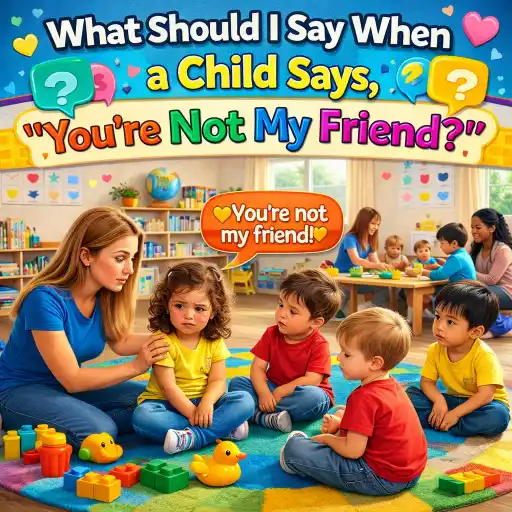
Why it matters:
1) Early peer breaks teach important social skills. When adults guide the moment, children learn to use words, not actions. 2) Small teachable moments build long-term #friend skills like sharing, turn-taking, and #empathy. For quick coaching ideas, see Teaching kids to solve problems with words and short scripts in Conflict Resolution Skills You Can Teach in Under 2 Minutes.
Keep in mind: state requirements vary - check your state licensing agency if you need guidance on reporting or behavior policies.
Hashtags: use these words in your notes and lesson plans: #friend #conflict #children #empathy #classroom.
What should I say first when a child says, “You’re not my friend”?
Start with calm words and simple steps. A short script helps everyone feel safe and shows kids how to use language instead of power. Try this 3-step approach that matches the “Connect, Calm, Coach” idea in Teaching kids to solve problems with words:
- 🔹 Connect: Get down to the child’s level and say, “I’m here. I can help.”
- 🔹 Calm: Use a slow voice: “Breathe with me.” (Model one deep breath.)
- 🔹 Coach: Offer one short phrase they can use next. Example scripts:
- “I feel sad when you say that.”
- “That hurt my feelings. Can we talk?”
- “I want to play, but not like that. Can we try [take turns/trade]?”
Why these words work:
- 1) They calm bodies so brains can use words (see Stop, Breathe, Talk).
- 2) They teach short, repeatable scripts children can copy later.
How do I coach both the child who said it and the child who heard it?
Use brief, separate steps for each child so they both feel seen. Keep sentences short and concrete. Follow this numbered plan:
- 😊 For the child who was hurt:
- Say: “You look upset. Tell me what happened.”
- Help them name a feeling: “You feel sad/angry.”
- Teach a repair step: “Can you say, ‘I felt hurt when you said that’ or ‘I’m okay now’?”
- 😐 For the child who said, “You’re not my friend”:
- Ask, “What made you say that?”
- Help them try an #empathy line: “I didn’t mean to. Are you okay?”
- If needed, coach an “I message”: “I feel ___ when you ___.” This is from quick scripts in Conflict Resolution Skills You Can Teach in Under 2 Minutes.
- 🔁 Bring them together only when both are calm. Ask: “Can we try one choice? Trade, take turns, or play something else?”
Use short role-play later during calm times so children can practice the words. For ideas on building these skills through play, see How to Foster Friendship Skills Through Guided Play.
What classroom routines help prevent “You’re not my friend” moments?
Prevention is easier than repair. Use simple, consistent routines so kids learn expectations and scripts.
- 🪑 Create a Peace Spot: A small area with two chairs and a feelings chart. Teach children to sit and use a sentence from the chart.
- 📜 Post 4–6 Friendship Phrases at child height and practice them daily (e.g., “Can I play?” “My turn next.”). ChildCareEd has printable ideas like Conflict Resolution Solution Cards Buy Now $0.00.
- 🎭 Guided Play: Plan short activities that teach sharing, taking turns, and joining in. See examples at How to Foster Friendship Skills Through Guided Play.
- 🕒 Two-Minute Practice: Teach one conflict script for two minutes a day so it becomes automatic—an idea from Conflict Resolution Skills You Can Teach in Under 2 Minutes.
These routines help children feel safe and learn the words to use before big feelings arrive. A calm, prepared #classroom reduces big incidents and builds stronger peer ties.
How do I handle repeated exclusion or relational aggression?
Relational aggression (exclusion, name-calling, silent treatment) can hurt children deeply. Treat it seriously and use clear steps. The article on relational aggression explains why this behavior matters and how it can affect girls and boys differently (HuffPost).
- 📋 Document: Note what happened: who, when, where, and what words were used.
- 🗣️ Teach and Coach: Use scripts that teach repair and inclusion. Encourage the child who excluded to try a re-join sentence: “You can play with us.”
- 👪 Involve Families: Share simple phrases families can use at home to build #empathy (see Teaching empathy to young children).
- 🏫 Use supports: Consider small-group social skills work or guided play groups for children who struggle to keep friends (refer to courses like You're Not My Friend Anymore
 Buy Now $16.00).
 - ⚖️ Safety & Policy: If patterns continue or escalate, follow your center policies. state requirements vary - check your state licensing agency.
Common mistakes to avoid:
- ❌ Waiting until a big fight—teach scripts during calm times.
- ❌ Telling only one child they’re “wrong”—coach both sides.
- ❌ Using long lectures—keep language short and concrete.
Conclusion
Short, calm words can turn a painful moment into a learning one. Use the simple steps above: connect, calm, coach. Practice scripts in calm times, post friendship phrases in your #classroom, and lead guided play to build lasting skills. For quick printable tools and more training, ChildCareEd has helpful resources like Conflict Resolution Solution Cards Buy Now $0.00 and related courses (You're Not My Friend Anymore Buy Now $16.00).
Small, steady coaching helps children move from “You’re not my friend” to “Can we try again?”
FAQ
- Q: What if a child refuses to talk?
A: Give space and offer a later check-in. Use visuals like feelings cards. - Q: How long should a script be?
A: One short sentence is best (3–6 words) during upset moments. - Q: When should I involve families?
A: If behavior repeats or if you need family support to practice skills at home. - Q: Are there printable tools?
A: Yes—see Conflict Resolution Solution Cards Buy Now $0.00.
- Confidence Boosters for Preschoolers
- What Should I Say When a Child Says, “You’re Not My Friend”?
- Recursos en Español sobre el Sueño Seguro del Bebé
- Teaching Preschoolers How to Work Through Conflict
- Celebrando la amistad en el cuidado infantil durante el Día de los Mejores Amigos
- How Can Providers Support Children Through Friendship Changes?
- How Do You Explain Ego to a Child Without Making It Sound Like a Bad Thing?
- Time-In or Time-Out? 7 Real Classroom Scenarios and What to Try
- How Can Child Care Providers Teach Friendship Skills Through Everyday Classroom Activities?
- How Can Child Care Providers Teach Children to Share and Take Turns Without Forcing Them?
- How Can Child Care Providers Teach Children What to Say During Conflict Beyond “Use Your Words”?
- What Do Children Learn When Educators Change Their Minds?
- How Can Teachers Encourage Sharing Without Forcing It?
- How Can Providers Teach Children to Notice When a Friend Needs Space?
- Why Do Young Children Tattle, and How Should Teachers Respond?
- How Can Child Care Providers Handle Bossy Behavior in Preschool?
- How Can Educators Help Children Negotiate When Pretend-Play Rules Change Midgame?
- What Should You Say When a Child Calls Another Child’s Feelings Silly?
- How Can Teachers Help Children Rejoin Play After a Conflict?
- How Can Teachers Help Children Understand Personal Space and Boundaries?
