Introduction
Every day in your program you want simple, strong ideas you can repeat and share. This guide gives easy, evergreen #learning ideas and ways to turn them into real classroom #activities that work for infants through preschool. The tips are low-cost, easy to change, and ready to use in your daily schedule. For help with planning lesson steps, see our guide on developmentally appropriate lesson plans.
Why does evergreen play and activity planning matter?
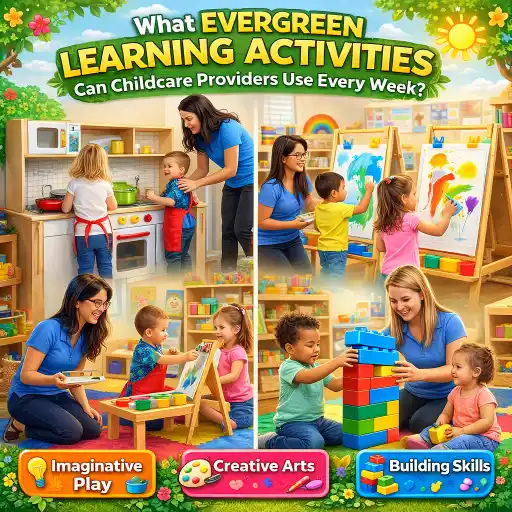
Why it matters:
1) Evergreen activities are repeatable. Kids learn when they practice the same idea many times. 2) They save you time. You spend less prep energy and more time observing children. 3) They help families see progress because you use the same tools and routines each week.
These stable routines support social-emotional skills, language, and fine motor growth. For planning courses and templates that match these goals, check the Lesson Planning for Preschoolers  Buy Now $24.00 course.
What simple evergreen activities can I set up every week?
- 📚 Story + Props: Read a short book, then leave 2–3 props for play. This links reading to the block or dramatic play area as research shows props boost talk and imagination. See ideas on using book-related toys in the block center at Early Childhood Research & Practice.
- 🧩 Choice Centers: Rotate a small set of open-ended materials (blocks, loose parts, art) each week. Children revisit and deepen skills.
- 🌊 Sensory Tray: Quick bin with a clear goal (scoop, sort, count). Use household fillers and safe tools — many theme ideas are on ChildCareEd.
- 🎵 Circle Hook: Start with a short song, a movement break, and one open question. Circle routines help attention and language; see tips at ChildCareEd circle time.
- 🌿 Outdoor Minute: Five-minute scavenger or math hunt outside. Use nature to practice counting, shapes, or senses.
- 👐 Calm Corner Practice: Teach one calm tool each week (breathe, squeeze, or sensory object). This supports self-regulation; read activities for feelings at ChildCareEd.
Each activity can be shortened or lengthened. Keep one clear learning goal (language, fine motor, or social skill). Label materials and store by theme for fast setup.
How do I plan these activities to match children's development and licensing rules?
- 🧭 Age fit: Ask, "Can most children this age do it with my help?" (For example, toddlers need larger items; preschoolers can sort small pieces.)
- 🔎 Individual fit: Tailor one small change for a child who needs a challenge or a simpler step.
- 🌍 Culture & safety fit: Include materials that reflect families and follow health rules. Remember: state requirements vary - check your state licensing agency.
A simple planning template has these parts: theme, one learning goal, materials, steps, and observation notes. You can learn more about step-by-step lesson planning at ChildCareEd lesson planning and the Baby Play Buy Now $16.00 course for infants and toddlers.
Quick differentiation tips (3 easy options):
- 🟢 Add a tool (tongs, tweezers) for fine motor practice.
- 🔵 Give a visual prompt (picture card) for language support.
- 🔴 Reduce pieces or time for children who need less stimulation.
How can I use sensory and outdoor play to boost learning and avoid common mistakes?
Sensory and outdoor play are powerful for hands-on learning. They help with language, #sensory regulation, motor skills, and calm focus. Use these quick guides:
- 🌾 Base + 2 props rule: Choose one filler (rice, oats, water-safe item) and two types of props. This keeps focus and reduces overwhelm. See many theme ideas at ChildCareEd sensory bin themes.
- 🧽 Clean & safe: Use washable tools, rotate materials, and have cleanup steps. For young children choose taste-safe or non-food bases and larger items for safety.
- 🌦️ Outdoor learning: Plan short hunts, loose-parts math, or nature art. The outdoor classroom boosts curiosity and offers cross-curricular chances; find ideas at Messy Little Monster and the Natural History Museum's nature activities.
Common mistakes and fixes:
- ❌ Too many small parts. ✅ Fix: Start with one filler + two props.
- ❌ No learning goal. ✅ Fix: Pick one focus (counting, vocabulary, sharing).
- ❌ Forgetting allergies or cultural needs. ✅ Fix: Check family notes and swap materials when needed.
How do I record learning and share it with families and your team?
Documentation keeps your work visible and useful. Try this easy loop:
- 🔍 Observe: Watch for 1–2 target behaviors during play (e.g., counting, asking for help).
- ✍️ Note: Write one short sentence and a photo or quick video. Use your program's observation form or the Learning Opportunities Checklist Buy Now $0.00.
- 📣 Share: Send a 1–2 sentence note home: "Today Maya counted to five while filling shells in the beach bin!" Families love specifics.
- 🔁 Plan: Use that note to pick next week's small step for the child.
Tips for teams:
- 🙂 Use a shared folder of themed kits and simple lesson steps so anyone can run the activity.
- 🗓️ Rotate themes weekly and include a quick "goal card" inside each kit.
- 📚 Offer brief staff refreshers using short ChildCareEd courses like Lesson Planning for Preschoolers Buy Now $24.00 or Baby Play Buy Now $16.00.
Conclusion
Evergreen #play and activity ideas give you stability and children repeated practice. Keep plans short, pick one learning goal, and rotate themes for variety. Use sensory bins, story props, outdoor hunts, and calm-corner routines to hit language, motor, and social goals. Document one clear observation and share it with families. For more themed ideas and step-by-step templates, explore ChildCareEd resources on lesson planning and sensory play.
Five words to remember: #learning #activities #sensory #play #lesson — pick one to focus on this week and build from there.
Use these 6 easy activity types. Each one can be done again and again with small changes to stay fresh.Good planning means meeting children where they are. Use three checks:- 45 Hour Child Growth and Development
- 45 Hour Preschool Methods and Materials
- Easy Steps to Resume and Interview Success
- Bienvenido! Welcoming All Families
- Birth to Five CDA Credential with Portfolio Review
- 45 Hour Infant and Toddler Methods and Materials
- Pediatric RSV First Aid & CPR/AED
- 45 Hour School Age Methods and Materials
- Texas Director Credential
- Preschool Arithmetic Activity
- 🤯 ¿Por qué este niño está teniendo un comportamiento difícil de repente?
- 🏡🗣️ ¿Cómo hablo con los padres sobre los comportamientos que su hijo aprendió en casa?
- What evergreen learning activities can childcare providers use every week?
- ¿Cuáles son las mejores actividades del Día de la Tierra para niños en casa o en el aula?
- Actividades de Motricidad Gruesa que Desarrollan el Equilibrio, la Coordinación y la Fuerza
- Normas de Licenciamiento de Cuidado Infantil en Virginia para Centros Diurnos Infantiles y Hogares Diurnos Familiares
- Proporciones de Cuidado Infantil y Tamaños de Grupo por Edad en Maryland (Guía Rápida para Centros y Hogares)
- Proporciones de Cuidado Infantil y Tamaños de Grupo por Edad en Virginia (Guía Rápida para Centros y Hogares)
- Cómo Celebrar el Día Nacional del Kindergarten
- Capacitación Previa al Servicio para Proveedores de Cuidado Infantil en Illinois
- Capacitación Previa al Servicio para Proveedores de Cuidado Infantil en Georgia
- How can I use beach and ocean-themed summer activities in my California early childhood classroom?
- Capacitación CDA gratuita en Illinois
- Celebrando la amistad en el cuidado infantil durante el Día de los Mejores Amigos
- How can North Dakota providers celebrate America’s 250th in age-appropriate ways?
- In-House Field Trips for Kids: Fun Ideas for Daycare
- Classroom Resources to Help Child Care Teachers Save Time
- How Can Child Care Providers Stay Organized Without Spending Hours Planning?
