This short guide helps child care providers and directors in North Dakota plan easy, playful fine motor work for #toddlers in your #classroom to build #fine #motor skills through #play. The ideas are low-cost, tested in child care settings, and link to ready-to-use resources from ChildCareEd and other trusted sources. Use these tips during centers, mealtimes, or calm-down moments. Note: state requirements vary - check your state licensing agency.
What simple fine motor activities can toddlers do right away?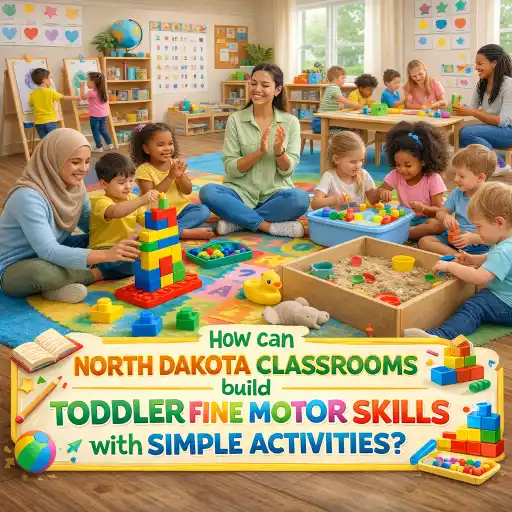
- 🧵 Threading & lacing (pincer grasp)
- ✂️ Snipping paper strips (scissor control)
- 🥄 Scoop-and-pour sensory bins (bilateral coordination)
- 🎯 Tweezer transfer of pompoms (precision and sorting)
- 🧁 Clothespin clipping on paper cupcakes (thumb-finger squeeze)
- 🍝 Pasta or Cheerio stringing (hand-eye coordination)
- 🖊️ Q-tip or dot painting (controlled small movements)
- 🧸 Dressing dolls (buttoning, zipping practice)
- 🔩 Nuts-and-bolts, Lego snaps (wrist rotation and strength)
- 📎 Paperclip pick-up and transfer (precision)
Quick tips:
- Start with bigger pieces for new toddlers and make pieces smaller as they improve.
- Use visual cue cards or photos, so children know the steps and can try independently.
- For seasonal ideas (winter crafts, themed tubs), see ChildCareEd seasonal bundles like winter fine motor activities. For preschool-safe ice play that supports sensory exploration and fine-motor practice (melting, scooping, grasp-and-release tasks), see Icy Activities.
For sensory ideas that calm and build hands, try making simple calming bottles — instructions at Make your own Sensory Bottles Buy Now $0.00. If you want themed printable activities, explore ChildCareEd resources such as the Gingerbread Person Fine Motor Activity Buy Now $0.00 or the Fine Motor Fruit Juice Collection Buy Now $0.00.
How can I organize activities into centers and daily routines so staff can run them easily?
- 🧭 Choose 3–4 rotating centers each day (12–20 minute rotations):
- Fine motor table (beads, lacing, tweezers)
- Sensory scoop table (rice, beans, water with scoops)
- Art & cutting station (snip strips, dot painting)
- Playdough/manipulative box (roll, pinch, stamp)
- 📦 Prep labeled tubs: Put one task and a picture instruction card in each tub so children can try independently. See ChildCareEd task-box ideas at How to incorporate fine motor into daily activities.
- 🧩 Classroom environment and center design: For staff who want to set up fine motor centers that invite independence and self-directed learning, ChildCareEd's Environments That Inspire Independence and Exploration
 Buy Now $55.00 is a 6-hour online course covering how to design stimulating, inclusive spaces where toddlers can explore, choose, and build skills at their own pace — a strong match for the rotating center approach outlined in this guide.
 - 🧯 Safety & licensing: Remove choking hazards for under-3s and supervise small-piece activities. Remember: state requirements vary - check your state licensing agency.
- 🧰 Staff workflow: Prep 1–2 new activities weekly and keep a small rolling cart with ready tubs for substitutes and early finishers.
- 📊 Track practice: Use a simple checklist to note who practiced which skill each week. Pair observations with milestone references like the CDC's age guides (2 years, 3 years).
Extra tips:
- Keep cleanup short: use trays under bins and teach a tidy-up song.
- Label difficulty levels (easy/medium/hard) so toddlers self-select appropriately.
- Post simple goals at each center (e.g., "pinch, thread, count").
How do I adapt activities for diverse learners and measure progress in my program?
- 🔧 Adaptations to try:
- Use larger beads, jumbo tweezers, or clothespins for beginners.
- Provide grip helpers or built-up handles on crayons and spoons.
- Offer two difficulty levels in each tub (e.g., large vs small beads).
- 🤝 Inclusive play: Partner with programs like Special Olympics Young Athletes in North Dakota for inclusive motor events and ideas for mixed-ability play.
- To build staff confidence in adapting activities for toddlers with varied abilities, ChildCareEd's Recognize, Respond, Respect: Supporting Diverse Learners Buy Now $55.00 is a 6-hour online course that gives practical strategies for inclusive play and differentiated instruction — directly supporting the adaptation tips and mixed-ability fine motor activities described here.
- 📋 Measure progress simply:
- Pick 1 target skill per child (pincer grasp, scissor use, bilateral hand use).
- Observe during two short sessions a week and mark success steps (attempted, used the tool with help, used the tool independently).
- Share a brief note with families and link to CDC milestones for context (2-year milestones, 3-year milestones).
- 🩺 When to refer: If a child shows consistent difficulty across settings, follow your program steps for screening and share resources from ChildCareEd's guides and local early intervention services. Early help matters.
For assistive ideas and resources for children with varied abilities, see ChildCareEd's resource page Know Me For My Abilities.
What common mistakes do providers make, and why does fine motor practice matter?
Why it matters: Fine motor practice supports independence (zipping, feeding), school readiness (pencil control, cutting), and even early math when children use fingers and manipulatives. Research and practical guides show that short, frequent practice helps more than rare, long sessions. See ChildCareEd's explanation of motor skill importance at How motor skills shape child development and review why play matters in learning.
Common mistakes and fixes (quick list):
- 😬 Too-hard materials cause frustration.
- Fix: Level up slowly. Start chunky, then reduce size.
- 😩 Only worksheets or table time.
- Fix: Prioritize hands-on, playful tubs first; use paper tasks as a brief follow-up.
- 😕 One-size-fits-all groups.
- Fix: Offer 2–3 difficulty levels per tub and visual cues so toddlers self-select the right challenge.
- 🧼 Poor cleanup plan leads to chaos.
- Fix: Teach fast clean-up steps and keep cleaning tools handy. Put a daily checklist on each bin.
- ⚠️ Safety oversights (small parts with under-3s).
- Fix: Separate age groups for small-piece play and supervise closely. State rules matter—state requirements vary - check your state licensing agency.
Avoiding these pitfalls will help staff keep activities playful, safe, and developmentally useful. For more activity ideas, you can drop into centers, explore ChildCareEd's quick lists like Crayons, Chopsticks, and Cheerios, and practical task boxes.
Conclusion
1) Start small: pick 3 activities to rotate for two weeks. 2) Make tubs clear and labeled so any staff member can run them. 3) Observe one short skill per child and share quick notes with families. Use the ChildCareEd resources linked above for printable activities, seasonal ideas, and calm-down tools. You are building the tiny skills that lead to big independence. Keep it simple, playful, and consistent — toddlers learn fastest when they are having fun.
Organization makes fine motor practice realistic for busy classrooms. Use numbered steps and keep setups predictable so staff and toddlers know what to do. Every toddler learns at their own pace. Use small adaptations and clear measurement steps so families and staff see growth. Here are easy activities you can set up with materials you already have. Each item shows the main skill it builds and a quick tip for success. For a much longer list, see ChildCareEd's 25 activities.
- CDA Home Visitor Subject Area 3 Part 3 Birth to 5
- CDA Home Visitor Subject Area 2 Part 3 Birth to 5
- SIDS: Saving Babies: A Change of Position, A Change in Tradition
- Open Ears: Listening in Child Care
- Birth to Five CDA Credential with Portfolio Review
- 45 Hour Infant and Toddler Methods and Materials
- Texas Director Credential
- 45-Hour Infant and Toddler Curriculum
- CDA Certification en Español: Recursos y Consejos para Educadores Bilingües
- ⏰📘 ¿Cuáles son los requisitos de capacitación anual en el cuidado infantil en Dakota del Norte?
- 👶 ¿Cuáles son las proporciones y grupos requeridos en Dakota del Norte? 🏫
- 🚌❄️ Ideas de excursiones en Dakota del Norte
- Pascua En El Aula: Actividades Sencillas Para Aprender y Celebrar Con Seguridad
- Actividades de Motricidad Gruesa que Desarrollan el Equilibrio, la Coordinación y la Fuerza
- 10 Ejemplos de Cómo la Cultura Influye en el Desarrollo Infantil
- Actividades de Fiesta para Niños de Preescolar y Primaria
- Lista para Abrir una Guardería en Casa en Dakota del Norte: Cómo Empezar
- Cómo Ser Maestra de Preescolar en Dakota del Norte
- Capacitación Previa al Servicio para Proveedores de Cuidado Infantil en Dakota del Norte
- Las Mejores Ideas de Excursiones para Guarderías en Dakota del Norte
- How Do Art Activities Support Cognitive Growth in North Dakota Preschoolers?
- How can North Dakota classrooms build toddler fine motor skills with simple activities?
- How Do Art Activities Support Cognitive Growth in North Dakota Preschoolers?
- Calabazas, hojas y manzanas: actividades de otoño para preescolares
- Celebrando la amistad en el cuidado infantil durante el Día de los Mejores Amigos
- Canciones, juegos y preguntas de círculo para niños
- How can we turn playtime into learning time in North Dakota child care?
- How Can Simple Cooking Activities Teach Skills in North Dakota Child Care Programs?
