Every morning and afternoon, your program has busy moments. These are the times when children move from home to care and back again. Small steps can keep kids safe, calm, and happy. In this article, we explain clear routines and tools you can use right away. We focus on being steady, working with families, and planning for emergencies in Washington, D.C.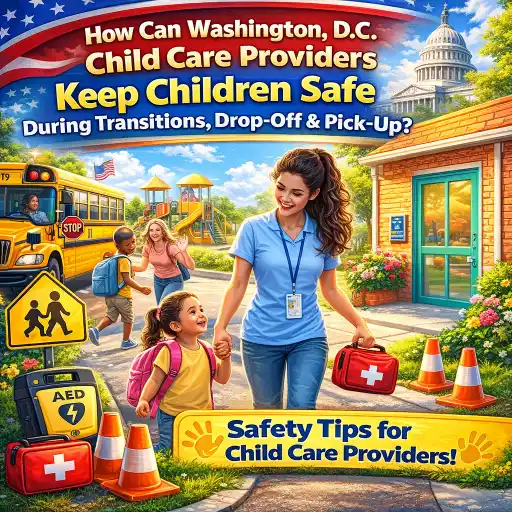
Why this matters:
1. Calm starts and ends help children learn all day. A calm #safety-first arrival helps children join activities faster and reduces behavior challenges. For tips on easing drop-off, see Easing Drop-Off Anxiety.
2. Strong teamwork with families and clear records protects children and programs. Good communication is powerful — read ideas in Drop-Off Drama? Not with Great Communication.
Note: state requirements vary - check your state licensing agency.
How can we make drop-off and pick-up safer every day?
1. 👋 Greet each child and parent by name at the door. A short hello makes children feel seen. ChildCareEd recommends a warm, consistent greeting to build trust (How can parents and child care providers make drop-off and pick-up less stressful?).
2. 📝 Use a clear sign-in/out sheet. Keep one paper copy in the classroom and one master copy in the office. Templates and samples help you create a usable form (Daycare Sign In Sheet Samples).
3. 🔐 Verify pick-up permissions. Always check the child’s emergency form and ID before release. For what to include on forms, see Emergency Form for Daycare.
4. 🚗 Manage traffic safely. Create marked spots for cars and walkers, and staff a door during busy times. Remind families about car seat safety; review the CDC guidance on child passenger safety (Child Passenger Safety).
5. 📣 Share a short daily handoff. Ask parents to tell you one quick fact (sleep, meds, mood) and give a one-line reply at pick-up. This keeps communication focused and fast (How can we help children move from home to daycare with less stress?).
What routines and tools help children through transitions?
1. 🖼️ Use a picture schedule by the door. Show arrival, snack, play, nap, and pick-up with photos or icons so non-readers know what comes next. ChildCareEd explains why visuals reduce surprises (How can organizing materials and routines make my classroom calmer?).
2. 🧸 Allow one small comfort item. A washable toy or photo can help a child feel connected during the morning. Make a simple policy, so families know what to bring (What routines really help toddlers with separation anxiety?).
3. 🎵 Teach a short goodbye ritual. A 20–60 second ritual (song, handshake, phrase) gives children control and shortens stress. Research and tips are in How to Ease Goodbyes at Daycare Drop Off. For hands-on training and practical routines that help children overcome separation anxiety at drop-off, see the Strong Good Hug, And A Kiss to Say Good Bye seminar.
4. ⏱️ Offer a quick arrival activity. A sensory tub, puzzle, or book near the door helps children shift attention from their parent to the room (Why Is Drop-Off So Emotional?).
Common mistakes and how to avoid them:
1. 😬 Long, drawn-out goodbyes. Coach families to keep the ritual short.
2. 🚪 Sneaking away. Always say goodbye — sneaking breaks trust.
3. 🔄 Changing routines too often. Pick 2–3 consistent steps and use them daily (What routines really help toddlers with separation anxiety?).
How can staff and families communicate to reduce stress and keep kids safe?
1. 🤝 Use a one-line handoff. Parents tell one key fact at drop-off. Staff replies with one short note at pick-up. This simple exchange builds trust and saves time (Drop-Off Drama? Not with Great Communication).
2. 📱 Offer optional check-ins. If your policy allows, a quick photo or text 10–20 minutes after arrival reassures worried parents. Check privacy rules first and write this into your family handbook (How can parents and child care providers make drop-off and pick-up less stressful?).
3. 👩🏫 Train staff on consistent words and responses. When the whole team uses the same phrases and rituals, children learn faster and families feel confident (Staff teamwork: consistent responses across rooms - see related ChildCareEd trainings).
4. 📚 Share simple tips with families. Give a one-page arrival guide with the visual schedule, where to park, and your short goodbye script. This strengthens your partnership and reduces surprises (How can we help children move from home to daycare with less stress?).
What emergency steps and records must be ready for safe transitions?
1. Keep emergency records accurate and easy to find.
1. 🗂️ Maintain current emergency forms for each child. Include contacts, authorized pick-up names, allergies, and medical consent. For a checklist, see Emergency Form for Daycare.
2. 🎒 Pack a Go-Bag with attendance lists, medication notes, first aid, and release forms. Keep a copy in the classroom and one by the main exit. ChildCareEd Go-Bag checklists help you pack smart (How can my classroom be ready for an emergency?).
3. 📊 Track attendance during drills and daily drop-off. A clear sign-in sheet supports reunification and accountability (Printable Daycare Sign In Sheets).
4. 🆘 Practice reunification. Decide on a safe meeting spot and rehearse how to release children only to authorized adults. Follow CDC guidance on planning and reunification in emergencies (Before, During, and After an Emergency).
5. 📌 Know your local rules. Washington, D.C. programs should follow local licensing and child welfare guidance. For context on D.C. systems and staffing, see the GAO review of D.C. child services (GAO-04-1017).
Summary and Quick Checklist
Why this helps: Calm, consistent routines and strong family teamwork make transitions safer and kinder. You will see fewer tears, fewer lost items, and happier families.
- 👋 Greet by name and use a short goodbye ritual (#transitions).
- 📝 Keep current emergency forms and a clear sign-in/out system (#dropoff #pickup).
- 📷 Offer optional brief check-ins if policy allows (#communication).
- 🎒 Have a classroom Go-Bag and practice reunification drills (#safety).
- 🤝 Train staff so everyone uses the same words and steps (#transitions).
FAQ (quick answers):
- Q: How long should goodbyes be? A: 20–60 seconds works for most children. See How to Ease Goodbyes at Daycare Drop Off.
- Q: Can children bring comfort items? A: Yes — one small, washable item is best (What routines really help toddlers with separation anxiety?).
- Q: What if a parent is late? A: Follow your late-pickup policy and document the time. Keep contact info current on emergency forms (Emergency Form for Daycare).
- Q: When should we call for help? A: Call 911 for medical emergencies. Use your reunification plan for evacuations and follow CDC guidance (CDC: Emergency Preparedness).
You are making a real difference every time you greet a family or close a door safely. Small, steady routines keep children safe and help families trust your program. State requirements vary - check your state licensing agency.
- Moving About the Classroom: Effective Transitions for Everyday
- Bienvenido! Welcoming All Families
- 1,2,3, Eyes on Me: Classroom Safety
- Play Safe, Think Big: Literacy Through Play
- 45 Hour Infant and Toddler Methods and Materials
- Self-Regulation & Change: Helping Children Cope
- Texas Director Credential
- Every Moment Matters: Schedules and Transitions
- Moving About the Classroom: Effective Transitions for Everyday
- Estudio de caso de TDAH
- Bright Beginnings in the Capital: A Day in the Life of Early Childhood Educators in Washington, D.C.
- 👶 ¿Cuáles son las proporciones y grupos requeridos en Dakota del Norte? 🏫
- Recursos en Español sobre el Sueño Seguro del Bebé
- Capacitación en Salud y Seguridad Preventiva en Línea para Proveedores de Cuidado Infantil
- Regulaciones de Licenciamiento de Cuidado Infantil en California para Centros y Hogares de Cuidado Infantil Familiar
- Proporciones de Cuidado Infantil y Tamaños de Grupo por Edad en Maryland (Guía Rápida para Centros y Hogares)
- Proporciones de Cuidado Infantil y Tamaños de Grupo por Edad en Nueva Jersey (Guía Rápida para Centros y Hogares)
- Proporciones de Cuidado Infantil y Tamaños de Grupo por Edad en Virginia (Guía Rápida para Centros y Hogares)
- Lista para Guardería en Casa en Illinois: Cómo Iniciar una Guardería en el Hogar
- Consejos de Supervisión Activa para Salones de Preescolar y el Juego al Aire Libre
- Cómo Trabajar en el Cuidado Infantil en Wisconsin: Requisitos y Pasos
- How Can DC Child Care Programs Keep Staff During Workforce Shortages?
- How do I start a daycare in Washington, D.C. as a new provider?
- How can Washington, D.C. child care providers keep children safe during transitions, drop-off, and pick-up?
- Canciones, juegos y preguntas de círculo para niños
- La mejor manera de hacer seguimiento a la capacitación de su equipo de daycare How to Organize Staff Training for Your Child Care Center Cómo organizar la capacitación del personal para su centro de cuidado infantil
- Cómo simplificar la capacitación para sus empleados de daycare
- Should Washington Child Care Centers Rethink Parking Lots, Barriers, and Building-Side Safety?
