Keeping classrooms and care spaces healthy requires staff to understand the differences between cleaning, sanitizing, and disinfecting—and to use each process safely and consistently. This practical guide helps child care directors and providers establish reliable routines for high-touch surfaces, toys, food-contact areas, diapering stations, bathrooms, and body-fluid spills. It also covers product selection, label directions, safe storage, ventilation, handwashing, staff responsibilities, and documentation so everyday practices protect children without creating unnecessary chemical exposure. To strengthen your program’s procedures, explore ChildCareEd’s self-paced online course Prevention and Control of Infectious Diseases  Buy Now $16.00, which addresses hygiene policies and strategies for maintaining a healthy environment while reducing the spread of germs. Programs can also use the free Cleaning, Sanitizing & Disinfecting Schedule Buy Now $0.00 to identify what should be treated, which process to use, and how often each task should be completed. Remember that state requirements vary, so always check with your state licensing agency.
1) What is the difference between cleaning, sanitizing, and disinfecting, and when should each be used?
Short definitions that help staff choose the right action:
- 🧽 Cleaning: remove visible dirt and many germs using soap/detergent and water. Cleaning is the required first step before any sanitizing or disinfecting. See ChildCareEd: What's the difference? and CDC guidance at How To Clean and Disinfect Early Care and Education Settings.
- 🔸 Sanitizing: reduces germs to levels considered safe for public health codes; used for items that contact mouths or food (e.g., bottles, highchair trays, mouthed toys). Methods include dishwasher hot cycles, EPA-registered sanitizers, or brief bleach soaks per the CDC (see CDC feeding item FAQ).
- ⚠️ Disinfecting: uses stronger products (EPA-registered disinfectants or diluted bleach at recommended strengths) to kill remaining germs — appropriate after known illness, body-fluid spills, or for diapering/bathroom areas. Follow product contact time and safety instructions from the CDC: When and How to Clean and Disinfect a Facility.
Why this distinction matters: picking the right level avoids unnecessary chemical exposure, conserves staff time, and targets effort where it prevents transmission most effectively. For classroom-friendly explanations and examples, see the ChildCareEd overview here.
2) How do we build a practical, staff-friendly cleaning, sanitizing, and disinfecting schedule?
Make the schedule short, visual, and task-focused. Use three columns: Task • Frequency • Responsible person. Keep one posted copy in the classroom and one in your administrative binder. ChildCareEd provides sample schedules and checklists you can adapt: Cleaning, Sanitizing & Disinfecting Schedule Buy Now $0.00 and What to Clean When.
- Daily priorities (every day or after each use):
- 🍽️ Wipe and clean tables and highchair trays after meals.
- 🧺 Move mouthed toys to a labeled “Wash Me” bin; wash and sanitize daily or more often as needed.
- 🚻 Clean diapering surfaces after each use and disinfect at scheduled intervals.
- Weekly priorities:
- 🧼 Deep clean shelving, wash soft toys and linens per label instructions.
- 🔁 Review inventories (soap, paper towels, sanitizer) and replace PPE/supplies.
- Monthly priorities:
- 🔍 Room-by-room maintenance check, review training logs, and update the schedule after incidents. Use ChildCareEd templates Buy Now $0.00 to keep records.
Assign tasks to specific roles and rotate duties so staff share the workload. Maintain brief sign-off records: Date • Task • Staff initial. These records are helpful during licensing visits and when communicating with families.
3) What products, dilutions, and safety steps protect children and staff?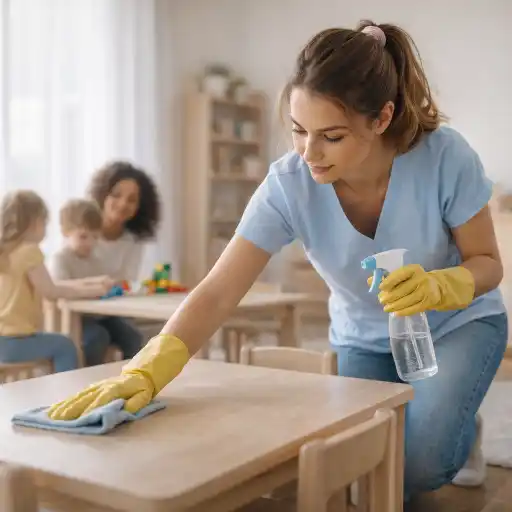
Choosing and using products safely prevents harm while ensuring effectiveness. Key principles come from CDC and trusted toxicology resources: CDC ECE guidance, NPIC disinfectant safety, and Minnesota’s practical charts: MN Dept. cleaning & disinfection.
- ✅ Read labels and use EPA-registered products when recommended. For virus-specific outbreaks, use products from EPA’s List N as directed on product labels.
- ✅ Bleach guidance: prepare correct dilutions and fresh solutions (follow CDC or your state chart); never mix bleach with ammonia or other cleaners. See mixing guidance in MN Dept. materials and CDC examples: CDC.
- ✅ Contact time: leave the surface wet for the full wet/contact time listed on the label — this is essential for effectiveness.
- ✅ PPE and ventilation: staff should wear gloves and any PPE recommended on the Safety Data Sheet; ensure good ventilation (open windows or use fans safely). For worker protection, follow OSHA-aligned training and NPIC safety tips.
- ❗ Store chemicals locked and labeled away from children; train staff on safe mixing, use, and disposal. Keep Safety Data Sheets accessible.
Common mistakes to avoid: disinfecting without cleaning first, mixing incompatible chemicals, and neglecting contact time. Use checklists and short refreshers to reinforce safe practice.
4) How should we clean specific items: toys, feeding items, linens, electronics, and body-fluid spills?
Different materials need different treatments. Use the following itemized steps and link staff to manufacturer guidance when available:
- Toys and mouthed items:
- 🧸 For hard toys: wash with soap and water, then sanitize (dishwasher hot cycle or EPA-approved sanitizer). Put mouthed toys in a "Wash Me" bin immediately after use — see ChildCareEd: Infection Control Practices.
- 🧶 For soft toys: launder according to labels; if not washable, remove from shared use during outbreaks (see Purdue guidance on soft surfaces: Purdue).
- Infant feeding items:
- 🍼 Clean after every feeding, then sanitize daily if the infant is CDC feeding item FAQ.
- Electronics:
- 📱 Use wipeable covers and follow manufacturer instructions. Use disinfectant wipes rated for electronics; ensure contact time and avoid soaking.
- Body-fluid spills (vomit, blood, diarrhea):
- 🧯 Put on gloves, remove solids with paper towels, disinfect with an appropriate bleach solution or EPA product per CDC norovirus and disinfection guidance (CDC Norovirus and facility guidance), and dispose of waste safely.
Always wash hands immediately after cleaning and after removing gloves.
5) How do we respond to illness, outbreaks, and communicate with families and public health?
Clear procedures reduce confusion and support timely public health action. Follow the CDC Early Care & Education portal and local health department guidance: CDC ECE Protecting Against Infections and local examples such as San Diego County guidance.
- Immediate steps when a child is sick at the center:
- 🤒 Isolate the child in a supervised, separate area; ensure the child has adult supervision and comfort items as allowed by policy.
- 📞 Notify the family promptly with specific, calm information about symptoms and pickup expectations.
- Reporting and outbreak steps:
- 📣 Report to your local health department when required by local rules (many counties require reporting outbreaks or specific conditions). Work with public health on testing, notifications, and additional measures.
- 🔁 Increase cleaning/disinfection of affected areas and follow public health direction for communication templates and exclusion criteria (see Illinois school nurse guidance for examples).
- Communicating with families:
- 📝 Use short, factual messages: what happened, what you did, what families should watch for, and when you’ll update them. Keep messages translated as needed.
FAQ (common questions):
- Q: Can hand sanitizer replace handwashing? A: No — use sanitizer (60%+ alcohol) only when soap and water aren’t available; handwashing is preferred. See CDC hand hygiene guidance.
- Q: How long do I keep records of cleaning? A: Keep sign-off logs and incident records at least per state licensing guidance; maintain as part of your program files.
- Q: When must children be excluded? A: Follow your written illness policy and local health guidance; typical reasons include fever, vomiting, diarrhea, or conditions that require one-on-one care. State requirements vary - check your state licensing agency.
- Q: Are disinfectant foggers or electrostatic sprayers recommended? A: Generally not as primary methods unless product labels specify safe use; follow CDC facility guidance.
- Q: Who trains staff on safe use of products? A: Directors should provide training and ensure Safety Data Sheets are available; consider short refreshers and the ChildCareEd infection-control courses for staff. You can assign the short, classroom-focused course Shoo, Germs! Don’t Bother Me! to staff for practical, child-centered strategies to teach children about handwashing and germ avoidance.
Summary: What should you do tomorrow?
- 🧾 Post a short, numbered daily checklist (handwashing, "Wash Me" bin, clean after meals) and review it with staff at shift start. Consider linking this checklist to routine daily health checks and Children's Health Month resources to prompt consistent drop-off screening and clear family communication.
- 🔐 Check that cleaning chemicals are stored locked and that SDS sheets are accessible; refresh PPE supplies.
- 🧑🏫 Schedule a 15-minute staff refresher on clean-first, then sanitize/disinfect, and on contact time for products.
- 📣 Update your one-page family illness handout and post it at drop-off; include clear return-to-care rules. State requirements vary - check your state licensing agency.
- 📚 Use ChildCareEd checklists and CDC resources linked above as the basis for training and to document your program policies.
You’re already doing the most important things: supervising, teaching, and caring. Adding clear steps for #cleaning, #sanitizing, and #disinfecting makes your program safer, supports staff confidence, and reassures families. For templates and classroom-ready tools, start with ChildCareEd’s schedule and infection-control pages and pair them with CDC guidance for technical details.
- How To Keep A Healthy Class for Infants/Toddlers
- CDA Home Visitor Subject Area 3 Part 3 Birth to 5
- How To Keep A Healthy Class: Six Tips for Germ Control
- 45-Hour Infant and Toddler Curriculum
- Creating Safe & Healthy Child Care Environments
- Texas Director Credential
- Everyday Safety: Creating Healthy Environments
- Family Child Care: Building, Premises, and Outdoor Safety
- Shoo, Germs! Don't Bother Me!
- Recursos en Español sobre el Sueño Seguro del Bebé
- How can childcare centers protect health, hygiene, and safety every day?
- How can childcare centers use simple health and safety best practices every day?
- How Can Michigan Daycare Centers Prevent the Spread of Illness?
- How can child care programs keep children healthy every day?
- How Can We Create a Healthy Childcare Environment?
- How can childcare programs prevent the spread of illness?
- How can child care programs prevent the spread of illness?
- How can child care programs control infections and keep kids healthy?
- How can child care programs prevent infections and keep kids healthy?
- Daycare Closing Routine: Safety, Cleaning, and Classroom Checks
- How can I create a safe childcare environment for every age group?
- How can childcare settings prevent the spread of illness?
- How should childcare programs clean, sanitize, and disinfect spaces to keep children and staff safe?
- How can group child care programs effectively prevent the spread of illness?
- How can child care programs ensure safe food preparation and mealtimes?
- How can the last 15 minutes of the day keep children, families, and staff safer and calmer?
- How Can Classrooms Prevent the Spread of Illness During Cold and Flu Season?
- How Can Child Care Centers Properly Sanitize Toys?
- How Often Should Daycare Toys and Classroom Materials Be Cleaned and Sanitized?
