Working in a Michigan daycare means keeping kids safe, healthy, and learning. This guide helps directors and providers use simple steps every day to stop germs. You will find practical routines, cleaning steps, illness policy tips, and what to do during an outbreak. Remember: state requirements vary - check your state licensing agency. We focus on five big ideas: #handwashing #illness #cleaning #policy #children. Links point to trusted resources from ChildCareEd and the CDC so you can train your team and share clear rules with families.
What daily routines stop germs the fastest?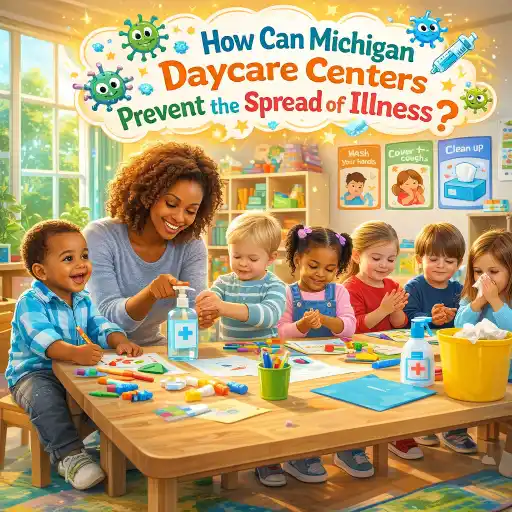
- 🧼 Wash hands on a schedule: arrival, before food, after bathroom/diapering, after outdoor play, and after coughing or sneezing. Teach the 5 steps: wet, soap, scrub 20 seconds, rinse, dry. See Handwashing for Kids and the CDC About Handwashing.
- 🧽 Clean then sanitize or disinfect high-touch surfaces and mouthed toys every day. Use ChildCareEd's guidance in Infection Control Practices for Child Care Settings, plus CDC cleaning steps at How To Clean and Disinfect.
- 🧴 Use hand sanitizer with at least 60% alcohol only when soap and water aren't available (CDC recommends soap/water whenever possible).
- 🧺 Keep a labeled "mouthed toy" bin and clean those toys before returning them to shelves.
- 🛏️ Have a quiet supervised space to isolate a sick child until a parent arrives; follow your written sick policy.
How should a Michigan daycare write and use an illness policy?
- 📄 Draft a one-page family handout and a longer staff policy. Include: quick rule for drop-off, list of symptoms that require staying home, return rules, medication steps, and how to report illness. Use ChildCareEd’s Illness Exclusion ideas as a model.
- 👥 Review with staff and a few families, then post the family handout at drop-off and email it. Put the full policy in the staff binder and in orientation materials.
- 📣 Communicate kindly when you send a child home: name the observed symptom, cite the policy, and explain next steps. Sample scripts in the ChildCareEd article help keep the tone calm.
- 🗂️ Document each illness event: date/time, symptoms, action taken, parent notified. Good records help with follow-up and with public health if needed.
- 🔁 Train and refresh staff yearly and when rules change. Offer short drills and quick refreshers using ChildCareEd courses like Prevention and Control of Infectious Diseases
 Buy Now $16.00.
What cleaning, disinfection, and diapering steps must staff follow?
- 🧼 Clean first, then sanitize or disinfect. Cleaning removes dirt; sanitizing lowers germs to safe levels; disinfecting kills most germs. Use weaker bleach mixes for sanitizing toys and stronger per-label disinfectants for diaper areas.
- 🧪 Follow product labels: wear gloves when needed, keep the surface wet for the contact time listed, and ventilate spaces. Never mix chemicals (for example, bleach + ammonia is dangerous).
- 👶 Diapering steps (simple sequence): prepare supplies, clean the child front-to-back, remove trash in a hands-free can, sanitize the changing surface after each use, wash the child's hands as appropriate, and wash your hands last. See full steps at the CDC diapering page and ChildCareEd diapering tips.
- 🧴 Make a daily checklist for high-touch items: tables, door handles, rails, toilet handles, shared electronics, and mouthed toys. Increase frequency during illness spikes.
- 🧽 Manage mouthed toys: place in a designated bin, then wash, rinse, and sanitize before reuse. For items that cannot be cleaned, remove them during outbreaks.
How do we handle outbreaks, reporting, and partnering with public health in Michigan?
When several children get similar symptoms, act fast. Michigan has public health resources and ethical guidance; see the Michigan MDCH ethics notice and materials at Michigan public health ethics. Also, keep the reportable disease list handy from ChildCareEd resources like Illnesses & Reportable Diseases Guidelines Buy Now $0.00.
- 📞 Notify your local health department early if you suspect an outbreak. They guide testing, exclusion rules, and communications.
- 🧯 Step up cleaning and isolate any sick children in a supervised area. Use PPE as public health or CDC guidance recommends; staff caring for sick children may need gloves and masks per CDC: When Students or Staff are Sick.
- 📣 Write one clear parent letter: what happened, what you are doing, what families should watch for. Use ChildCareEd templates and ask public health to review major messages when possible.
- 🗂️ Keep good records: who was sick, dates, symptoms, cleaning steps taken, and communications. Records speed public health investigations.
- 💉 Encourage vaccination and staff sick-leave that does not punish staying home when ill. This reduces spread and shows you value staff and family health.
State rules and local health department details matter — state requirements vary - check your state licensing agency and your local health department for Michigan-specific reporting and exclusion rules.
Conclusion
Preventing illness is a team effort. Use simple daily routines, a clear illness policy, strong cleaning and diapering steps, and a plan for outbreaks. Quick checklist for leaders:
- 🔹 Post and share a short family handout with your sick rules from ChildCareEd.
- 🔹 Train staff on handwashing and cleaning using Prevention and Control of Infectious Diseases Buy Now $16.00.
- 🔹 Keep cleaning supplies, a mouthed-toy bin, and a supervised isolation area ready.
- 🔹 Connect with your local health department and keep the reportable disease list available: Illnesses & Reportable Diseases Guidelines Buy Now $0.00.
Your daily choices protect children, families, and staff. For more tools and templates, visit ChildCareEd and the CDC links above. State requirements vary - check your state licensing agency. Thank you for the work you do to keep Michigan children safe and healthy.
Follow a clear cleaning routine so chemicals work safely and effectively. The CDC and ChildCareEd give easy rules to follow. See CDC cleaning steps at How To Clean and Disinfect and diapering steps at Healthy Habits: Diaper Changing Steps. Key steps below keep workers and children safe. A clear illness policy makes daily decisions easier and fair. Use short, kind language that families can read fast. ChildCareEd has templates and a helpful illness-exclusion tool in What should an illness policy for child care include?. Remember: state requirements vary - check your state licensing agency. Why it matters: simple routines cut how often kids and staff get sick. When everyone follows the same steps, classrooms stay open more often, and families lose less work time. For clear classroom ideas and the reasons these steps work, see Achoo! Classroom Tips to Help Stop Germs and the CDC's Early Care Guidance on Protecting Against Infections. Also review broader child-wellness strategies that support illness prevention — including nutrition, seasonal health tips, and age-appropriate physical activity ideas — in Keeping kids healthy! Tips and tricks.
- 45 Hour Child Growth and Development
- How To Keep A Healthy Class: Six Tips for Germ Control
- Administering Basic Health and Safety ONLINE
- Potty Training Made Simple
- Texas Director Credential Renewal
- Texas Director Credential
- How To Keep A Healthy Class: Six Tips for Germ Control
- Everyday Safety: Creating Healthy Environments
- Shoo, Germs! Don't Bother Me!
- CDA Certification en Español: Recursos y Consejos para Educadores Bilingües
- Child Care Professional Development in Michigan
- Requisitos de Cuidado Infantil en Nueva Jersey para Centros y Proveedores de Cuidado Infantil Familiar
- Proporciones de Cuidado Infantil y Tamaños de Grupo por Edad en Maryland (Guía Rápida para Centros y Hogares)
- Proporciones de Cuidado Infantil y Tamaños de Grupo por Edad en Nueva Jersey (Guía Rápida para Centros y Hogares)
- Cómo Trabajar en el Cuidado Infantil en California: Requisitos y Pasos
- What are the basic steps for Michigan child care providers?
- What should Michigan child care providers know to get started and stay compliant?
- How Can Michigan Daycare Centers Prevent the Spread of Illness?
- How does sleep help toddlers' brains grow in Michigan daycares?
- How can Michigan daycares teach healthy eating habits to toddlers?
- How can Michigan child care providers protect children now that measles is back in 2026?
- Cómo simplificar la capacitación para sus empleados de daycare
- How can I run a simple first-week staff onboarding plan for Michigan child care?
- How should Michigan child care providers watch for measles this summer?
- What Are Michigan Child Care Ratios and Group Sizes by Age (Center + Home Quick Guide)?
- How can childcare settings prevent the spread of illness?
- What Certifications Do I Need to Open a Daycare? License, Training, and Credentials Explained
- Daycare Licensing Michigan: Home, Group Home, or Center—Which License Do You Need?
- How Can Daycare Programs Prevent the Spread of Common Illnesses?
