Shared toys are part of how young children learn—and they can also carry dirt and germs from hands, mouths, and classroom surfaces. A practical, age-aware schedule helps your team keep materials ready for play without turning the classroom into a sterile space; ChildCareEd’s Prevention and Control of Infectious Diseases  Buy Now $16.00 course offers a focused next step for strengthening everyday infection-prevention practices. Explore the course to build knowledge you can apply to classroom routines and staff procedures.
Why does a consistent toy-cleaning schedule matter?
Children learn through active exploration: they grasp, mouth, share, drop, and carry materials throughout the room. These ordinary behaviors make toys and classroom materials high-touch items, particularly in infant and toddler settings. A consistent routine helps reduce opportunities for germs to spread while allowing children to continue using engaging, developmentally appropriate materials.
The goal is not to make every object sterile or to apply the strongest chemical to everything. Instead, providers need a clear process for deciding which items need cleaning, sanitizing, or disinfecting—and when. The CDC distinguishes these steps: cleaning uses soap, water, and scrubbing to remove dirt and many germs; sanitizing reduces germs to levels considered safe; and disinfecting uses products designed to destroy remaining germs after cleaning.
A predictable system also supports staff. When educators know where to place a mouthed toy, how materials are processed, and who is responsible for returning them to circulation, hygiene becomes a manageable classroom routine rather than an end-of-day scramble.
- Prioritize toys that are mouthed, shared, visibly soiled, or frequently handled.
- Use materials that can be cleaned according to their labels and your program’s procedures.
- Post a brief schedule and assign responsibility so tasks are not left to guesswork.
How are cleaning, sanitizing, and disinfecting different?
These terms describe different processes, and using them interchangeably can lead to wasted effort or chemical use that is not needed. Cleaning removes visible soil and many germs with soap or detergent, water, and friction. It is the first step whenever an item is dirty and before a sanitizer or disinfectant is applied.
Sanitizing reduces germs on a clean item or surface to a level considered safe by applicable public-health standards. It is especially relevant for items that contact food or that children may put in their mouths, such as appropriate toys and feeding items. Disinfecting uses a product intended to kill remaining germs on surfaces after cleaning; it is commonly needed for designated toileting or diapering areas and situations involving body fluids or illness, according to program policy and local rules.
Choose the process for the object and situation, not simply the strongest product on the shelf. Product labels specify appropriate surfaces, application methods, contact time, rinsing, and protective measures. The surface generally needs to remain visibly wet for the listed contact time for the product to work as directed. Keep children away while cleaning and antimicrobial products are in use, and never mix products unless labels explicitly say it is safe.
- 🧽 Clean first when dirt or residue is present; then sanitize or disinfect if indicated.
- Use a sanitizer for appropriate mouth- or food-contact materials, following the label.
- Reserve disinfection for the situations and surfaces called for by guidance and policy.
How often should toys and classroom materials be cleaned?
Frequency depends on age group, how materials are used, their surface and construction, and whether contamination or illness is present. A written, item-based routine is more useful than applying one rule to every toy. Head Start’s schedule, adapted from Caring for Our Children, provides examples: classroom toys are generally cleaned weekly, play activity centers and counters or shelves daily, and washable cloth toys used by one child weekly. Local rules and your licensing agency’s requirements take precedence.
- Mouthed toys: Remove them from play when a child is finished; clean before reuse, and sanitize when used by another child or when your applicable policy or rules call for it. In rooms serving children who are not toilet-trained, specific requirements may apply.
- Shared classroom toys: Clean on a routine schedule—often weekly—and sooner if visibly soiled or contaminated.
- Play centers, counters, and shelves: Clean daily, as well as promptly when visibly dirty.
- Washable cloth toys and dress-up clothes: Launder weekly or when soiled; dry completely before returning to use.
- Water-play equipment: Empty, clean, and disinfect after use or before a new group begins, following local guidance.
Clean immediately after visible contamination, body-fluid exposure, or a spill. During an illness or outbreak, follow public-health and licensing guidance for any increased cleaning or disinfection. State requirements vary - check your state licensing agency.
How can staff handle different toy materials safely?
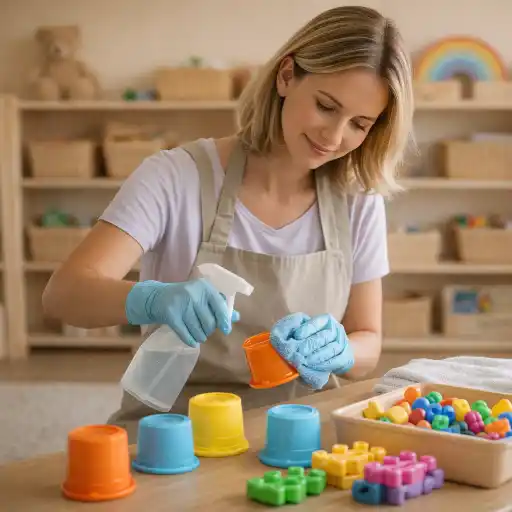
A method that works for solid plastic may damage wood, leave fabric damp, or harm electronics. Sort materials before processing and follow the manufacturer’s care instructions. Choose durable items that can be cleaned reliably, especially for infants and toddlers, who are more likely to mouth toys.
- Hard, washable plastic or rubber: Scrub with soap and water, rinse, and use an appropriate sanitizer when indicated. A dishwasher may be suitable only for items labeled dishwasher-safe and compatible with the cycle.
- Fabric and plush: Follow the care label, machine-wash when permitted, and dry thoroughly. Remove soiled or mouthed soft toys from circulation for laundering; consider assigning items to one child at a time when appropriate.
- Wood: Avoid soaking unless the manufacturer permits it. Use a compatible method and dry promptly; check for cracks, rough areas, or damaged finishes.
- Electronic toys: Follow manufacturer instructions, avoid immersing them, and keep liquid away from openings. Use only products suitable for the device’s surface.
- Items with holes, seams, or trapped moisture: Inspect carefully. If the item cannot be cleaned and dried adequately, remove it from use.
Set up separate, clearly marked containers for dirty items and a clean drying area protected from contamination. Allow sanitized materials to air-dry as directed before returning them to children. These small workflow choices can prevent a cleaned toy from being recontaminated while staff manage the busy pace of the room.
How can directors make the routine consistent and safe?
Even a sound schedule can fail if it is hard to follow during active supervision. Keep procedures short, visible, and assigned. A labeled “to be cleaned” bin lets an educator remove a mouthed toy quickly without searching for a sink or leaving children unsupervised. Identify who processes the items, when the task happens, and where clean toys dry and are stored.
Use a checklist that records the task, frequency, responsible person, and completion. A simple log can help directors notice missed steps and clarify expectations during staff coaching. Train educators on the difference between cleaning, sanitizing, and disinfecting; product label directions; contact time; safe storage; and what to do with toys that cannot be cleaned effectively.
Common pitfalls are preventable: applying sanitizer or disinfectant before removing visible soil, wiping a product off before its contact time, returning damp materials to storage, using one method for every material, or leaving chemicals accessible. Store products in their original or properly labeled containers and locked away from children. Provide ventilation and any protective equipment required by the label. During active cleaning, ensure supervision remains covered.
Keep the routine responsive: review it when classroom ages, materials, products, illness conditions, or local requirements change. For additional professional learning, consider ChildCareEd’s How To Keep A Healthy Class: Six Tips for Germ Control Buy Now $35.00, Handling and Storage of Hazardous Materials Buy Now $10.00, Shoo, Germs! Don’t Bother Me! Buy Now $24.00, and Using Toys to Support Learning Buy Now $16.00. Confirm course details and whether training meets your needs with the provider and your licensing agency.
Conclusion: What is a practical answer to how often toys should be cleaned?
Clean toys and classroom materials on a written schedule that reflects their use, material, age group, and contamination risk. As a practical baseline, clean shared classroom toys weekly, play centers and shelves daily, and washable cloth toys weekly; remove and process mouthed or visibly soiled items promptly. Sanitize or disinfect only when the material, situation, product directions, and applicable requirements call for it.
Most importantly, clean before sanitizing or disinfecting, follow label instructions and contact times, dry items completely, keep chemicals inaccessible, and assign clear staff responsibilities. A steady, realistic routine protects children while preserving the joyful exploration that makes classroom materials valuable. Requirements differ by location, so use state and local guidance to tailor the schedule.
What are common questions about toy cleaning?
- Do all daycare toys need to be sanitized every day?
No. Daily sanitizing is not a universal requirement for every toy. Follow the schedule for each material and sanitize items when their use or applicable guidance indicates it. - What should staff do with a toy that a child has mouthed?
Remove it from play and place it in a designated container. Clean it before reuse; sanitize as required by your policy, licensing rules, and the item’s intended use. - Should staff disinfect all classroom toys?
Not routinely. Cleaning is the everyday foundation; disinfection is for designated higher-risk surfaces or situations identified by guidance, illness response, or program policy. - Can all toys go in a dishwasher?
No. Use a dishwasher only for items labeled dishwasher-safe and suitable for the sanitizing cycle. Keep electronic, porous, or otherwise incompatible toys out of it. - What should a center do during an illness outbreak?
Follow instructions from public-health authorities and licensing. The program may need to clean or disinfect more often, using appropriate products and procedures. - Do state rules use the same cleaning schedule everywhere?
No. Requirements vary by state and locality. Check your state licensing agency and local public-health guidance.
- 45 Hour Child Growth and Development
- 45 Hour Preschool Methods and Materials
- Using Toys to Support Learning
- 45 Hour Infant and Toddler Methods and Materials
- Pediatric RSV First Aid & CPR/AED
- 45 Hour School Age Methods and Materials
- CDA Bridge Bundle: Family Child Care without Portfolio Review
- CDA Bridge Bundle: Infant/Toddler without Portfolio Review
- CDA Bridge Bundle: Preschool without Portfolio Review
- Texas Director Credential
- CDA Certification en Español: Recursos y Consejos para Educadores Bilingües
- Cómo Abrir Una Quardería En Casa Sin Dinero?
- Recursos en Español sobre el Sueño Seguro del Bebé
- Que es Título 22 en California?
- Proporciones de Cuidado Infantil y Tamaños de Grupo por Edad en Maryland (Guía Rápida para Centros y Hogares)
- Proporciones de Cuidado Infantil y Tamaños de Grupo por Edad en Nueva Jersey (Guía Rápida para Centros y Hogares)
- Proporciones de Cuidado Infantil y Tamaños de Grupo por Edad en Virginia (Guía Rápida para Centros y Hogares)
- Lista para Abrir una Guardería en Casa en Carolina del Norte: Cómo Empezar
- Lista para Guardería en Casa en Illinois: Cómo Iniciar una Guardería en el Hogar
- Lista para Guardería en Casa en California: Cómo Iniciar una Guardería en el Hogar
- Lista para Guardería en Casa en Texas: Cómo Iniciar una Guardería en el Hogar
- Retraso del Habla en la Guardería: Cómo Pueden Ayudar los Proveedores
- Cómo Trabajar en el Cuidado Infantil en California: Requisitos y Pasos
- Cómo Ser Maestra de Preescolar en Maryland
- Cómo simplificar la capacitación para sus empleados de daycare
- Free Classroom Supplies for Teachers by Mail: How to Find Legitimate Offers
- How Can Classrooms Prevent the Spread of Illness During Cold and Flu Season?
- How Can Child Care Centers Properly Sanitize Toys?
- What Should You Check During a Daily Child Care Toy Inspection?
- How Often Should Daycare Toys and Classroom Materials Be Cleaned and Sanitized?
