Keeping kids safe and healthy is the most important job in your program. This article gives easy steps you can use every day. The ideas are for directors and providers who want practical routines that work. Remember: state requirements vary - check your state licensing agency. You will see helpful links to short guides and trainings from ChildCareEd and public health sources.
Why it matters
Healthy kids miss fewer days and learn more. Strong routines protect your #children, your #staff, and families. Small steps done the same way every day build trust with parents and make your program run smoother.
How do we stop germs and clean safely every day?
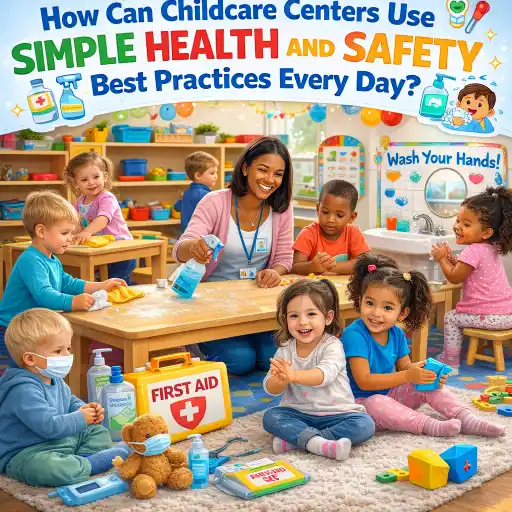
Germs spread fast in busy rooms. Follow 1 simple plan: clean, sanitize, then disinfect when needed. Use these steps:
- 🧼 Clean first: remove dirt with soap and water. This is enough most of the time. See clear steps from the CDC about how to clean and disinfect.
- ✨ Sanitize mouthed toys and feeding areas after use. The CDC explains when to sanitize and how to make a safe bleach solution: cleaning with bleach.
- 🧴 Disinfect when someone is sick or after diapering and bodily fluids. Follow the product label for contact time so the surface stays wet long enough to work.
- 💨 Improve air: open windows when safe, move activities outside, or use portable air cleaners. The CDC has tips for preventing infections in ECE settings here: protecting against infections.
Extra tips:
- Label a "mouthed toy" bin and wash those toys daily. See a short ChildCareEd guide on practical daily steps: How can childcare centers protect health.
- Store cleaners safely and never mix chemicals. Train staff to read product labels and use gloves and ventilation.
What policies and training keep our team ready and compliant?
- 📋 Write core policies: sick-child, medication, emergency plan, diapering, and allergy plans. Use templates from ChildCareEd to get started: Health and Safety Orientation
 Buy Now
 $55.00$45.00. - 👩🏫 Train staff regularly: CPR/First Aid, medication administration, infection control, and safe sleep. ChildCareEd offers courses like Medication Administration Training and other health courses.
- 🗂️ Keep clear records: training certificates, cleaning logs, injury reports, and medication logs. Good documentation protects kids and staff — see ChildCareEd tips on documentation dos and don'ts.
- 📣 Communicate with families: share policies at drop-off, post sick rules, and get written permission for medicines and allergy plans. Follow CDC advice on food allergy planning: food allergy guidelines.
- 🔁 Review and practice: run drills, refresh training, and update policies each year. A safety culture needs regular attention; see the 10 actions to create a culture of safety Buy Now $0.00.
Tip: designate a staff member to manage health files and make sure files are locked and private. For legal and clinical procedures about medication, see state or school nurse guidance like the Minnesota page: Medication Administration Procedures. state requirements vary - check your state licensing agency.
How do we protect infants and children during sleep, feeding, and play?
- 🛏️ Safe sleep for babies (back, firm crib, no soft bedding). Follow CDC safe sleep guidance: providing care for babies to sleep safely.
- 🍽️ Feeding and allergies: keep bottles and food labeled and separate. Have a written allergy plan and train staff to use epinephrine if ordered. The CDC has a full food allergy resource for schools and ECE: food allergy in schools.
- 🚼 Diapering: use a dedicated diaper area, disposable liners, gloves, and clean then disinfect the surface after each use. For diapering and preventing Cryptosporidium, follow CDC steps: preventing and controlling Crypto.
- ⚽ Playground and supervision: check equipment, surfacing, and sight lines. Use a playground checklist and adult ratios. ChildCareEd offers a handy playground safety checklist: playground safety checklist.
- 🔄 Responsive care: keep routines predictable, support calm transitions, and use family-style meals for older toddlers when safe.
Why these steps work: they lower illness and injury risks and help babies feel safe. Training and practice help staff do these routines without stress.
What are common mistakes and how do we handle outbreaks or emergencies?
Knowing common mistakes helps you fix them fast. Use this short plan to avoid problems and act when something happens.
Common mistakes and fixes:
- ❌ Mixing cleaners. Fix: Always follow labels and never mix bleach with other products. See CDC bleach safety: cleaning and disinfecting with bleach.
- ❌ Poor handwashing. Fix: Post handwashing steps, practice with children, and place sinks or sanitizer nearby. The CDC recommends washing hands for 20 seconds.
- ❌ Weak documentation. Fix: Use a Medication Administration Record and log every dose. ChildCareEd has strong guidance on documentation best practices: documentation dos and don'ts.
- ❌ Inconsistent sick policies. Fix: Post a clear sick policy and train staff on when to isolate a child and when to call families.
Steps to handle an outbreak:
- 👩⚕️ Isolate the sick child with supervision and give care in a separate area.
- 📞 Notify parents and your local health department if required. Follow their directions.
- ✨ Deep clean and disinfect areas linked to the illness, following CDC guidance on what to disinfect and how.
- 📣 Communicate calmly with families about next steps and when children can return.
For some infections, special steps are needed (for example Crypto). The CDC page on preventing Crypto shows extra cleaning and exclusion rules.
FAQ
- Q: How long should toys stay wet with disinfectant? A: Follow the product label for contact time; the surface must stay wet for that time.
- Q: Can staff give OTC medicine without a prescriber? A: Check state rules. Many centers require signed parent permission and sometimes a prescriber order. See medication procedure guidance: Medication in Administration Procedures.
- Q: What if a child has a food allergy reaction? A: Follow the child’s allergy action plan, give epinephrine if ordered, and call emergency services.
- Q: Who trains new staff on safety? A: The program director or a trained lead should deliver orientation and document completion. Use ChildCareEd courses for staff refreshers: health and safety training resources Buy Now $0.00.
Conclusion
Small, steady actions protect everyone in your program. Start with 1) handwashing, 2) clear policies, 3) proper cleaning, 4) training, and 5) good documentation. Build a culture of safety and your #children and #staff will thrive. For more practical tools and courses, visit ChildCareEd and check CDC links above. Use these steps and keep practicing—safety improves when teams work together.
Good policies make good practice stick. Use clear written rules, training, and records so everyone knows what to do. Try these 5 steps:Infants and toddlers need the most careful routines. Use clear steps to reduce risk and support development.- 45 Hour Child Growth and Development
- 45 Hour Preschool Methods and Materials
- Easy Steps to Resume and Interview Success
- Bienvenido! Welcoming All Families
- 45 Hour Infant and Toddler Methods and Materials
- Pediatric RSV First Aid & CPR/AED
- 45 Hour School Age Methods and Materials
- Texas Director Credential Renewal
- Texas Director Credential
- Celebrating International Women's Day
- Normas de Licenciamiento de Cuidado Infantil en Virginia para Centros Diurnos Infantiles y Hogares Diurnos Familiares
- Proporciones de Cuidado Infantil y Tamaños de Grupo por Edad en Nueva Jersey (Guía Rápida para Centros y Hogares)
- Creative National Ice Cream Day Ideas for the Classroom
- Which Georgia Parks and Nature Centers Are Best for Preschool Field Trip Adventures?
- How can childcare centers use simple health and safety best practices every day?
- How can I organize an effective preschool classroom?
- How can New York daycares build a positive classroom environment?
- Managing an Early Childhood Classroom with Confidence
- Celebrando la amistad en el cuidado infantil durante el Día de los Mejores Amigos
- Cómo simplificar la capacitación para sus empleados de daycare
- What are the basic child care safety standards we must follow?
- What is a simple first-week staff onboarding plan for Minnesota child care?
- How can Florida child care centers run a simple, safe first-week staff onboarding plan?
- Classroom Management Technology: Tools and Best Practices
- What Is Active Supervision and How Can It Keep Children Safe?
- Intergenerational Activities That Bring Children and Seniors Together
- New Mexico Home Daycare Standards: What Providers Need to Know
- How can centers effectively support new employees during childcare onboarding?
- MN Daycare Rules and Regulations 2026: Current Requirements and Upcoming Changes
