Introduction: Why does this matter for our classrooms?
Keeping children healthy is one of the most important parts of running a child care program. When staff know the difference between #cleaning, #sanitizing, and #disinfecting, they can pick the right step for the job and keep #preschoolers safe. This short guide answers common questions and gives simple steps you can use today.
Why it matters:
- Fewer sick days for children and staff.
- Families trust your program more when it’s clearly clean and safe.
- You follow good practice and reduce outbreaks. For more on everyday practices, see Infection Control Practices for Child Care Settings.
Note: state requirements vary - check your state licensing agency.
1) What do cleaning, sanitizing, and disinfecting actually mean?
Here are the simple meanings you can use in your classroom:
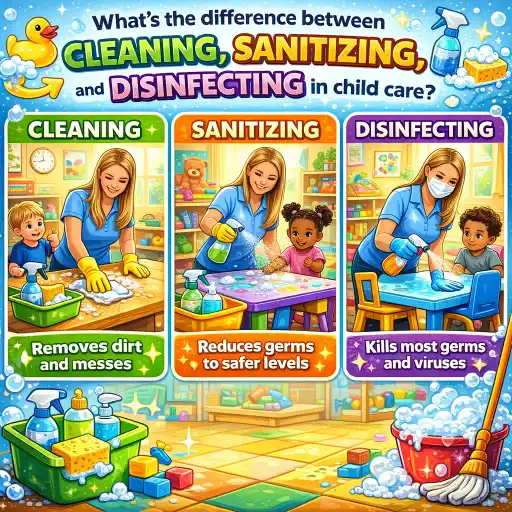
- Cleaning = remove dirt and crumbs with soap and water. It lowers germs by scrubbing them away. The CDC explains these basic definitions in plain language: Cleaning and Disinfecting.
- Sanitizing = reducing germs to a safer number. Use food-safe sanitizers for dishes, highchair trays, and things children put in their mouths. The CDC has details for infant feeding and toys, see How to Clean, Sanitize, and Store Infant Feeding Items.
- Disinfecting = use stronger products to kill most germs. This is needed when someone is sick or after body fluid spills. The CDC shows when to disinfect in early care settings: How To Clean and Disinfect Early Care and Education Settings.
Think of it like steps: 1) Clean first, 2) then sanitize or disinfect if needed. For a childcare-friendly overview with tips and examples, check What to Clean When.
2) When should we clean, sanitize, or disinfect in a child care program?
Use this quick decision list when you are busy:
- Clean (soap + water):
- Every day: tabletops, floors with paste/food, craft areas, and visibly dirty spots.
- Sanitize (weaker solutions or dishwasher):
- Disinfect (stronger chemicals):
- After a child is sick, diaper-changing surfaces, bathrooms, and body-fluid spills. The CDC explains contact times and safety under early care guidance.
Quick example: After lunch, you clean the table. If it’s a high-touch surface or a child was sick, follow with sanitize or disinfect depending on the item.
3) How do we do each step safely and simply?
Use these practical steps your team can follow today. Keep supplies labeled and locked away from children.
- Cleaning:
- 🧽 Use soap/detergent and water. Scrub surfaces and rinse if needed.
- 🧺 Wash soft items (linens, cloth toys) per schedule.
- Sanitizing:
- 🔸 Use dishwasher hot cycle or a food-safe sanitizer. For small items, follow the CDC's sanitizing soak instructions in their FAQ.
- 🔸 For bleach solutions (food contact): use the weaker mix recommended by authorities and follow labels.
- Disinfecting:
- ⚠️ Clean first, then use an EPA-registered disinfectant or diluted bleach as directed. Leave it wet for the contact time on the label.
- ⚠️ Do not mix chemicals (for safety and to avoid toxic reactions). CDC safety tips are here: Cleaning and Disinfecting.
For diapering steps and when to disinfect the changing area, see the CDC diapering guidance: Healthy Habits: Diaper Changing Steps. Also consider ChildCareEd resources for classroom practice: Achoo! Classroom Tips.
4) How do we build a simple schedule and avoid mistakes?
A short, clear schedule keeps staff consistent. Use daily, weekly, monthly lists so tasks don’t pile up. ChildCareEd offers clear examples and checklists you can copy: What to Clean When and a printable Cleaning, Sanitizing & Disinfecting Schedule.
- Daily must-dos:
- 🧴 Wipe tables after meals
- 🧺 Put mouthed toys in a “Wash Me” bin (then clean and sanitize)
- 🧼 Clean diaper and toilet areas after use
- Weekly and monthly tasks:
- 🔁 Wash linens, deep-clean shelves, and check supply storage
- Common mistakes and how to avoid them:
- 🚫 Mistake: Disinfecting before cleaning. Fix: Always clean first.
- 🚫 Mistake: Leaving chemicals where children can reach them. Fix: Store locked, labeled, and out of reach.
- 🚫 Mistake: Not following contact time. Fix: Read label and keep surface wet for required time.
For realistic staff-friendly schedules and job aids, use tools from ChildCareEd's resources: Resources - All.
Providers who want a stronger understanding of illness prevention and everyday safety practices may benefit from Preventative Health and Safety. This training covers ways to prevent illness in child care programs, strengthen active supervision, and create a safer environment for children, making it a strong match for programs reviewing cleaning, sanitizing, and disinfecting routines.
For staff who need a broader refresher on keeping children safe and healthy, Safeguarding Young Lives: A Comprehensive Guide to Child Care Safety is another strong choice. This course includes communicable disease prevention, indoor and outdoor safety hazards, and safe practices that can be applied right away in daily classroom care.
Conclusion: What should you do tomorrow morning?
1) Review your daily checklist with staff. 2) Remind everyone to clean first, then sanitize or disinfect when needed. 3) Put a clear "Wash Me" bin for mouthed #toys and plan who washes them and when. 4) Keep supplies labeled and remember: state requirements vary - check your state licensing agency.
Need quick refresher training? The CDC offers short modules and detailed ECE guidance: Clean Hands and Spaces. For checklists and classroom-ready tools, ChildCareEd has ready-to-use resources and sample schedules to copy and post.
FAQ
- Can I use disinfectant wipes on toys? — Use wipes only if the toy’s label allows it and the product instructions are followed. For mouthed toys, prefer washing and sanitizing per CDC steps (CDC feeding item FAQ).
- How often do mouthed toys need sanitizing? — Put them in a “Wash Me” bin immediately and clean/sanitize at least daily or more often if many toys are mouthed that day (ChildCareEd guidance).
- Do I need to disinfect every day? — Not always. Clean daily; disinfect when someone is sick or after body-fluid spills (CDC).
- Are homemade bleach mixes OK? — Yes if made correctly and fresh daily. Follow CDC dilution advice and label the bottle.
- Who should do training for staff? — Program directors should lead short refreshers and use resources like ChildCareEd courses and CDC modules to keep everyone current.
