When illness moves through a child care classroom, small, reliable routines can protect children, staff, and families while keeping the day more predictable. Explore Prevention and Control of Infectious Diseases  Buy Now $16.00 for focused learning on reducing germs and supporting a healthier care environment; infant and toddler teams can also benefit from How To Keep A Healthy Class for Infants/Toddlers Buy Now $32.00. These courses offer a deeper learning experience to complement the practical routines below; check whether a course fits your own professional development needs.
Why does a layered illness-prevention plan matter?
Young children learn through close contact, shared play, meals, and exploration. They are still learning to wash their hands, cover coughs, and avoid putting shared objects in their mouths, so respiratory and gastrointestinal infections can move quickly through a group. No single measure can prevent every illness. A coordinated approach—hygiene, environmental care, clear illness policies, and responsive communication—reduces opportunities for transmission while preserving warm, developmentally appropriate care.
Consistency also helps staff make sound decisions under pressure. When procedures are visible and practiced, caregivers know who handles a sick child, which surfaces need attention, and how families will be informed. This supports children’s comfort, staff confidence, and family trust.
Washington programs should consult current guidance from the Washington State Department of Children, Youth, and Families (DCYF) and the Washington State Department of Health (DOH). Licensing rules, disease-specific recommendations, and public-health advice can change; check the agencies’ current information and contact local public health when a cluster or suspected reportable illness raises questions. State requirements vary—check your state licensing agency.
- Turn written policies into brief steps staff can apply consistently.
- Assign cleaning and communication responsibilities by classroom or shift.
- Review routines with families before illness occurs, not only during an outbreak.
Which handwashing and hygiene routines should happen every day?
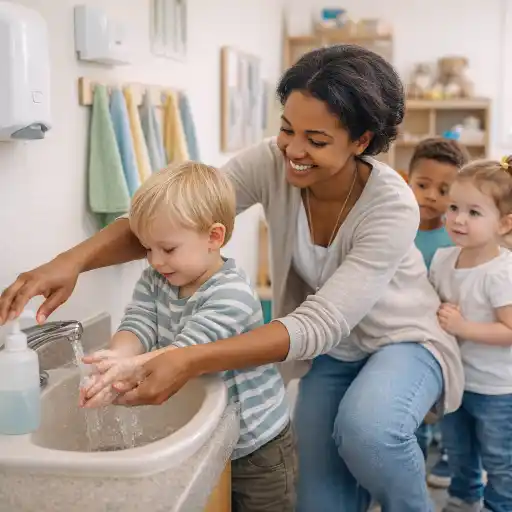
Handwashing is a practical, repeatable defense against many germs. Staff and children should wash with soap and water for at least 20 seconds and dry hands thoroughly. Build washing into the day at arrival; before preparing, serving, or eating food; after toileting or diapering; after outdoor or sensory play; after touching body fluids or helping with tissues; and whenever hands are visibly dirty. Adults should model the steps and calmly assist children who need support.
Hand sanitizer containing at least 60% alcohol can be a backup when soap and water are not readily available, but it does not replace washing after toileting or when hands are dirty. Supervise young children using sanitizer and store it safely out of reach. Teach cough and sneeze etiquette with tissues or an elbow, followed by handwashing, without shaming children for symptoms.
Use visual cues, songs, and consistent transition language to make hygiene part of classroom life. The routine should be achievable even during busy transitions, with soap, towels, tissues, and a waste bin ready where children need them.
- Keep children’s cups, toothbrushes, comfort items, and other personal belongings separate and labeled.
- Put mouthed toys directly into a designated “to be cleaned” container.
- 🧼 Praise the skill—“You scrubbed your fingers and rinsed well”—rather than rushing children through the sink.
How should cleaning, sanitizing, and disinfecting differ?
These processes have different purposes. Cleaning uses soap or detergent, water, and physical action to remove soil and many germs. Sanitizing reduces germs on appropriate clean surfaces or objects, such as items that contact food or may go into a child’s mouth. Disinfecting uses an appropriate product to kill remaining germs on a clean surface and is used for designated areas or situations, including certain body-fluid contamination or illness responses.
Clean first, then sanitize or disinfect when the surface and situation call for it. Follow product labels for intended use, dilution, protective equipment, ventilation, and contact time; the surface must remain wet for the full time stated. Never mix products. Store chemicals securely and keep children away while products are being applied.
- Clean meal tables and visibly soiled activity surfaces after use.
- Sanitize feeding items, food-contact surfaces, and mouthed toys according to program procedures and product directions.
- Clean and disinfect diaper-changing surfaces and bathrooms on the required schedule; promptly manage blood or body-fluid spills using standard precautions.
- Increase attention to high-touch surfaces when illness is present or public-health guidance recommends it.
A posted schedule with named responsibilities is more dependable than relying on memory. The ChildCareEd Daily Cleaning Checklist Buy Now $0.00 can serve as a model for organizing opening, during-the-day, and closing tasks. Adapt any checklist to current Washington rules and your facility’s procedures.
When should a child be excluded, and how should staff respond?
A clear illness policy lets staff respond consistently without attempting to diagnose. Consider whether the child can participate comfortably, needs more individual care than staff can safely provide, or has symptoms that create a meaningful risk to others. Define observable criteria, family notification and pickup steps, documentation, and return-to-care guidance in writing. Use current DOH and local public-health recommendations for disease-specific exclusions or outbreaks; avoid assuming that one time period applies to every illness.
If a child becomes ill in care, contact the family and arrange pickup according to policy. Keep the child in a comfortable area away from close contact with peers while maintaining active adult supervision. Record the observed symptoms, timing, actions, and family communication objectively and confidentially. Staff who are ill should follow program policy and public-health guidance as well.
Consult current DCYF licensing information and DOH guidance when reviewing exclusion rules, reporting obligations, and return criteria. If several children or staff develop similar symptoms, or a reportable illness is suspected, contact the local health department promptly for direction. State requirements vary—check your state licensing agency.
- Use the same policy across classrooms and explain it to families at enrollment.
- Share only necessary information, protecting each child’s privacy.
- Do not require a medical note for every minor illness unless current rules or public-health advice call for one.
How can ventilation and family communication strengthen prevention?
Ventilation supports cleaner indoor air and complements—not replaces—hand hygiene, staying home when ill, and appropriate cleaning. Maintain heating, ventilation, and air-conditioning systems as recommended, consult facilities professionals before making system changes, and use outdoor spaces or safely opened windows when conditions permit. Consider portable air cleaners where appropriate, following manufacturer directions and keeping equipment, cords, and airflow arrangements safe for children.
Families are essential partners. Share a concise, accessible illness policy that explains symptoms to report, when children should remain home, pickup procedures, return expectations, and how the program communicates about clusters. Use plain language, offer translated materials when possible, and approach conversations with respect for family circumstances. During a cluster, provide factual updates about general symptoms and steps taken without identifying individual children. Encourage families to consult their health care professional for medical advice.
Keep current agency contacts and a simple response plan where staff can find them. A useful routine review asks whether supplies are stocked, ventilation concerns are reported, staff know the supervised sick-child procedure, and all families receive consistent information.
What might a daily hygiene routine look like at each age?
Routines should fit children’s development and the natural flow of care. Treat handwashing and diapering as relationship-building moments, not merely checklist items. These sample schedules are starting points; follow applicable licensing requirements, each child’s care plan, and current public-health guidance.
- Infants: At arrival, check the child’s wellness information and wash the caregiver’s hands before feeding or care. Wash hands before and after feeding and diapering and after contact with body fluids. Use each infant’s labeled feeding items; clean and sanitize items as required. Remove mouthed toys promptly for cleaning. Clean and disinfect the changing surface according to procedure between diaper changes. Maintain airflow while ensuring windows, equipment, and sleep spaces remain safe.
- Toddlers: Wash hands on arrival, before meals, after diapering or toileting, after outdoor play, and after nose wiping. Provide close support at the sink and use a short song or picture cues. Place mouthed toys in a separate bin, clean tables after eating, and keep each child’s cup and belongings distinct.
- Preschoolers: At arrival, guide children through handwashing and storing belongings. Wash before food and after bathroom use, outdoor play, sensory activities, or coughing and nose wiping. Invite children to help follow a visual cleaning routine—without handling chemicals—and practice covering coughs and sneezes. Clean tables after meals and activities, and reset shared materials as scheduled.
The Morning Arrival Routine Cards Buy Now $1.99 offer a visual model for predictable arrival steps, including washing hands. You can adapt the same idea for later transitions and hygiene routines.
Conclusion: What are the most useful steps to begin today?
Washington child care providers can reduce the spread of common illnesses through consistent handwashing, task-appropriate cleaning and disinfection, fair exclusion procedures, improved ventilation, and respectful family communication. Make these practices workable: post short steps, stock supplies, define staff roles, and practice the response to illness before a busy day puts the plan to the test.
Most importantly, check current DCYF licensing information and Washington DOH recommendations rather than relying on an old policy or a one-size-fits-all rule. When symptoms cluster or guidance is unclear, consult local public health. Small habits, reinforced with care and consistency, help create healthier classrooms while preserving the relationships and play that young children need.
Further ChildCareEd learning: Prevention and Control of Infectious Diseases Buy Now $16.00; How To Keep A Healthy Class for Infants/Toddlers Buy Now $32.00; How To Keep A Healthy Class: Six Tips for Germ Control Buy Now $24.00; Shoo, Germs! Don’t Bother Me! Buy Now $24.00; CDA Infants/Toddlers: Health and Safety Buy Now $24.00. Review course details and confirm whether a course meets your specific professional development requirements.
- Creating Safe & Healthy Child Care Environments
- Moving About the Classroom: Effective Transitions for Everyday
- How To Keep A Healthy Class: Six Tips for Germ Control
- What Makes Me Special: An Overview of Autism and ADHD
- Administering Basic Health and Safety Overview
- Texas Director Credential
- Prevention and Control of Infectious Diseases
- How To Keep A Healthy Class: Six Tips for Germ Control
- Preventative Health and Safety
- Everyday Safety: Creating Healthy Environments
- Germs Happen! What to Do When the Sniffles Hit Circle Time
- 10 Ejemplos de Cómo la Cultura Influye en el Desarrollo Infantil
- Capacitación en Salud y Seguridad Preventiva en Línea para Proveedores de Cuidado Infantil
- Proporciones de Cuidado Infantil y Tamaños de Grupo por Edad en Maryland (Guía Rápida para Centros y Hogares)
- Proporciones de Cuidado Infantil y Tamaños de Grupo por Edad en Nueva Jersey (Guía Rápida para Centros y Hogares)
- Proporciones de Cuidado Infantil y Tamaños de Grupo por Edad en Virginia (Guía Rápida para Centros y Hogares)
- Cómo Trabajar en el Cuidado Infantil en California: Requisitos y Pasos
- How can North Dakota child care providers protect children now that measles is back in 2026?
- How can North Dakota providers prevent and manage common illnesses?
- How Can Daycare Programs Prevent the Spread of Common Illnesses?
- What Should Providers Know About Measles and Immunization Records This Fall?
- How Can Child Care Providers Recognize Signs of Illness and Respond Safely?
- Can a Child Come to Daycare With a Fever?
- What Should Daycare Illness Policies Include to Protect Children, Staff, and Families?
- When Should a Sick Child Stay Home? A Childcare Provider’s Guide to Winter Illness Policies
- How Can Child Care Programs Prevent Germs from Spreading Through Shared Toys and Classroom Materials?
- When Should a Sick Child Stay Home from Child Care During Winter Illness Season?
- How Can Washington Child Care Providers Strengthen Active Supervision and Prevent Accidents?
- How Can Washington Child Care Providers Prevent Illness from Spreading in the Classroom?
- How Can Washington Child Care Centers Create Safer Food Allergy Management Practices?
