Working in child care means you care for many little bodies every day. Small germs can spread fast, but simple steps can stop them. This article gives easy, numbered routines and clear steps you can use tomorrow. Why it matters: fewer sick days means more learning, less stress for families, and a safer place for your team. For training and printable tools, see Infection Control Practices for Child Care Settings from ChildCareEd and the CDC overview Protecting Against Infections in Early Care and Education Programs. Remember: state requirements vary - check your state licensing agency. This short guide uses plain language so your whole staff can follow it.
What simple daily routines stop germs in my child care setting?
Start with 5 short routines that everyone can do each day. These routines build habits and protect your #children and staff.
- 🧼 Handwashing: Teach and supervise washing with soap and water for 20 seconds. Play a song or count. Use sanitizer (60%+ alcohol) only if soap and water are not available. See ChildCareEd tips on handwashing and the CDC hand hygiene guidance at CDC WASH.
- 🧽 Clean first, then sanitize or disinfect: Clean visible dirt with soap and water, then sanitize items mouthed by children and disinfect diaper areas or body-fluid spills. Follow the CDC steps at How To Clean and Disinfect Early Care and Education Settings and ChildCareEd explanations at Infection Control Practices for Child Care Settings. #cleaning
- 🧸 Mouthed-toy plan: Use a labeled "Wash Me" bin. Put toys a child puts in their mouth in the bin until you wash and sanitize them that day.
- 🚼 Diapering routine: 1) Gather supplies, 2) Change and wipe front-to-back, 3) Dispose in a hands-free trash can, 4) Clean and disinfect the surface, 5) Wash hands. Follow CDC diapering steps at Healthy Habits: Diaper Changing Steps.
- 💨 Air and space: When safe, take activities outside, open windows, or run fans to improve ventilation. The CDC notes ventilation helps reduce airborne germs: Protecting Against Infections. #handwashing #children
How should I write and use a clear illness policy and daily health checks?
A short, kind illness policy makes mornings easier for staff and families. Keep it 1 page for families and 1–2 pages for staff. ChildCareEd has a helpful template: What should an illness policy for child care include?.
- 📝 What to include (quick list):
- One-sentence rule: when a child should stay home.
- Symptoms for exclusion: fever, vomiting, diarrhea, uncontrolled cough, new rash, eye drainage.
- Return rules: e.g., fever-free 24 hours without medicine; no vomiting for 24 hours.
- Medication steps and documentation forms.
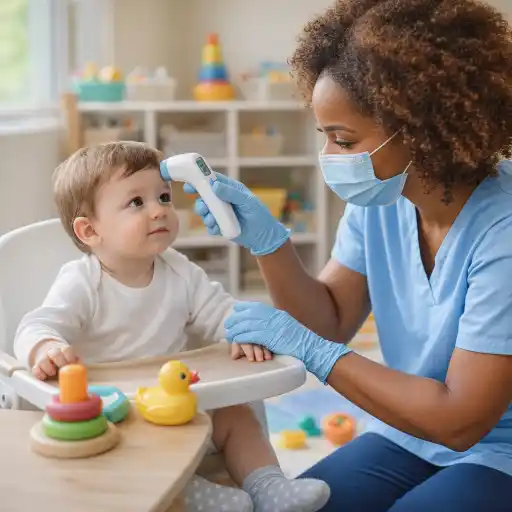
- 👀 Daily health checks: Use a 3-question morning screen: 1) Can the child play and learn? 2) Do they need one-on-one care? 3) Could they easily spread germs? Record date, signs, action, and parent contact. For more examples see ChildCareEd guidance and CDC prevention info at CDC Preventing Infectious Diseases. For help recognizing early signs and common symptoms in young children, see Ah-Choo!
- 📣 Communicate kindly: Give families the handout at enrollment, post it at drop-off, and practice short staff scripts for busy mornings. state requirements vary - check your state licensing agency.
How do we clean, sanitize, and disinfect safely, and when should we disinfect?
Know the difference: cleaning removes dirt, sanitizing lowers germs to safe levels, disinfecting kills most germs. Always clean before you sanitize or disinfect. The CDC details steps at How To Clean and Disinfect.
- 🧴 Practical schedule to copy:
- Daily: tables, high-touch things, floors, and mouthed toys (wash + sanitize).
- After each diaper change or body-fluid spill: clean and disinfect the changing surface.
- Weekly: deep clean shelves, soft toys per manufacturer instructions.
- 🧪 How to sanitize toys safely: use dishwasher, an EPA-registered sanitizer, or a bleach soak per CDC instructions. See step-by-step bleach soak at the CDC page above.
- 🧤 Safety rules: store chemicals locked and labeled, never mix bleach and ammonia, follow product contact time, wear gloves as directed, and ventilate the area while using cleaners. ChildCareEd training and checklists can help—see Prevention and Control of Infectious Diseases resources.
- ⚠️ Common mistakes and quick fixes:
- 🚫 Mistake: Disinfecting before cleaning — Fix: Clean first, then disinfect.
- 🚫 Mistake: Leaving chemicals where children reach them — Fix: Lock and label supplies.
- 🚫 Mistake: Not following contact time — Fix: Keep surface wet for required time per label.
What do we do during outbreaks and how do we work with public health?
Outbreaks can be stressful. Use short numbered steps, keep calm, and call local public health early. ChildCareEd gives outbreak steps and templates at How can child care programs prevent and control infections?. Local public health (example: San Diego County guidance) can tell you about reporting rules and next steps.
- 📞 Notify public health: They tell you if it’s an outbreak and what to report.
- 🧯 Isolate and supervise: Move the sick child to a room or area with adult supervision until a family picks them up. Keep the tone calm and caring.
- 🔁 Increase cleaning: Clean, then disinfect high-touch areas and mouthed toys. Follow CDC cleaning rules and PPE guidance at CDC Protecting Against Infections.
- 📣 Tell families one clear message: what happened, what you did, and what symptoms to watch for. Use short templates from ChildCareEd to save time.
- 💉 Encourage vaccination and training: Remind families and staff to stay up to date on routine immunizations; offer staff refreshers using courses like ChildCareEd’s Prevention and Control of Infectious Diseases
 Buy Now $16.00. #vaccination #policy
Conclusion
Small, steady steps protect children, families, and your team. Start with numbered routines: 1) Post a handwashing poster and practice the 20-second song, 2) Start a "Wash Me" bin for mouthed toys, 3) Share a 1-page illness handout at drop-off, 4) Follow a simple cleaning schedule, and 5) Keep a link to local public health handy. For tools, templates, and courses, prioritize ChildCareEd resources like Infection Control Practices and the CDC pages linked above. state requirements vary - check your state licensing agency.
FAQ (short):
- Q: Can hand sanitizer replace handwashing? A: No. Use sanitizer only when soap and water aren’t available.
- Q: Do we need a doctor note for every cold? A: Not usually. Use clear return rules so families know when a note is needed.
- Q: Who do I call for an outbreak? A: Your local health department. Keep their number posted.
- Q: How often should we train staff? A: At hire, yearly refresh, and short quarterly practice for key skills.
Thank you for the care you give every day. Your steady routines and kind communication keep classrooms safe and children learning. For templates and training, visit ChildCareEd and the CDC links used throughout this article.
- 45 Hour Child Growth and Development
- CDA Preschool Credential with Portfolio Review
- Birth to Five CDA Credential with Portfolio Review
- CDA Family Child Care Credential with Portfolio Review
- CDA Bridge Bundle: Preschool
- CDA Infant/Toddler Credential with Portfolio Review
- CDA Bridge Bundle: Family Child Care
- CDA Bridge Bundle: Infant/Toddler
- Texas Director Credential
- Ah-Choo!
- Tummy Time Travelers: How to Send Your Kid’s Gut on a Yummy Health Journey
- CDA Certification en Español: Recursos y Consejos para Educadores Bilingües
- Recursos en Español sobre el Sueño Seguro del Bebé
- Capacitación en Salud y Seguridad Preventiva en Línea para Proveedores de Cuidado Infantil
- Cómo Trabajar en el Cuidado Infantil en California: Requisitos y Pasos
- Which Oklahoma Farms and Ranches Offer Preschool Field Trips That Teach About Animals and Community?
- How can childcare centers use simple health and safety best practices every day?
- How Can Michigan Daycare Centers Prevent the Spread of Illness?
- How can DC child care programs keep kids safe outdoors from insects, wildlife, and bites?
- How can childcare programs prevent the spread of illness?
- How can childcare programs protect young children in North Dakota from West Nile, ticks, and extreme heat?
- Canciones, juegos y preguntas de círculo para niños
- How can child care programs control infections and keep kids healthy?
- How can child care programs prevent infections and keep kids healthy?
- How can health and safety training work in early childhood programs?
- How can I create a safe childcare environment for every age group?
- Which Handwashing Activities Best Help Young Children Build Healthy Habits?
- How can child care programs build healthy hygiene habits?
- How Can Classrooms Prevent the Spread of Illness During Cold and Flu Season?
