Safe food preparation and mealtimes are daily responsibilities that protect children’s health, support healthy development, and reduce legal and reputational risks for child care programs. This article provides clear, numbered steps that directors and providers can use immediately, covering safe food handling and storage, sanitation, allergy awareness, meal supervision, staff training, and emergency response. Programs can strengthen these practices through ChildCareEd’s self-paced online courses Food Preparation and Nutrition  Buy Now $32.00 and Nutrition Essentials for Child Care Providers Buy Now $16.00, which address proper food preparation, safe storage, balanced nutrition, food allergies, and common feeding concerns. For practical, low-sugar holiday and toddler-friendly menu ideas that align with these nutrition principles, see Rudolph's Recipe: Festive Nutrition Ideas That Won’t Break Your Toddler’s Sugar Meter. Use the included ChildCareEd and public-health resources to establish consistent routines that every team member can follow. Remember that state requirements vary, so always check with your state licensing agency.
Why it matters
1) Young children are more vulnerable to foodborne illness and choking because of immature immune systems and small airways. 2) Consistent practices—from cutting grapes safely to logging trainings—reduce incidents and build family trust. For practical mealtime and choking guidance see How can childcare programs prevent choking and keep mealtimes safe? and for snack- and menu-focused resources see Snack Time in Daycare. For practical, budget-friendly snack ideas that support growth and meet licensing nutrition expectations, see healthy, cost-effective snack options for child care programs.
Key focus words: protect children, practical steps, and everyday habits. Inline tags you’ll see throughout: #safety #foodpreparation #allergies #supervision #nutrition
1) What are the core steps for safe food preparation in my center?
- 🍎 Plan and standardize: post a written kitchen checklist that covers receiving, prepping, cooking, cooling, labeling, and storage. Use ChildCareEd’s Food Preparation resources for sample templates: Food Preparation and Nutrition resources.
- 🔪 Clean → cook → chill sequence: 1) Wash hands and surfaces (20 seconds) before prep; 2) cook to safe temperatures; 3) refrigerate per safe times. See CDC’s four steps to food safety: Clean, Separate, Cook, Chill.
- 🥫 Store and label: date and label prepared foods, use FIFO (first in, first out), keep fridge ≤40°F and freezer ≤0°F. Canada’s fridge/freezer guidance is a useful reference: Safe food storage.
- 🍽️ Reduce cross-contamination: use separate cutting boards/utensils for raw and ready-to-eat foods; sanitize mouthed toys and feeding items as directed by the CDC: How To Clean and Disinfect ECE Settings.
- 📋 Train and record: document food-handler trainings and refreshers; many states require training or accredited courses—check local rules (example: Illinois food handler guidance).
2) How should meals and snacks be prepared to reduce choking and allergy risk?
- 🍇 Age-based prep rules: 1) Infants: purees and mashed foods; no honey under 12 months; 2) Toddlers: quarter grapes/cherry tomatoes and slice hot dogs lengthwise then small pieces; 3) Preschool: continue small portions and supervision. See ChildCareEd’s infant/toddler feeding guides: Mealtimes for infants & toddlers.
- 🔍 Label and separate allergy foods: keep a current allergy list, post one-page action plans in staff-only areas, and use dedicated utensils. ChildCareEd’s allergy planning templates help programs standardize documentation: Allergy and feeding strategies.
- 🥕 Texture and temperature: steam or mash hard vegetables; avoid whole nuts, popcorn, and uncut round foods. The CDC’s choking hazard tips are a practical complement to ChildCareEd guidance referenced above.
- 🧾 Family communication: share menus and safe-snack lists; require ingredient lists for family-provided items and limit homemade treats when allergies are present.
3) How should staff supervise and organize mealtimes to maximize safety?
- 👀 Active supervision plan: assign zones and roles each meal; place adults so all children are visible and within quick reach. ChildCareEd’s Active Supervision materials are designed for exactly this: choking and supervision guidance.
- 🍽️ Routines that protect: 1) Seat children; 2) no walking or running while eating; 3) remove toys from eating zones; 4) model slow chewing.
- 👥 Staffing considerations: increase adult coverage for mixed-age groups and transitions; include substitutes in drills and brief pre-shift safety huddles.
- 🧴 Hygiene practices: enforce handwashing before meals (20 seconds) and after toileting—CDC hand hygiene guidance is practical for staff and children: Hand Hygiene in ECE.
4) What training, policies, documentation, and drills will keep staff ready?
- 👩🏫 Required skills and cadence:
- 🍏 Pediatric first aid and hands-on CPR for infants and children—document certification dates.
- 📌 Choking-response workshops with manikin practice; ChildCareEd offers targeted training you can integrate: Food safety & training.
- 📁 Written policies: keep allergy plans, individual feeding plans, and medication orders accessible to staff (locked where appropriate). See ChildCareEd outcome pages for storage and prep standards: Food storage outcome.
- 🔁 Drills and competency checks: run monthly short drills focused on choking and allergic emergencies; log drills and update roles after debriefs.
- ❌ Common mistakes to avoid:
- 🚫 Relying only on online modules for hands-on rescue skills — fix: schedule practical sessions.
- 🚫 Inconsistent food prep — fix: post food-cutting checklists in the kitchen.
- 🚫 Skipping label checks — fix: assign a label checker each delivery.
5) What immediate steps should staff take if a child chokes or there’s suspected foodborne illness?
- 🔎 Recognize partial vs. complete obstruction: if the child can cough or cry, encourage coughing and monitor. For complete obstruction (unable to breathe/speak), act immediately. See ChildCareEd’s summary steps: Choking prevention & response.
- 👶 Infants (under 1 year): 1) 5 gentle back blows; 2) 5 chest thrusts; repeat until cleared or unresponsive. Follow certified training (Red Cross guidance echoed in ChildCareEd resources).
- 🧒 Children (1 year+): 1) 5 back blows; 2) 5 abdominal thrusts (Heimlich) for complete obstruction; if unresponsive, call 911 and begin CPR if trained.
- 📞 After the event: 1) call EMS if needed; 2) seek medical clearance even if child seems well; 3) document incident, notify family, and run an after-action debrief to update policies.
- 🦠 For suspected foodborne illness: isolate the food if available, record symptoms/time, notify public health per local rules, and follow your program’s illness reporting policy. Detailed food safety prevention steps are available from CDC: Preventing food poisoning.
FAQ (Quick answers for directors and providers)
- Q: Do online food-safety modules count for licensing? — A: Some states accept online training, but hands-on CPR and practical checks are often required. State requirements vary - check your state licensing agency and local health department (see state example).
- Q: How often should staff refresh choking/CPR skills? — A: At hire, annually, and after any incident; short drills quarterly or monthly help muscle memory.
- Q: Can we keep stocked epinephrine? — A: Laws vary by state; follow local standing orders and storage/training rules.
- Q: When should we sanitize vs. disinfect? — A: Clean first; sanitize items that touch mouths (toys, feeding items); disinfect surfaces after illness or body-fluid spills. CDC guidance: Cleaning, sanitizing, disinfecting.
- Q: What is the best place to find ready-to-use checklists and templates? — A: ChildCareEd’s resource pages include menu templates, training courses, and printable checklists: Food Preparation & Nutrition resources.
Conclusion 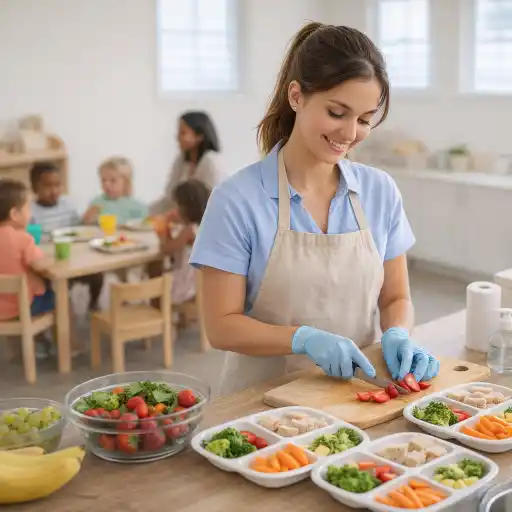
Prevention depends on predictable routines: consistent #foodpreparation checklists, assigned #supervision at meals, deliberate #training with hands-on practice, and clear allergy and storage policies. Use ChildCareEd templates and public health guidance (CDC, Caring for Our Children) to align daily practice with evidence-based standards. Small, numbered habits—cutting grapes correctly, logging trainings, scanning the room—are the actions that keep children safe and families reassured. State requirements vary - check your state licensing agency. You’re already doing important work; these practical steps will make your mealtimes safer, calmer, and more nutritious.
- Safe and Sound: Creating Healthy Environments for Every Child
- Basic Health & Safety and Breastfeeding Awareness
- Reducing the Risk of Sudden Infant Death Syndrome
- Health and Safety Orientation
- Nutrition Essentials for Child Care Providers
- Family Child Care Health Essentials
- Texas Director Credential
- Preventative Health and Safety
- Safeguarding Young Lives: A Comprehensive Guide to Child Care Safety
- Eat, Play, Grow: Essential Nutritional Tips for Growing Minds
- CDA Certification en Español: Recursos y Consejos para Educadores Bilingües
- Recursos en Español sobre el Sueño Seguro del Bebé
- Proporciones de Cuidado Infantil y Tamaños de Grupo por Edad en Virginia (Guía Rápida para Centros y Hogares)
- Lista para Guardería en Casa en Texas: Cómo Iniciar una Guardería en el Hogar
- How can New York childcare providers help picky eaters in daycare?
- How can Michigan daycares teach healthy eating habits to toddlers?
- What Does the Free School Meals Debate Mean for Child Nutrition in North Dakota?
- How can Michigan child care programs use CACFP and Summer Meals to keep children nourished when school is out?
- How can Georgia infant and toddler classrooms use the Watermelon Wake-Up Call to prevent choking?
- How can my North Dakota program make the most of food programs like CACFP?
- How can Michigan child care programs introduce new foods and prevent picky eating?
- How can childcare programs prevent choking and keep mealtimes safe?
- How can child care programs ensure safe food preparation and mealtimes?
- How can child care providers support children with feeding difficulties?
- How can child care programs build healthy eating habits that last?
- Food Program for Childcare Providers: Are You Missing Out on Meal Reimbursement?
- From Mealtime to Manners: How Cultural Influences Show Up in Everyday Child Care
- How Can Child Care Providers Serve Healthy Meals and Snacks That Children Enjoy?
