Every day you welcome a group of children into your #classroom. You want each child to feel safe, seen, and able to learn. This article gives clear, practical steps you can use right away. We link to helpful ChildCareEd resources so you and your team can learn more. Remember: state requirements vary - check your state licensing agency.
Why does inclusive learning matter?
Inclusive learning matters because it helps all children grow. When children feel they belong, they try new things and make friends. Inclusive classrooms teach kindness, respect, and everyday skills. Research also shows that inclusive practices support better learning and reduce inequality — see ideas from the OECD.
Here are 3 quick reasons why inclusion matters:
- Children feel safe and ready to learn.
- All children learn social skills like empathy and sharing.
- Families trust programs that respect their child's needs and culture.
For practical ideas and a strong start, read Creating Inclusive Classrooms Where Every Child Belongs from ChildCareEd. These tips are simple and made for busy providers.
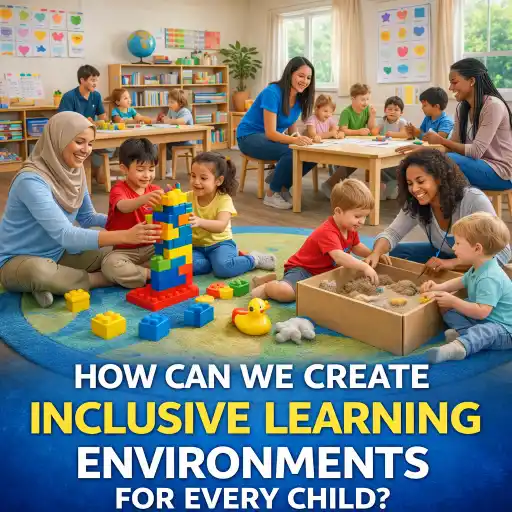
The room tells children what they can do. A thoughtful room says: "You belong here." Use these steps to make the space work for everyone.
- Define centers (reading, blocks, art, sensory). Keep each center clear so children know what to do.
- Make materials reachable. Put toys and books at child height so children can choose.
- Offer calm places. A soft mat or a small tent helps children who need a quiet break.
- Label with pictures and words to help dual language learners.
Helpful ChildCareEd ideas about room design and planning are in Designing Learning Spaces that Inspire Curiosity, Not Chaos and Planning with Purpose. These pages show how small changes make big differences in how #children use the space.
Teaching for inclusion means planning with different learners in mind. Use these easy strategies every day.
- Offer choices so children show learning in many ways (draw, act, build).
- Use visuals: picture schedules, story cards, and simple signs to show steps.
- Adapt materials: bigger crayons, adaptive scissors, or quiet tools for those who need them.
- Include children’s languages and cultures in books, songs, and displays.
- Teach social skills like asking for a turn using role play — see the practical steps in the CSEFEL What Works Brief.
For training on inclusive teaching, check ChildCareEd courses like Inclusive Practices in Early Childhood Education and How to Design an Inclusive Childcare Curriculum. For focused training on tailoring instruction to each child’s strengths and needs, consider ChildCareEd’s Individualized Learning Online Courses.
What common mistakes should we avoid and how do we fix them?
Even well-meaning programs make some common errors. Spot these and fix them fast.
- Not planning for many ways to learn. Fix: Use Universal Design ideas and give choices.
- Relying only on verbal instructions. Fix: Add pictures, gestures, and demos.
- Isolating a child with extra needs. Fix: Keep supports in the group so the child stays part of daily life.
- Ignoring family knowledge. Fix: Ask families what works at home and include their ideas.
- Skipping staff training. Fix: Use short team meetings to practice one new strategy each week.
For tools you can use right away, download the Inclusive Care Strategies article and the Mini Behavior Support Plan from ChildCareEd’s resources. Small steps and team practice build big change.
Conclusion
Creating inclusive learning environments takes heart and planning. Start with the room, use simple teaching moves, and work closely with families. Use these action steps:
- Pick one center to improve this week (e.g., add picture labels).
- Try one teaching change (e.g., a picture schedule at circle time).
- Ask one family what to add to the classroom to reflect their child.
Need more help? ChildCareEd has many courses and articles you can use, like Diversity, Equity, and Inclusion in Education  Buy Now $16.00 and How to Make Your Circle Time More Inclusive. Keep learning as a team — inclusion grows with small steps and steady practice. Your #families will notice, and your #children will thrive. #inclusion #learning
FAQ
- Q: How do I include a child who needs lots of quiet? A: Provide a calm spot, reduce noise, and use visuals to explain steps. See ideas in Inclusive Care Strategies.
- Q: What if I don’t have extra funds for materials? A: Use family items, rotate a few quality materials, and borrow books from the library. Small changes help a lot.
- Q: How do I work with families who speak another language? A: Learn a few words, use pictures, and ask families for favorite songs or stories. ChildCareEd offers tips in Culturally Responsive Teaching.
- Q: Who should lead inclusion efforts at my program? A: Directors guide the plan, but every staff member practices the steps. Regular team check-ins help keep everyone on the same page.
- 45 Hour Child Growth and Development
- CDA Preschool Credential with Portfolio Review
- Easy Steps to Resume and Interview Success
- Bienvenido! Welcoming All Families
- Birth to Five CDA Credential with Portfolio Review
- CDA Family Child Care Credential with Portfolio Review
- Pediatric RSV First Aid & CPR/AED
- Classroom Setup for Child Care
- Texas Director Credential
- The power of Imagination: How to add it to your classroom
- How can learning environments support children's development?
- What can the National Mall teach us about building a classroom where every child has a voice?
- Canciones, juegos y preguntas de círculo para niños
- How can Michigan PreK classrooms support inclusion and children with special needs?
- How can child care programs host inclusive family celebrations that welcome every family?
- How Can Child Care Directors Make Inclusive Practices Consistent Across Every Classroom?
- What Makes a Great Home Daycare? 10 Things Parents Notice First
- How Can Child Care Providers Build a Strong Preschool Curriculum?
- How Can Child Care Providers Teach Empathy and Kindness in the Classroom?
- How Can Child Care Programs Make Nature-Based Learning Meaningful, Inclusive, and Safe?
- How Can Child Care Providers Design Learning Centers That Support Play and Development?
- How Can Universal Design Make Every Classroom More Inclusive?
- How Can Providers Respond When Children Reject Unfamiliar Materials?
- Can Every Toddler Reach and Recognize Their Own Storage Space?
- How Can Child Care Providers Ensure Every Child Can Participate in Outdoor Play?
- How Can Toddlers Contribute to Classroom Jobs Without Turning Them into Rewards?
- Can Every Child See the Shared Game? How Can Providers Check Tabletop Sightlines?
