What are inclusive practices in #early childhood education?
Inclusive practices are the everyday choices you make so all children can join in.
This includes children who:
- Learn in different ways
- Speak different #home #languages
- Have disabilities or #developmental-delays
- Come from different #cultures, faiths, and family structures
In an inclusive classroom, you don’t ask, “Can this child fit our plan?”
You ask, “How can we adjust our plan so this child can succeed?”
Why do inclusive practices matter for children and families?
When children feel included, they feel #safer. When they feel safe, they #learn better.
Inclusive practice helps children: 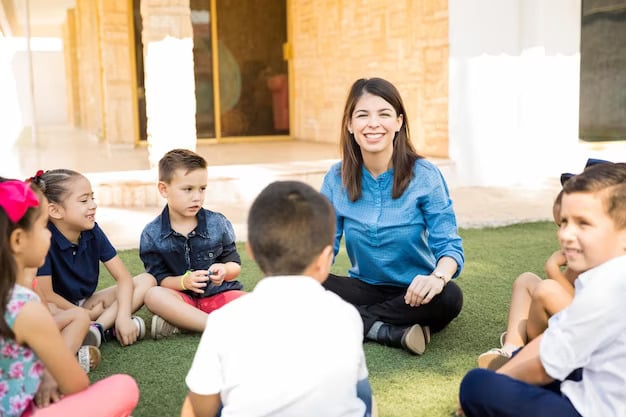
- Feel accepted and calm
- Build friendships
- Try new skills without fear
- Learn kindness and #respect for differences
It also helps families trust you more. Families want to know their child is seen, supported, and treated with dignity.
How can you look at your program through an inclusion lens?
Try this simple “walk-through” once a week. Stand in your classroom and ask:
- Do children see themselves here? ( #books, photos, dolls, music, art)
- Can every child join the same activity in some way?
- Are directions easy to understand for non-native English speakers?
- Do routines feel predictable and calm?
- Is there more than one way to participate? (talk, point, show, choose a picture)
Small changes done often create a big culture shift over time.
How do you make daily routines more inclusive?
Routines are where children spend most of their day. Routines can either support children—or #stress them out.
Here are inclusive routine supports you can start today:
- Use a visual schedule with pictures (arrival, snack, #play, clean-up, etc.)
- Give two simple choices (example: “Do you want blocks or play dough?”)
- Use short directions and show what you mean (“Coat on. Then line up.”)
- Offer calm transition tools (a song, a timer, a “helper job”)
- Provide flexible seating (chair, carpet square, small cushion)
These supports help many children at once, especially children who are anxious, learning English, or need extra structure.
How can you support children with different abilities without singling them out?
A good goal is: support the child while keeping them part of the group.
Try “same activity, different access,” like:
- Bigger crayons or #adaptive scissors
- A slanted board for drawing
- A choice to stand, sit, or kneel at a table
- Extra time to finish
- A quieter space nearby for breaks (not a “time-out”)
If a child has an IFSP/IEP (or you are told the child needs specific supports), follow the plan and keep communication clear with your director and family. A helpful training option is Individual Needs & IEPs for School Age (online), which includes adapting the environment and understanding the IEP process.
How do you include children who are dual language learners?
Language inclusion is a big part of equity.
Simple steps that work well:
- Learn how to say the child’s name correctly (and keep trying!)
- Label key areas with pictures + words (bathroom, wash hands, snack)
- Teach peers simple phrases like “Play?” “My turn?” “Help?”
- Use gestures and real objects when you talk
- Ask families for favorite songs, foods, or greetings from home

Even small “home language moments” tell a child: “You are welcome here.”
What should you do when challenging behavior shows up?
In inclusive care, behavior is not “bad.” Behavior is often a message.
A child may be saying:
- “This is too hard.”
- “I don’t know what to do next.”
- “I’m tired / hungry / overwhelmed.”
- “I need attention or connection.”
Instead of only reacting, try a simple support plan you can share with your team.
A great #free tool from ChildCareEd is the Mini Behavior Support Plan. It helps you write down:
- Triggers (what happens before)
- Prevention steps
- Replacement skills to teach
- Step-by-step #staff responses
- Quick notes to track progress
Use it like this:
- Pick one behavior to focus on (ex: hitting at clean-up).
- Observe for 2–3 days (what happens right before?).
- Add 1–2 prevention steps (ex: “5-minute warning + helper job”).
- Teach a replacement skill (ex: “Tap #teacher’s shoulder for help”).
- Keep responses consistent across staff.
How do you build inclusive partnerships with families?
Families are your best partners. They know what helps their child.
Try:
- A short “getting to know you” form (home language, routines, comfort items)
- Quick, #respectful daily updates
- Asking, “What works at home when your child is upset?”
- Using translation tools or an interpreter when needed (so families truly understand)
When families feel respected, they share more—and you can support the child better.
What training and resources can help you grow your inclusion skills?
If you want to go deeper, these ChildCareEd trainings match this topic:
- Access for All: Inclusion and the ADA (online)
 Buy Now $16.00 — focuses on inclusion and accessibility, including modifications and accommodations.
 - Diversity, Equity, and Inclusion in Education (zoom/in-person) Buy Now $25.00 — supports #culturally-responsive teaching and inclusive #classroom-strategies.
- Individual Needs & IEPs for School Age (online) Buy Now $16.00 — explains supporting individual needs and adapting the environment.
Free ChildCareEd resource to use with your team:
Related ChildCareEd article:
Stay connected (and get more ideas you can use right away):
Follow ChildCareEd on TikTok and share your favorite inclusion win this week!
- Coaching for Success: Inclusive Strategies to Support Children with Autism
- Building Equity: Inclusionary Practices in Preschool
- Bienvenido! Welcoming All Families
- CDA Bridge Bundle: Family Child Care without Portfolio Review
- Emergent Learning & Development
- Early Childhood Education
- Equity in Action with Head Start
- Building Bridges for Dual Language Learners
- Inclusive Montessori: Supporting Diverse Learners in the Classroom
- Rooted in History: Early Childhood
- Building Quality Early Childhood Education Programs
- Empowering Early Childhood Education: NYAEYC
- Daycare Near Me: A Parent's Necessity
- From Challenges to Triumphs: Strategies for Childcare Educators in New York
- CDA Council's Early Educators Leadership Conference
- Bright Futures: Why CDA Certification is the Career Glow-Up You Need in 2025
- CDA Certification en Español: Recursos y Consejos para Educadores Bilingües
- Cursos De Daycare En Español
- Cómo Trabajar en el Cuidado Infantil en Carolina del Norte: Requisitos y Pasos
- Cómo Ser Maestra de Preescolar en Illinois
- Cómo Ser Maestra de Preescolar en Maryland
- Starting an Inclusive Daycare for Children with Speech Delays
- What can the National Mall teach us about building a classroom where every child has a voice?
- What Will the Future of Early Childhood Education and Care Look Like?
- More Than ABCs and 123s: The Real Importance of Early Childhood Education
- Special Needs Training for Early Childhood Educators: Which Course Should You Take?
