Print-and-play resources can turn a busy learning center into a more organized, inclusive, and engaging space without requiring expensive materials or hours of preparation. For practical guidance on connecting printable tools with purposeful centers, explore Spicing Up the Classroom: Learning Centers  Buy Now $16.00, which can strengthen lesson planning and support professional learning goals. You may also benefit from CDA: Curriculum Alignment & Materials Buy Now $16.00 to deepen your approach to selecting developmentally appropriate resources.
Why do print-and-play resources matter in learning centers?
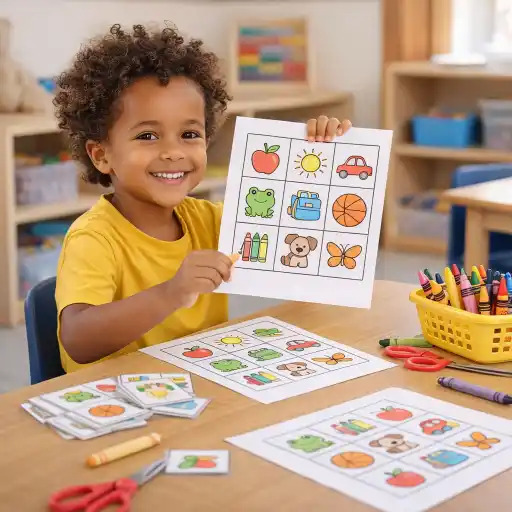
A well-designed printable is more than a page to complete. It can serve as a visual cue, conversation starter, game board, documentation tool, or invitation to investigate. When paired with blocks, books, manipulatives, dramatic-play props, art materials, or natural objects, printables help children move from looking to doing.
This matters because children learn through relationships, movement, language, sensory experiences, and play. The goal is not to replace hands-on learning with worksheets. Instead, print-and-play materials should make important ideas visible and give children additional ways to participate. A picture label may help a child return materials independently; a sequence card may support storytelling; a prompt card may inspire a construction challenge.
Research and professional guidance emphasize that accessible, open-ended environments support agency and engagement. NAEYC’s discussion of creative materials in toddler learning environments highlights following children’s interests, using repurposed materials, and offering loose parts. Printables fit naturally into this approach when they extend children’s ideas rather than dictate a single correct outcome.
Which printables support routines and independence?
Learning centers run more smoothly when children understand what is available, how many children may participate, and where materials belong. Simple visual resources reduce repeated adult directions and help children make decisions with increasing independence.
- Picture-and-word center signs for art, blocks, literacy, sensory play, math, science, and dramatic play.
- Photographic shelf labels showing where baskets, tools, and manipulatives belong.
- Center-capacity cards using numerals, dots, or children’s photographs.
- Two- or three-step cleanup cards.
- Choice boards showing available activities.
- “Work in progress” signs that protect children’s constructions for later continuation.
Use photographs of the actual classroom whenever possible. A real image of the block basket is usually more meaningful to a young child than a generic icon. Place visuals at children’s eye level and explicitly teach how to use them. A visual schedule or cleanup card is not automatically self-explanatory; adults need to model, practice, and revisit the routine.
These tools can support toddlers, preschoolers, multilingual learners, and children who benefit from predictable sequences. For infants and toddlers, use large photographs, object cues, and brief routines rather than crowded displays. State requirements vary - check your state licensing agency, especially when printables are used for required attendance, health, safety, or documentation records.
How can printables enrich literacy, math, and inquiry?
Print-and-play materials are most powerful when they connect symbols with concrete experiences. In literacy centers, offer name cards, picture-word cards, story-sequencing strips, puppets, rhyming cards, environmental-print examples, and blank book pages. Invite children to match, retell, dictate, draw, dramatize, or create their own messages.
In math and science centers, use number cards, counting mats, ten frames, shape cards, pattern strips, sorting labels, prediction charts, and simple recording pages. Always add objects children can manipulate:
- Pair counting mats with blocks, counters, shells, buttons, or toy animals.
- Use shape cards during a classroom shape hunt or block-building challenge.
- Extend pattern strips with linking cubes, beads, movements, or sounds.
- Use a graphing page after children vote on a snack, book, color, or outdoor activity.
- Place a prediction card beside a sink-and-float investigation or plant study.
Ask questions that invite reasoning: “How do you know?” “What could you try next?” and “Can you represent that another way?” This approach turns a printable into a bridge between representation, language, and #play. It also gives teachers opportunities to observe #language, #math, #inquiry, and problem-solving as they naturally emerge.
How can providers differentiate print-and-play activities?
One printable does not need to look or function the same for every child. Differentiation may involve changing the size of the images, reducing the number of choices, adding a home-language label, or offering an alternative response method. The course Tailoring Instruction to Children’s Needs Buy Now $24.00 offers focused professional learning on scaffolding and adapting instruction for varied abilities.
Consider these adaptations:
- Offer photographs, objects, symbols, and written words together.
- Enlarge visuals and reduce distracting background details.
- Accept pointing, drawing, movement, dictation, stickers, stamps, or verbal responses instead of handwriting.
- Provide thick crayons, adapted scissors, page holders, or larger manipulatives when needed.
- Use bilingual labels and invite families to contribute meaningful vocabulary.
- Add an extension prompt for children ready for greater complexity.
For example, a story-sequencing activity might allow one child to match three picture cards, another to retell the complete story with puppets, and a third to invent a new ending. The learning goal remains connected, but the access points differ. This strengthens #inclusion and ensures that printables support participation rather than measure compliance.
Observe before adapting. A child who avoids a writing page may be demonstrating a motor challenge, limited language access, visual overload, or simply a preference for oral storytelling. Responsive teaching begins with curiosity.
How can directors organize and evaluate a print-and-play system?
A resource collection saves time only when staff can find and use it quickly. Create a digital archive and a physical grab-and-go system organized by purpose: routines, literacy, math, science, social-emotional learning, fine motor, family communication, planning, and assessment.
- Use clear filenames such as “Preschool—Weather—Picture Cards—Small Group.”
- Keep one protected master copy of frequently used resources.
- Store cards in labeled envelopes or bins with companion materials.
- Laminate high-use cards or place them in sheet protectors, but keep observation forms writable.
- Record the intended age range, materials needed, and possible adaptations.
- Check copyright and usage permissions before copying or sharing resources.
Evaluate each resource by asking: What recurring need does it address? What will children do with it? How does it connect to play or investigation? Can children access it independently? Does it represent enrolled children and families respectfully? Will teachers use it consistently?
🖨️ Start with two or three resources, pilot them for two weeks, and gather staff observations. Look for evidence such as calmer transitions, more independent cleanup, richer peer conversation, or more useful documentation. If a printable creates clutter or confusion, simplify it rather than assuming children need more explanation.
How can a learning center begin this week?
Choose one center and one practical goal. If the block area is difficult to restore, add picture labels and a short cleanup sequence. If the literacy center lacks engagement, add story cards, puppets, and blank pages for child-created books. If the math area feels worksheet-heavy, replace some pages with counting mats and real manipulatives.
- Observe a recurring challenge in the center.
- Select one printable that directly addresses that challenge.
- Pair it with open-ended, hands-on materials.
- Model the resource and invite children to use it in different ways.
- Document one child’s action, language, or strategy.
- Revise the resource based on what you learn.
Common mistakes include printing too much, displaying too many choices, treating worksheets as the curriculum, and expecting independent use without instruction. Keep the environment calm, accessible, and responsive. The most effective print-and-play resource is not necessarily colorful or elaborate; it is the one that helps children explore ideas, communicate meaning, and participate more fully.
Conclusion: How can print-and-play resources support any learning center?
Print-and-play resources support learning centers when they function as flexible tools within rich, relationship-based environments. Visual signs can strengthen #independence, prompt cards can deepen investigation, literacy and math materials can connect symbols with real objects, and documentation forms can help teachers plan responsive next steps.
Begin with a clear need, pair each printable with hands-on experiences, adapt it for individual learners, and evaluate its impact with observation. With intentional selection and thoughtful organization, even a low-cost page can support smoother routines, stronger communication, and more meaningful learning across any center.
Recommended ChildCareEd courses
- CDA Preschool Credential with Portfolio Review
- Bienvenido! Welcoming All Families
- CDA Bridge Bundle: Preschool
- CDA Infant/Toddler Credential with Portfolio Review
- CDA Bridge Bundle: Family Child Care without Portfolio Review
- CDA Bridge Bundle: Infant/Toddler without Portfolio Review
- Texas Director Credential Renewal
- Texas Director Credential
- CDA Infants/Toddlers: Brain Development and Gene Expression
- CDA Infants/Toddlers: Stages of Development
- CDA Certification en Español: Recursos y Consejos para Educadores Bilingües
- Actividades de Otoño Fáciles para Preescolares esta Temporada
- Capacitación CDA gratuita en Illinois
- How can we teach letters, numbers, and early literacy to young children?
- Canciones, juegos y preguntas de círculo para niños
- How to Keep Training Certificates Easy to Access
- What simple early literacy activities really help children learn?
- Can we build early literacy skills through play in high-quality child care?
- How Can Dramatic Play Be Used to Support Learning?
- Bring the Pumpkin Patch Inside: Dramatic Play Ideas for Preschool
- How Can Child Care Programs Build Meaningful School Readiness?
- How Can Child Care Programs Build Meaningful Kindergarten Readiness?
- How Can Picture Task Cards Support Emerging Readers?
- How Can Printable Activities Save Teachers Hours of Prep Time?
- How Can Child Care Providers Strengthen Language and Literacy Development?
- Why Are Reusable Printables a Smart Investment for Child Care Providers?
- How Can Child Care Providers Help Children Recognize Letters Through Play?
- How Can Child Care Providers Create Print-Rich Early Childhood Environments?
- How Can Print-and-Play Resources Support Any Learning Center?
