Every day you can help children grow into readers. For #preschoolers, building strong early #literacy and a love of #reading starts with short, fun activities. These simple habits—talking, singing, reading, and play—build #vocabulary and early #phonics work without pressure. This article gives quick steps, classroom ideas, family tips, and ways to avoid common mistakes. Links point to helpful ChildCareEd resources and trusted guides so you can try ideas right away.
1. What simple activities build early literacy skills every day?
- 📚 Read aloud daily in short bursts. Try 2–5 minutes for babies, 5–10 minutes for toddlers, and 10–15 for preschoolers. Preview 1–2 new words before you read and repeat them in play (Reading Aloud and Storytelling).
- 🗣️ Narrate routines. Say what you are doing as you do it: "I am pouring milk. The cup is cold." This builds #vocabulary and makes words meaningful (How can classroom activities support early learning?).
- 🔤 Make print visible. Label bins and shelves with pictures and words so children see print in play (Building Foundations for Literacy).
- 🎵 Use rhymes and songs at transitions to build sound awareness (phonological play) — short, playful practice helps phonics later (Phonological Awareness Activities).
- 🧩 Offer hands-on letter play: play dough letters, letter hunts in a sensory bin, or magnetic letters on a board (What simple early literacy activities really work for preschoolers?).
Tip: keep activities short, repeat them, and follow each child's lead. State requirements vary - check your state licensing agency.
2. How do I run read-alouds and storytime that really teach?
- Before reading: pick 1–2 target words and show the cover. Quick previews help children follow the story.
- During reading: ask short questions and wait. Try PEER/CROWD style prompts (prompt, evaluate, expand, repeat). See dialogic reading ideas at Reading Rockets and tools at ChildCareEd.
- After reading: follow up with a 1–3 minute activity:
- 🎭 Act the story with puppets or props.
- 🔁 Retell the story in three steps: first, next, last.
- 🧠 Use the new words in play today.
More tips: 1) Read in small groups when possible so every child speaks. 2) Use expressive voices and gestures to hold attention. 3) Re-read favorites — repetition deepens learning (Scholastic).
3. How can centers, play, and quick games teach letters, phonics, and vocabulary?
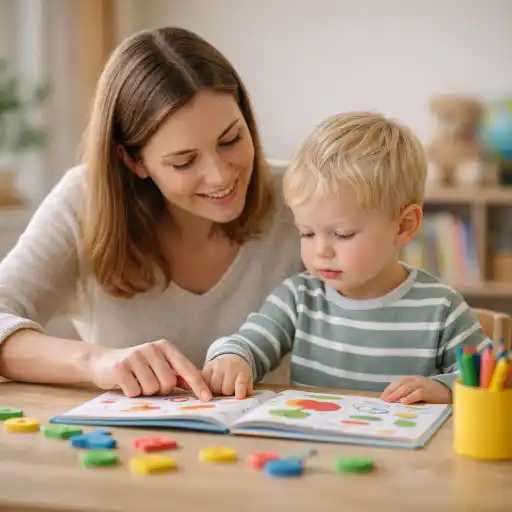
Play and centers are perfect for teaching letter knowledge, phonological awareness, and word meaning. Short, playful activities during center time let children repeat skills many times. ChildCareEd explains how classroom activities and centers support learning How can classroom activities support early learning? and offers center ideas Activity Center Ideas.
- 🔎 Letter hunts: hide plastic letters in a rice bin. When a child finds a letter, they name it and say its sound.
- 🧪 Phonological games (1–3 minutes): rhyme rounds, syllable stomp, or blending games. These quick games build #phonics readiness (Phonological Awareness Activities).
- 🎲 Play-based letter work: use alphabet blocks, letter beads, or stamps so children explore letters with hands-on play (Preschool literacy activities).
- ✍️ Name work: give each child daily chances to see, trace, and write their name with fun tools (sand trays, crayons, stickers).
- 📚 Literacy centers: rotate a teacher-led phonics group plus 2–3 independent centers. Short rotations (6–12 minutes) work well. See the 30-minute literacy center model at ChildCareEd Can 30-Minute Literacy Centers for Pre-K Really Work?.
Keep materials low-prep and predictable. Observe during play and jot one quick note on each child’s next step. Small, frequent practice beats one long lesson.
4. How do I involve families, avoid mistakes, and track progress?
Family partnership multiplies learning. ChildCareEd lays out ways to build family engagement that respect culture and schedules Family Engagement Strategies. Here are simple steps you can use. For practical, age-appropriate activities (including bilingual and toddler-focused ideas) that you can share with families, see Basic to Basics: Literacy Skills.
- 📧 Quick family tips: send a weekly photo or a 1-line idea ("Read 1 page tonight" or a short rhyme to sing). Invite families to share songs or books in home languages.
- 🤝 Two-way conversation: ask about favorite home stories and suggest simple play ideas families can do in 5 minutes.
- 🧾 Track progress simply:
- Note 1 skill per child each week (example: used new word "enormous").
- Collect a photo or writing sample monthly.
- Use short checklists or screening tools when needed; see screening guidance like DIBELS for older classrooms (DIBELS overview).
- 😊 Celebrate strengths: share positive notes and one next step with families.
Common mistakes and fixes: 1) ❌ Only one big storytime → ✅ Do short daily reads. 2) ❌ Passive reading → ✅ Ask 1–2 questions. 3) ❌ Too many goals → ✅ Pick one clear goal per activity. For program guidance, ChildCareEd offers courses like Classroom Tools for Emergent Literacy and a new emergent reading course NEW Emergent Reading Course.
Conclusion
Early literacy grows from warm interactions, short routines, and playful practice. Try these numbered steps tomorrow: 1) Read one short book, 2) add a rhyme at a transition, 3) place one labeled bin on a low shelf. Watch small wins add up. For more tools and training, explore ChildCareEd resources linked above. You’re doing essential work—keep it simple, joyful, and steady.
Quick FAQ:
- Q: How long should read-aloud be? A: Short and frequent—5–15 minutes for preschoolers (ChildCareEd tips).
- Q: What if children won’t sit? A: Read in small groups, use movement, or read during play.
- Q: How many new words at once? A: Pick 1–2 and use them all day.
- Q: Where to learn more? A: ChildCareEd courses and local licensing or professional trainings—state requirements vary - check your state licensing agency.
- Reading Aloud and Storytelling
- Language and Literacy Foundations in Pre-K
- Play Safe, Think Big: Literacy Through Play
- Setting the Stage: Story Time
- 24 Hour Texas Pre-Service
- Texas Director Credential
- Classroom Tools for Emergent Literacy
- Building Vocabulary
- Classroom Tools for Emergent Literacy
- Supporting Families and Caregivers in Language and Literacy
- Read Across America Day
- Phonological Awareness
- Free Vocabulary Kit for your Classroom!
- CDA Certification en Español: Recursos y Consejos para Educadores Bilingües
- Ready, Set, Kindergarten!
- Cómo Ayudar a Niños con Retraso del Habla en el Cuidado Infantil
- Retraso del Habla en la Guardería: Cómo Pueden Ayudar los Proveedores
- Cómo Trabajar en el Cuidado Infantil en Carolina del Norte: Requisitos y Pasos
- How can Florida VPK teachers use FAST Star Early Literacy simply and well?
- Celebrando la amistad en el cuidado infantil durante el Día de los Mejores Amigos
- What simple early literacy activities really work for preschoolers?
- What Kindergarten Readiness Skills Should My Program Build?
- How can preschool programs build early literacy every day?
- Why Does Self-Regulation Matter More Than ABCs for Minnesota Kindergarten Readiness?
- What simple early literacy activities really help children learn?
- How can we help children identify and express emotions in child care?
- How can child care programs build strong readers before kindergarten?
- How Can Music and Movement Activities Boost Learning and Inclusion for Young Children?
