Do you want simple, reliable ways to move children from noticing shapes to using geometric ideas and making patterns confidently? Practical, play-based strategies make these early geometry skills accessible and fun for busy classrooms—start by exploring Math Foundations in Early Childhood  Buy Now $16.00 to get hands-on lesson ideas and immediate classroom tools. For quick, engaging activities and fresh perspectives on making math playful, consider No Such Thing as Boring Math Buy Now $24.00; both courses help you strengthen daily practice and plan short lessons that count toward professional learning goals.
Why does teaching shapes and patterns matter?
Why it matters: early work with #shapes and #patterns builds spatial reasoning, vocabulary, and the informal logic children use in reading, science, and daily problem solving. Children who play with shapes and patterns practice comparison, classification, and prediction—core skills of later math. Research and classroom experience show that these small, repeated moments of guided discovery strengthen conceptual learning more than isolated drill.
In practice, teaching shapes and patterns supports classroom routines (lining up, setting the table, following directions) and boosts language: naming sides, corners, and repeating sequences becomes math talk. When adults intentionally prompt children—"Which tile fits?" or "What comes next in this pattern?"—kids move from recognition to explanation and invention. This is especially important for #preschoolers preparing for kindergarten expectations.
How can I introduce shapes and patterns through play?
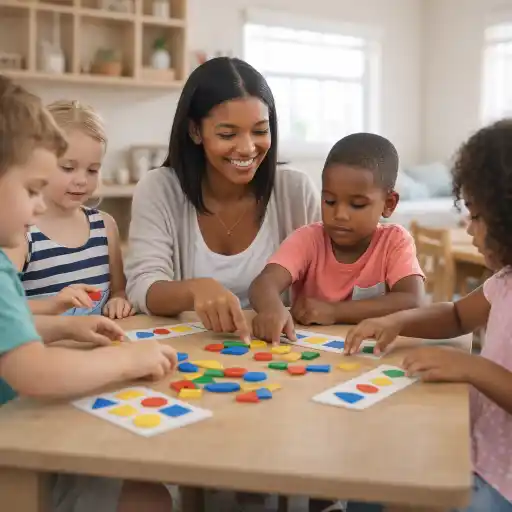
Start with invitations to play: short, low-prep setups children can explore independently or with a peer. Use a small tray or basket and offer 3–6 manipulatives (pattern blocks, wooden shapes, printed cards) plus one simple prompt. Good entry ideas include shape pizzas, pattern necklaces, and sensory tubs with hidden shapes. For printable art and center pages, use resources such as the Pizza Shape Activity Worksheet as part of a weekly shape invitation.
- Keep language short and repeat: "circle, triangle, square" and pattern words like "ABAB" or "same/next."
- 🧩 Offer open‑ended challenges: "Can you make a pattern that repeats three times?"
- Rotate materials weekly so novelty and repetition balance—one week blocks, next week playdough + craft sticks for building shapes.
Embed pattern play into routines: make a clapping pattern at circle time, use colored cubbies to sort coats (a real application of patterns and classification), or count and compare during snack. Short invitations (5–15 minutes) repeated across days produce steady gains. Remember: keep activities hands-on before moving to worksheets.
How do I scaffold learning and assess progress without heavy testing?
Scaffolding means moving children from noticing to naming to using shapes and patterns. An effective three-step routine is: (1) Observe—watch child interact with materials; (2) Model—use precise vocabulary and short demonstrations; (3) Extend—offer a slightly harder challenge. For example: watch a child stack triangles, name the triangle and its sides, then invite them to make a pattern using triangle–circle–triangle.
Assessment should be low-burden and play-based. Use quick observations (3–5 minutes) and one-line notes: "Aisha names circle, sorts by color, repeats AB pattern." Short artifacts—photo of a child-built pattern, a recorded verbal description, or a roll‑and‑graph outcome—give clear evidence of progress. For team-friendly assessment strategies, see trainings like Tracking Progress, Shaping Futures Buy Now $55.00.
State and documentation: state requirements vary - check your state licensing agency when you record assessments or claim training hours. Keep records simple: date, activity, one observed skill, suggested next step.
What activities work best by age and how do I avoid common mistakes?
Match challenge to motor and attention skills. Use the following age-guided ideas:
- Infants (0–12 months): soft shape boards, simple shape mobiles, caregiver naming during play—focus on exposure and sensory exploration.
- Toddlers (1–3 years): sensory bins for sorting by shape or color, shape puzzles, gross-motor shape hunts (step on the circle!), and simple pattern clapping.
- Preschoolers (3–5 years): pattern necklaces, playdough shape building, shape combination challenges (what can you make with two triangles?), and simple repeating pattern strips.
- Mixed-age groups: provide three challenge levels (adult-supported, guided prompts, independent extension) so each child participates meaningfully.
Common mistakes and how to avoid them:
- ⚠️ Relying on worksheets too early — fix: prioritize manipulatives and talk.
- ⚠️ Teaching too many new words at once — fix: introduce one or two terms and use them across routines.
- ⚠️ Not observing first — fix: watch play to set the right next step rather than guessing ability.
How can I engage families and build a math-friendly classroom culture?
Families are powerful partners. Send a single, simple home activity each week (count stairs, match shapes in the laundry, make a pizza with paper shapes) and include a short note about why it helps. Host a 20–30 minute family math night using low-prep games so caregivers see play-based learning in action.
Classroom culture tips:
- 📚 Create a math shelf with 4–6 rotating games and a small teacher note that says "How to play."
- 📸 Use photos and short captions to show families a child’s pattern work—share one sentence about next steps.
- 💡 Model math talk in routines: "Who has more?" "Which shape fits here?"
Further learning (practical, course-based options):
- Math Foundations in Early Childhood Buy Now $16.00 — hands-on strategies for everyday integration.
- No Such Thing as Boring Math Buy Now $24.00 — creative, play-first math invitations.
- How Preschoolers Develop Buy Now $32.00 — developmental grounding for planning challenges.
- Tracking Progress, Shaping Futures Buy Now $55.00 — practical observation & assessment skills.
- Letter & Number Planning in Child Care Buy Now $24.00 — pairing early math and literacy planning.
Conclusion
Helping children understand #shapes and #patterns is a high-return part of early education: short, well-planned invitations to play boost spatial reasoning, vocabulary, and confidence. Keep learning tactile and language-rich, scaffold from noticing to creating, and use quick, play-based observation notes to set the next step. Partner with families through one tiny home activity and build a math shelf that staff can rotate and celebrate. For immediate classroom tools and course-based support that translate directly into practice and professional development hours, explore the ChildCareEd courses linked above—each is designed to help you spend less time planning and more time teaching with impact.
FAQ
- Q: How long should a shape/pattern activity be? A: 5–15 minutes for invitations; centers can be 20–30 minutes depending on age.
- Q: Can mixed-age groups use the same activity? A: Yes—offer tiered challenges so each child works at their level.
- Q: When are worksheets appropriate? A: Use sparingly—only after solid hands-on exploration and discussion.
- Q: How often should I assess math skills? A: Brief observations every 2–4 weeks are usually sufficient for planning next steps.
- Q: Where do I start if I feel unsure? A: Pick one weekly goal (e.g., name 3 shapes), slot it into three routines, and take one quick observation per child.
- Recognize, Respond, Respect: Supporting Diverse Learners
- 45 Hour Child Growth and Development
- Moving About the Classroom: Effective Transitions for Everyday
- Early Mathematics Through Play
- CDA Home Visitor Subject Area 3 Part 3 Birth to 5
- CDA Home Visitor Subject Area 2 Part 3 Birth to 5
- Equity in Action with Head Start
- Texas Director Credential
- 45 hour Growth and Development Birth-age 12 ONLINE
- CDA Certification en Español: Recursos y Consejos para Educadores Bilingües
- Proporciones de Cuidado Infantil y Tamaños de Grupo por Edad en Virginia (Guía Rápida para Centros y Hogares)
- Cómo Trabajar en el Cuidado Infantil en Carolina del Norte: Requisitos y Pasos
- How Can I Use Fun Math Activities for Preschoolers Every Day?
- Cómo simplificar la capacitación para sus empleados de daycare
- How can preschool classrooms effectively support early math skills?
- How can preschool programs intentionally support early math skills every day?
- How Can I Help Children Understand Shapes and Patterns?
- How Can Preschool Math Become Meaningful, Playful, and Part of Every Day?
- How Can You Create Easy Preschool Math Centers with Print, Prep, and Start Learning?
- How Can Early Math Activities Build Young Children’s Mathematical Thinking?
- What Should Child Care Providers Look For in Fine Motor Skills by Age?
- How Does Counting Shapes Build Early Number Sense Through Play?
- How Can Shape Vocabulary Strengthen Early Reading Practice?
- How Can Open-Ended Summer Art Encourage Planning and Creativity?
- How Can Flag Design Help Children Explore Symbols, Patterns, and Individual Expression?
- How Can Child Care Providers Integrate Counting into Seasonal Art Activities?
- Why Can a Child Match a Shape but Struggle to Rebuild It with Pieces?
- How Can Preschool Bingo Build Shape Reasoning Beyond Naming?
- How Can Counting Activities Start Meaningful Conversations About Food and Nutrition?
