Counting a pretend picnic can do more than strengthen number skills—it can give children a relaxed way to notice, name, and talk about food. Try Picnic Food Count and Color Buy Now $1.50 as a playful classroom invitation, and build your nutrition knowledge with On My Plate: Children’s Nutrition  Buy Now $24.00, a course that explores children’s nutritional needs, MyPlate, meal planning, and practical food preparation. The activity gets the conversation started; the course offers a deeper learning experience to support your everyday practice.
Why connect counting with food conversations?
Food is part of children’s daily lives, which makes it a familiar starting point for learning. A picnic picture or food card gives children something concrete to count, compare, and describe. As they point to each item, they practice one-to-one correspondence; as they name colors and foods, they build vocabulary and confidence speaking in a group.
Pairing math with food talk also lets providers introduce nutrition without turning the activity into a lecture. Children can notice that foods have different colors, shapes, textures, and places of origin. Providers can invite curiosity and acknowledge what children already know from home and family meals. This approach treats food as a subject for exploration rather than a test of whether a child will eat something.
Plan for participation in several ways: a child may count, point, color, name an item, or simply observe. These choices respect different developmental levels, communication styles, sensory preferences, and experiences. Counting activities are especially useful when they are playful, brief, and open-ended—more conversation starter than worksheet drill.
How do you set up a picnic counting activity?
Choose a small-group or individual activity with clear, manageable materials. The Picnic Food Count and Color activity Buy Now $1.50 provides a simple framework: children count pictured picnic foods and color them. Before beginning, decide what you want children to practice—counting objects accurately, recognizing colors, naming familiar foods, or explaining what they notice.
- Introduce the pictures and invite children to identify foods they recognize.
- Model touching or pointing to one object at a time while counting aloud.
- Pause to let children count, point, use a communication aid, or respond in a home language.
- Invite children to color items and describe their choices.
- Keep the experience flexible: use fewer objects or smaller quantities when that supports success.
Use prompts that extend thinking without making children feel quizzed: “How many apples do you see?” “Which foods are the same color?” “What do you notice about these shapes?” A child who counts incorrectly still offers useful information about their current strategy. You can recount together, slow down, and point to each item in sequence.
For an extension, add play food, counters, or a paper picnic blanket. Children can place one counter beside each pictured food, compare two groups, or create a pretend picnic menu. Follow children’s interests; the richest learning may come from a question or family food connection you did not anticipate.
What learning can children build through counting and coloring?
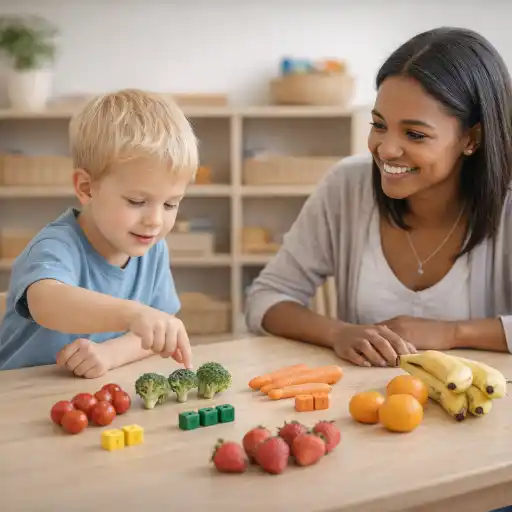
A food-themed counting invitation can support several areas of development at once. Children practice early math by matching one number word to one item, comparing quantities, recognizing numerals, and noticing patterns. When an adult narrates the process—“You counted four strawberries, one for each touch”—the child hears a clear model of how counting works.
Coloring and handling materials add visual discrimination and fine-motor practice. Naming the foods supports language development, while waiting for a turn and listening to others strengthens social participation. Research and classroom guidance on food-and-math activities emphasize that familiar materials can make mathematical concepts more meaningful and encourage children to connect classroom learning with everyday experiences.
To extend learning, keep the focus on observation and conversation:
- Ask children to compare: “Which group has more? Which has fewer?”
- Invite them to sort by color, kind of food, shape, or another visible feature.
- Make a simple class graph of favorite colors or pretend picnic choices, without ranking foods or children.
- Connect a food image to a book, garden, market, or family meal story.
Children will not all demonstrate the same skill at the same time. Some may count objects reliably; others may enjoy naming foods or matching colors first. Notice the strategy and effort, then adjust the next invitation. The goal is meaningful engagement, not a perfect completed page.
How can providers keep nutrition talk positive and inclusive?
Use neutral, respectful language. Rather than labeling foods “good” or “bad,” talk about colors, textures, ingredients, how foods are prepared, and the different ways people enjoy them. Avoid commenting on a child’s body, family menu, appetite, or willingness to eat. Children can learn about nutrition through pictures and play without being pressured to taste or disclose personal information.
Represent the children and families in your program. Food names, meal routines, and familiar ingredients vary across cultures and households. Invite families to share a food word, photograph, or tradition if they wish, and do not ask a child to speak for an entire culture. Accept gestures, pointing, home-language words, and communication supports as meaningful contributions.
- Offer picture cards or play food as alternatives to real ingredients.
- Let children choose whether to count, color, talk, or observe.
- Welcome familiar and less familiar foods without calling any family food unusual.
- Use open-ended prompts such as “What do you notice?” or “How might we sort these?”
When an activity includes real food, review each child’s allergy and dietary information, prevent cross-contact, follow sanitation procedures, and supervise closely. Adapt food size and texture to children’s ages and abilities. State requirements vary - check your state licensing agency, particularly when food is prepared, served, or used for tasting.
How can you observe learning and extend the activity?
Observe children’s thinking while they work. Do they touch each picture as they count? Do they recognize a numeral, compare two groups, sort by a feature, or explain a choice? Brief, objective notes can guide your next step: “Counted five items with one-to-one pointing” or “Sorted foods by color and named two in Spanish.” These observations are more informative than recording only whether a page was finished.
Extend the experience by revisiting the same ideas in different contexts. Set up a pretend picnic or market, use food pictures to create patterns, count play-food items into baskets, or read a story about gardening and food. A short follow-up at snack can invite children to notice colors or describe shapes, while keeping eating optional and conversation welcoming.
Directors can support staff by sharing adaptable prompts, checking that materials are accessible, and encouraging documentation focused on children’s strategies. For additional professional learning, these English-language ChildCareEd courses connect closely to the activity:
- Early Mathematics Through Play Buy Now $24.00 — practical approaches to counting, number sense, patterns, and math through play.
- Nutrition Essentials for Child Care Providers Buy Now $16.00 — nutrition foundations, MyPlate, food preparation, allergies, and feeding concerns.
- Food Preparation and Nutrition Buy Now $32.00 — planning, preparing, and storing food safely.
Conclusion: How can counting open the door to nutrition conversations?
Counting activities make food a concrete, inviting topic for young children. A picnic-themed page can prompt children to count one item at a time, notice colors and shapes, learn food names, and share ideas—while also supporting early math, language, and fine-motor development.
Keep the experience playful, culturally responsive, and pressure-free. Follow children’s interests, offer different ways to participate, and use neutral language that respects each family’s food traditions. With thoughtful observation and safe materials, providers can turn a simple count-and-color activity into an engaging conversation about food and nutrition. For a fuller foundation in children’s nutrition and meal planning, explore On My Plate: Children’s Nutrition Buy Now $24.00.
- Early Mathematics Through Play
- CDA Home Visitor Subject Area 2 Part 3 Birth to 5
- Basic Health & Safety and Breastfeeding Awareness
- What Makes Me Special: An Overview of Autism and ADHD
- Nutrition Essentials for Child Care Providers
- Connections That Count: Building Relationships in Child Care
- Texas Director Credential
- Wellness in Action: Teaching Healthy Habits to Children
- Moving About the Classroom: Effective Transitions for Everyday
- Healthy Cooking for Picky Kids
- CDA Certification en Español: Recursos y Consejos para Educadores Bilingües
- Cómo Abrir Una Quardería En Casa Sin Dinero?
- Menos Estrés a la Hora de Comer: Rutinas Simples Que Sí Funcionan
- Proporciones de Cuidado Infantil y Tamaños de Grupo por Edad en Nueva Jersey (Guía Rápida para Centros y Hogares)
- Proporciones de Cuidado Infantil y Tamaños de Grupo por Edad en Virginia (Guía Rápida para Centros y Hogares)
- Lista para Guardería en Casa en Texas: Cómo Iniciar una Guardería en el Hogar
- Creative National Ice Cream Day Ideas for the Classroom
- How can we bring a farmers market and fresh fruit activities to preschoolers in California?
- How can New York early childhood programs use garden-based learning?
- Celebrando la amistad en el cuidado infantil durante el Día de los Mejores Amigos
- Can simple kitchen activities teach valuable skills to young children in child care settings?
- How Do Fruits vs. Vegetables Sorting Mats Build Healthy Eating Habits?
- ¿Todos los niños deben participar en el tiempo de círculo?
- How Can Providers Talk About Food Variety Without Shaming Children’s Lunches?
- How Can Child Care Providers Teach Healthy Habits Without Focusing on Children’s Weight?
- How Can Preschool Snack-Time Conversations Honor Food Preferences and Build Learning?
- How Can Thanksgiving Classroom Activities Teach Nutrition and Healthy Eating?
- How Can Playful Dental Health Activities Build Healthy Habits in Young Children?
- How Can Counting Activities Start Meaningful Conversations About Food and Nutrition?
