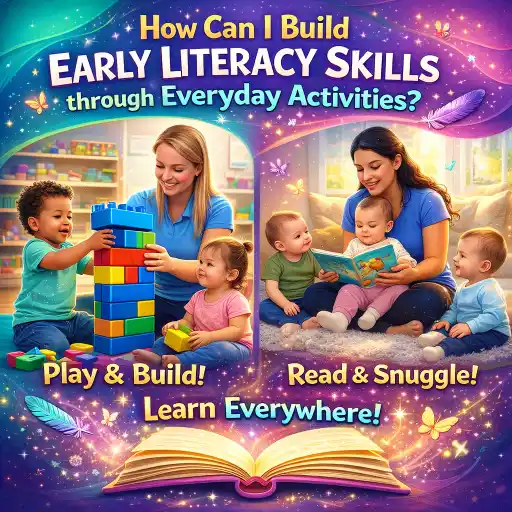
Introduction: Why does everyday literacy matter?
Everyday moments are powerful chances to grow a child's #early #literacy. Small routines—snack time, clean-up, a walk, or a quick song—help children learn words, sounds, and how stories work. When teachers and caregivers use these moments, learning becomes natural, not forced. This helps children feel safe and excited about #reading and #language.
Why it matters:
- 1. Early skills predict later school success. Research shows early literacy supports future learning (language and literacy survey).
- 2. Simple, repeated interactions build brain connections quickly. See ChildCareEd tips on daily strategies as part of How can I support children’s language and literacy development?.
Use this guide like a quick toolkit. Read the short sections and pick 1–2 ideas to try tomorrow. Remember: state requirements vary - check your state licensing agency.
1. What everyday routines help build early literacy?
Everyday routines are full of chances to teach. Use the same routine each day so children learn to expect and join in. Try these routine-rich ideas:
- 📚 Read a short page or two during transition times (arrival, snack, rest). Repetition helps memory.
- 🗣️ Narrate actions: say what you do and what children do ("I am pouring milk. You are stirring."). This models new words.
- 🧩 Turn chores into language games: ask children to name colors, count items, or tell a quick story about objects they put away.
- 🔤 Label routine spaces (cubby, coat hook, snack shelf) so children notice print in their environment — a simple print-rich tip from How to Foster Early Literacy Skills.
Tips for success:
- Keep language simple and repeat new words 2–3 times.
- Follow the child’s interest—make it about them.
- Use gestures and visuals to support meaning.
2. How can books, songs, and dialogic reading boost language and reading skills?
Books and songs give children practice with sounds, new words, and story ideas. Dialogic reading lets children become storytellers. Try this plan:
- 📖 Choose short, picture-rich books. Make time for interactive read-alouds daily. ChildCareEd shows many read-aloud strategies in supporting language and literacy and the course Reading Aloud and Storytelling.
- 🗨️ Use the PEER sequence: Prompt, Evaluate, Expand, Repeat. Ask a question, listen, add a word or two, then invite the child to say it back. Reading Rockets explains dialogic reading well: Dialogic Reading.
- 🎵 Add songs and rhymes every day. Rhymes build phonological awareness — a strong predictor of reading success. Try short nursery rhymes during handwashing or line-up.
Remember: make reading playful. Let children turn pages, act out parts, or make sound effects. For ready-to-use tools like rhyme cards, see Rhyme Hunt Match Cards Buy Now $0.00.
3. How do play and materials (blocks, labels, print) support literacy learning?
Play is one of the best ways children learn literacy. You can add language learning to regular play without extra prep.
- ✍️ Offer writing materials in play areas. Clipboards, markers, and sticky notes turn play into early writing practice.
- 🔍 Place print everywhere: book baskets, labeled centers, simple signs. The course Classroom Tools for Emergent Literacy
 Buy Now $16.00 lists hands-on materials and strategies to make print accessible.
 - 🎲 Add short literacy games: rhyme hunts, sound hunts, syllable claps. These can be 1–5 minute activities that fit into the day.
Why this works: Play keeps children engaged. When they care about the activity, they try new words and practice talking. Keep choices open and materials reachable so children can explore independently.
4. How do I include families and meet individual needs?
Families and individual support make a big difference. Work with parents as partners and adapt activities so every child can join.
- 📱 Share simple home activities: one book a day, five minutes of rhymes, or a short story during meals. Community programs like Read.Talk.Play offer family ideas: Read.Talk.Play.EveryDay!.
- 🤝 Encourage families to read and talk in their home language. Dual language skills are a strength and support later learning (support for DLLs).
- ✅ Observe and adapt: note what a child does easily and where they struggle. Use small steps and praise progress. If you see delays, talk with families and suggest local specialists or early intervention.
- 🔁 Make routines predictable and use visuals for children who need extra support. CSEFEL explains routines that support peer interaction and social skills: Using Classroom Activities & Routines.
Common mistakes and how to avoid them:
- 1. Mistake: Too many words at once. Fix: Slow down and repeat one new word at a time.
- 2. Mistake: Expecting long attention spans. Fix: Keep activities short and join play instead of lecturing.
- 3. Mistake: Skipping family input. Fix: Send simple, bilingual tips and invite family stories.
Conclusion: What small steps can I take tomorrow?
Pick 2 simple actions and try them tomorrow:
- 📘 Read one short book with dialogic prompts during circle time.
- 🗂️ Add one label in a play area and point to it during play.
- 🎶 Sing one rhyme during a routine (handwashing or clean-up).
Use resources to keep learning: ChildCareEd courses like Classroom Tools for Emergent Literacy Buy Now $16.00 and articles on read-alouds offer practical steps. For quick printable activities, check tools like National Reading Month Activities Buy Now $0.00.
You are not expected to be perfect. Small, consistent efforts build strong skills over time. Celebrate progress, involve families, and keep play at the center. Your everyday choices plant the seeds for confident readers and communicators.
FAQ
- Q: How long should storytime be? A: 5–15 minutes for toddlers and preschoolers; make it interactive.
- Q: What if a child speaks another language? A: Use the home language for comfort and add English slowly. Dual language is an asset.
- Q: Do I need special materials? A: No. Use everyday objects, books, and simple labels.
- Q: When should I seek help for a child? A: If the child shows little talking by expected ages or loses skills, share concerns with families and suggest screening.
- CDA Home Visitor Subject Area 2 Part 3 Birth to 5
- Reading Aloud and Storytelling
- Language and Literacy Foundations in Pre-K
- Adult Only CPR AED and Adult First Aid Blended
- Moving About the Classroom: Effective Transitions for Everyday
- Texas Director Credential
- Classroom Tools for Emergent Literacy
- Letter & Number Planning in Child Care
- Classroom Tools for Emergent Literacy
- Moving About the Classroom: Effective Transitions for Everyday
- Read Across America Day
- Phonological Awareness
- How to Foster Early Literacy Skills
- CDA Certification en Español: Recursos y Consejos para Educadores Bilingües
- 👶 ¿Cuáles son las proporciones y grupos requeridos en Dakota del Norte? 🏫
- How can child care providers use the science of reading to boost early literacy in New York?
- What are fun language-learning games preschool teachers can use?
- Cómo simplificar la capacitación para sus empleados de daycare
- What simple early literacy activities really work for preschoolers?
- How can preschool programs build early literacy every day?
- What simple early literacy activities really help children learn?
- How can North Dakota child care programs lay reading foundations the right way?
- Can we build early literacy skills through play in high-quality child care?
- How can child care programs build strong readers before kindergarten?
- Why Do Bilingual Classroom Activities Matter for Dual Language Learners?
- How Can Teachers Build Early Literacy Without Screens or Worksheets?
- How Do Color-Word Activities Support Reading Automaticity?
