As a child care provider or director you are likely caring for children who speak more than one language. These children are #DLLs and they bring great strengths to your program. This short guide gives easy, practical ideas you can use right away. We'll look at how to set up your space, simple daily teaching moves, family partnerships, and how to avoid common mistakes. For training and classroom ideas see Supporting Dual Language Learners in Child Care Settings and Many Languages, One Classroom.
How can I make my room welcoming for Dual Language Learners?
- Label the room in both languages.
- Put simple labels on shelves and centers using pictures plus words in English and the child's home language.
- Use books and materials that reflect children's cultures.
- Include board books, picture books, and songs in home languages. Check ChildCareEd's book ideas at Many Languages, One Classroom.
- Make visuals part of routines.
- Picture schedules, labeled photos of families, and object bins help children know what comes next without hearing every word.
- Celebrate the home language.
- Play music, invite parents to share a story, and display family photos. This builds #inclusion and respect. For ideas and materials to celebrate Hispanic cultures in your classroom, see our Hispanic Heritage Month resources.
What everyday teaching moves help children learn both English and keep home language skills?
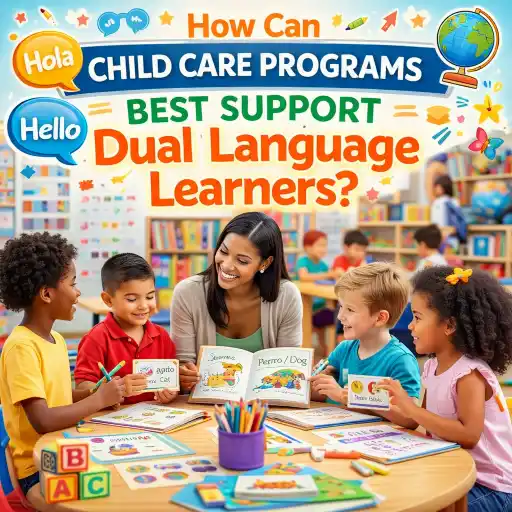
Use simple strategies that fit your daily routine. You don't have to speak every language to be effective. Research and practical resources show that language-rich interactions, repetition, and visuals work well (see Language Modeling PDF Buy Now $0.00).
- Model language clearly.
- 😊 Speak slowly, use short sentences, and repeat key words. Describe what you or the child is doing (self-talk and parallel talk).
- Use gestures and pictures.
- 📷 Point to photos or objects when you say a word. Pointing + word = better learning for #bilingual children.
- Support print knowledge.
- Letter posters, name cards, and simple writing activities help with literacy in any language (see ChildCareEd language & literacy strategies).
- Repeat and expand.
- When a child says a word, repeat it and add one new word. This small step grows sentences over time.
- Use peer helpers and routines.
- Pair children for play and learning. Routines like snack, circle time, and clean-up give chances to practice the same words again and again.
How can I build strong partnerships with families and the community?
- Invite family voice and help.
- 📩 Ask families to share key words, songs, and family photos. Write down words phonetically if you need help pronouncing them.
- Share simple home activities.
- Give families 1–3 easy ideas: read a picture book in the home language, sing a song, or make a simple family book together.
- Offer translation or visual messages.
- Use pictures, short voice notes, or translated flyers. State requirements vary - check your state licensing agency for guidance on translated materials and record-keeping.
- Connect to community supports.
- Link families to local bilingual story times, community centers, or online resources. ChildCareEd's resource pages can point you to tools and handouts (free resources).
What common mistakes should I avoid and how can I track progress?
Teachers sometimes worry that a child speaking their home language will slow English learning. This is a myth. Keeping the home language actually supports later English and literacy growth. Watch for these common pitfalls and how to avoid them (see assessment ideas in the DRDP guidance at DRDP (2015)).
- Avoid asking families to stop the home language.
- Instead, encourage families to keep using home language. It builds concept knowledge and identity.
- Don't label typical second-language behaviors as problems.
- Children may go through a silent period or mix languages (code-switching). These are normal steps in learning (see CSEFEL brief).
- Measure progress across languages.
- Use observations, family reports, and tools that consider home language and English. The DRDP and formative checks help you see growth in both languages (DRDP (2015)).
- Ask for help when needed.
- Train staff (e.g., online Building Bridges
 Buy Now $16.00) and use community language supports. Small, steady steps are better than big changes overnight.
- Train staff (e.g., online Building Bridges
Conclusion and FAQ
Supporting young #bilingual children is rewarding work. Focus on simple routines, visuals, family partnerships, and respectful inclusion of home languages. These steps help children learn, feel proud, and build strong early skills.
- FAQ (short):
- Q: Do I need to speak my child's home language? A: No. Use gestures, visuals, and simple key words. Invite family help and phonetic notes.
- Q: Will speaking two languages confuse a child? A: No. Bilingualism is a strength and supports cognitive growth (see Many Languages, One Classroom).
- Q: How do I document progress? A: Observe in both languages, use checklists and the DRDP if your program uses it (DRDP guidance).
- Q: Where can I get quick training? A: Look at ChildCareEd courses like Building Bridges Buy Now $25.00 and practical PDFs like Language Modeling Buy Now $0.00.
Thank you for the caring work you do every day. Remember that small, consistent supports create big gains for children and families. Keep celebrating #language, partner with #families, and build a classroom where #inclusion and respect are part of every routine.
Why it matters: A child who feels seen and safe learns faster. A welcoming room helps children use their home language and try English without fear. See practical room ideas in ChildCareEd's guide.Families are experts on their child's language. Strong family partnerships help children feel supported and speed learning. Keep communication simple, positive, and two-way. For training and tools, ChildCareEd offers workshops like Building Bridges for Dual Language Learners Buy Now $25.00.- Building Bridges for Dual Language Learners
- Building Bridges for Dual Language Learners: For Workforce Solutions
- 45 Hour Infant and Toddler Methods and Materials
- CDA Bridge Bundle: Family Child Care without Portfolio Review
- CDA Bridge Bundle: Infant/Toddler without Portfolio Review
- CDA Bridge Bundle: Preschool without Portfolio Review
- Texas Director Credential
- Building Bridges for Dual Language Learners
- Language for Our Littlest Learners: Building Communication From the Start
- Language and Literacy Preschool Curriculum
- CDA Certification en Español: Recursos y Consejos para Educadores Bilingües
- Apoyo en Español para Capacitaciones Grupales Presenciales y por Zoom en Cursos Selectos
- How can I support English Language Learners in Michigan childcare classrooms?
- How can Minnesota child care settings support Dual Language Learners?
- How Can New York Providers Support Children Learning English?
- How can child care programs support immigrant and multilingual families?
- How can child care programs best support Dual Language Learners?
- How Can Child Care Programs Celebrate Mexican Culture Beyond Stereotypes?
- Why Is Repeating Favorite Books So Valuable for Young Children?
- How Can Child Care Programs Create Inclusive Programs for Rural Communities?
- Why Do Bilingual Classroom Activities Matter for Dual Language Learners?
- How Can Child Care Programs Build Meaningful School Readiness?
- How Can Spanish Printable Resources Support Dual Language Learners?
- How Can Early Childhood Programs Respect and Strengthen Children’s Home Languages?
- What Would the Proposed Head Start Changes Mean for Children and Families?
- How Can You Support a Dual Language Learner Who Knows the Idea but Not the English Word?
