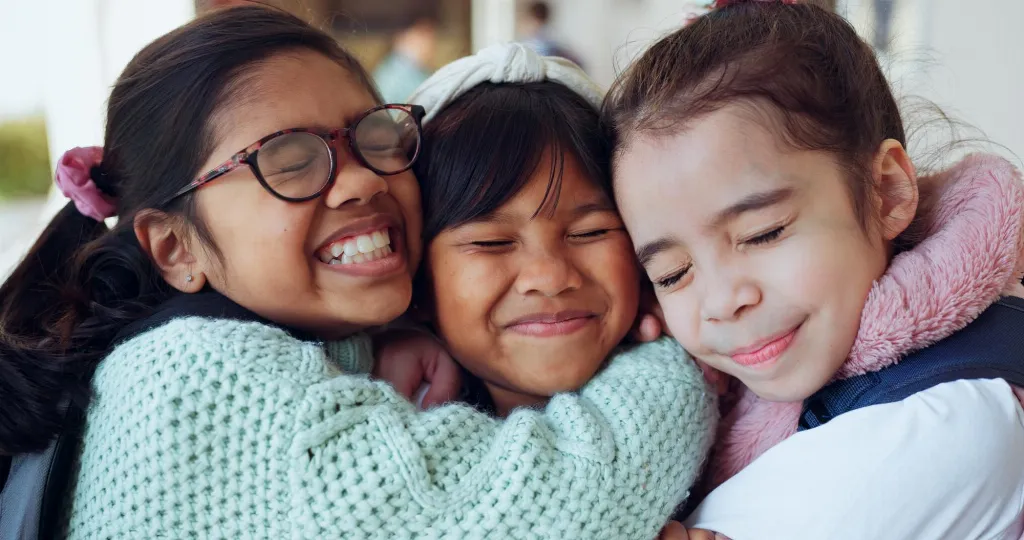
 Best Friends Day (June 8) is a great chance to help children notice kindness and practice making friends. Child care leaders and teachers can plan short, joyful activities that teach skills like sharing, taking turns, and saying kind words. For background and ideas about this holiday, see National Best Friends Day from ChildCareEd. You can also adapt seasonal holiday crafts for friendship-focused activities; see Happy Groundhog Day for simple, child-friendly crafts and activities that can be modified to reinforce sharing and turn-taking.
How can we celebrate Best Friends Day in our child care program?
Celebrating Best Friends Day should be simple, safe, and fun. Try short activities that fit your daily routine. Here are easy ideas you can use tomorrow:
- 🎨 Make friendship cards or hearts. Children draw or trace hands to create cards to swap. See craft ideas and swaps in ChildCareEd's Best Friends Day ideas.
- 🤝 Partner guided play. Pair children for a 10–15 minute cooperative task like building a track or a group collage — this supports teamwork as shown in How to Foster Friendship Skills Through Guided Play.
- 🎭 Puppet problem-solving. Use puppets to act out small disagreements and ask children what the puppets should do next. ChildCareEd suggests puppet scripts and short role-plays in several resources like How can preschool teachers teach friendship skills.
- ⏳ Timer turns. Use a 1–3 minute sand timer so children learn to wait their turn. Practical tips on timers and turn-taking appear in How can preschoolers learn to share, take turns, and make friends?.
- 📚 Story pause and reflect. Read a friendship book and pause to ask, “How does this character feel?” Scholastic offers book lists to spark these conversations (Books About Friendship).
Tips for planning:
- Keep activities short (5–15 minutes).
- Make roles clear (who is helper, timer, artist).
- Offer choices so every child can join comfortably.
Why does celebrating friendship matter for young children?
Friendships do more than feel nice. They teach children skills they will use all their lives. Research and practice show these benefits:
- 😊 Emotional learning — Friends help children learn to notice feelings and show #empathy. See examples in Social skills in action and research summaries like With a Little Help from My Friends.
- 🧠 Social problem solving — Peer play gives practice sharing, negotiating, and fixing problems. The CSEFEL briefs explain how short teaching moments and role-play build these skills (CSEFEL What Works Brief).
- 💪 Confidence and belonging — Children who feel included try new things and learn better. ChildCareEd's articles on belonging and family celebration have classroom ideas you can use (Celebrate Every Family).
Why this matters for programs:
- Better peer interactions = less time on conflicts and more time for learning.
- Clear teaching routines make behavior predictable and safer for everyone.
Note: state requirements vary - check your state licensing agency for rules about celebrations, classroom helpers, or bringing items from home.
What classroom lessons and games teach friendship skills well?
Use short, repeatable lessons tied to play. Here are practical lesson ideas you can add to your daily routine. Each idea lists simple steps so staff can use them without long prep.
- 😊 “Let’s Be Friends” mini-lesson (5–10 minutes):
- Model a joining script: “Can I play?”
- Practice with a puppet or two children.
- Give the children one chance to try during centers. Reward with specific praise. See the sample lesson plan at ChildCareEd's sample lesson plan Buy Now $0.00.
- 🎲 Team Build challenge (10–20 minutes):
- Set a goal (build a bridge or complete a puzzle).
- Assign roles (builder, helper, tester).
- Coach with short scripts and praise cooperation; CSEFEL shows ways to scaffold peer interactions (CSEFEL brief).
- 🎭 Puppet problem-solving (5–10 minutes):
- Use a short puppet conflict script from ChildCareEd resources (role-play article).
- Ask children: “What could Puppet A say?”
- Practice and praise repairs.
- ⏳ Turn-taking with timers (ongoing): Use sand timers and visual cards. Teach the phrase: “Your turn after the timer.” For scripts and visuals see ChildCareEd tips.
Quick materials list:
- Sand timers or visual timers.
- Puppets and simple props.
- Big paper for cooperative art.
- Prewritten scripts for joining, asking, and repairing.
How can we avoid common mistakes and include every child?
Celebrations are fun, but sometimes well-meaning plans leave children out. Here are common mistakes and how to avoid them.
- ❌ Mistake: Forcing sharing or taking a toy away.
- ✅ Fix: Teach offers and trades. Use scripts like “I will play with this part while you play with that part.” See ChildCareEd's guidance on alternatives to forcing (sharing and turn-taking).
- ❌ Mistake: Long lectures after a conflict.
- ✅ Fix: Use short, calm coaching steps: Stop, name the problem, offer 2 choices, ask for a small repair. CSEFEL and ChildCareEd both recommend brief coaching moments (CSEFEL).
- ❌ Mistake: Celebrations that require expensive items or put families on the spot.
- ✅ Fix: Offer low-cost options (drawings, photos, printed cards) and make sharing optional. ChildCareEd's family celebration ideas show low-pressure choices (Celebrate Every Family).
- ❌ Mistake: Not adapting for children who need extra help.
- ✅ Fix: Use priming, peer buddies, quieter spaces, and visual supports. PBS and Care for Kids highlight strategies for inclusive friendships (PBS on fostering friendships) and CareforKids provides practical tips.
FAQ — Quick answers for busy providers
- Q: How long should a friendship activity be? A: 5–20 minutes. Short and repeated beats one long lesson.
- Q: What if one child is left out? A: Prime that child with a script, pair them with a buddy, and coach peers to invite them in (role-play article).
- Q: Can we celebrate outdoors? A: Yes — weather-friendly outdoor celebrations are recommended in some Best Friends Day ideas (Best Friends Day).
- Q: How do we include children with different needs? A: Use adaptations: fewer toys, larger pieces, visual cards, and extra adult coaching. See inclusion tips in Social skills in action.
- Q: Where can I get lesson plans? A: ChildCareEd offers a sample plan: Let’s Be Friends! Buy Now $0.00
Conclusion
Best Friends Day is a simple hook to teach big ideas. Use short, guided play, puppet scripts, and low-cost crafts to help children practice #sharing, taking #turns, and showing #empathy during play. Small, repeated teaching moments with clear scripts help children build real friendships and classroom belonging. For more ideas, visit ChildCareEd resources like Will You Be My Friend? and related lesson plans.
Thank you for the care you give children every day — your planning helps friendships grow.
- 45 Hour Child Growth and Development
- You're Not My Friend Anymore: Learning Conflict Resolution
- Many Colors, One Canvas: MD ECE Conference
- 45 Hour Preschool Methods and Materials
- 1,2,3, Eyes on Me: Classroom Safety
- 45 Hour Infant and Toddler Methods and Materials
- Creating Safe & Healthy Child Care Environments
- Texas Director Credential
- Building Social Foundations
- 🎈 Better Together: Why Little Friends Make a Big Difference in Early Childhood
- Celebrating Father’s Day in Child Care: Simple Ideas for Providers
- How can Georgia preschool teachers use positive guidance to help preschoolers share during indoor play?
- How can rainy day indoor activities help preschoolers learn kindness and cooperation in Georgia?
- How can indoor creative play encourage teamwork for preschoolers in California?
- How Can We Help Children Make Friends?
- How Can Early Childhood Classrooms Celebrate Diversity and Inclusion?
- Best Friends Day: Helping Children Learn Kindness and Friendship
- Celebrating Friendship in Child Care on Best Friends Day
- Celebrando la amistad en el cuidado infantil durante el Día de los Mejores Amigos
- How can child care providers help children build friendship skills?
- How Can We Teach the Forgotten Skill of Being a Good Friend to Young Children?
- How Can Providers Support Children Through Friendship Changes?
- Team-Building Games for Preschoolers That Teach Cooperation
- First Week of Preschool Lesson Plans: 5 Days of Easy Activities and Routines
- How Can Child Care Providers Teach Friendship Skills Through Everyday Classroom Activities?
- How Can Child Care Providers Support a Child Who Struggles to Make Friends?
- When Does Exclusion in an After-School Group Become a Pattern?
- How Can You Help a Preschool Group Include the Child Who Is Often Left Out?
