International Women's Day is not just a celebration of women's achievements but a reminder of the ongoing journey toward gender equality. The United Nations observes this day to review progress and mobilize for meaningful change (UN: International Women's Day). It is also a time to honor historic milestones, such as Ketanji Brown Jackson's nomination to the U.S. Supreme Court, which exemplify progress and leadership. This day is a moment to reflect on the contributions of women to society, particularly in roles that are often undervalued. One such role is that of childcare providers, where women play a pivotal role in nurturing and shaping the next generation. As we commemorate International Women's Day, recognize the significance of women in childcare and support them through training programs such as Emergent Learning & Development  Buy Now $24.00 and Brighter Futures: Social Emotional Development Buy Now $16.00.
What is the role of women in childcare?
Women have historically been the primary caregivers in families, and this responsibility often extends beyond their own children to include caregiving roles in childcare centers, schools, and community programs. According to statistics, women make up the majority of childcare providers across the country, demonstrating their indispensable role in the #early-childhood #development sector. Their nurturing nature, #empathy, and dedication create a nurturing environment essential for children's holistic #growth-and-development.
Childcare providers play a multifaceted role in children's lives. They ensure the safety and well-being of children. They also support cognitive, emotional, and social development. From teaching basic life skills to fostering creativity and curiosity, these caregivers lay the foundation for children's future success. Childcare providers often serve as role models, instilling values of kindness, respect, and empathy.
How does women's work in childcare affect communities?
Beyond the individual impact on children, the role of women in childcare has far-reaching effects on communities and society as a whole. Accessible and high-quality childcare services enable #parents, particularly women, to participate fully in the workforce, pursue education, or engage in community activities. By alleviating the burden of childcare responsibilities, these services contribute to women's economic empowerment and societal advancement.
Learn more about how early childhood education supports community and economic well-being in our article The Critical Importance of Early Childhood Education.
Moreover, childcare providers serve as community pillars, fostering social cohesion and inclusivity. They create #safe spaces where children from diverse backgrounds come together, promoting tolerance, understanding, and friendship. Additionally, childcare centers often serve as hubs for parental support and education, offering resources and guidance to families facing various challenges.
What activities can childcare centers use to celebrate International Women's Day?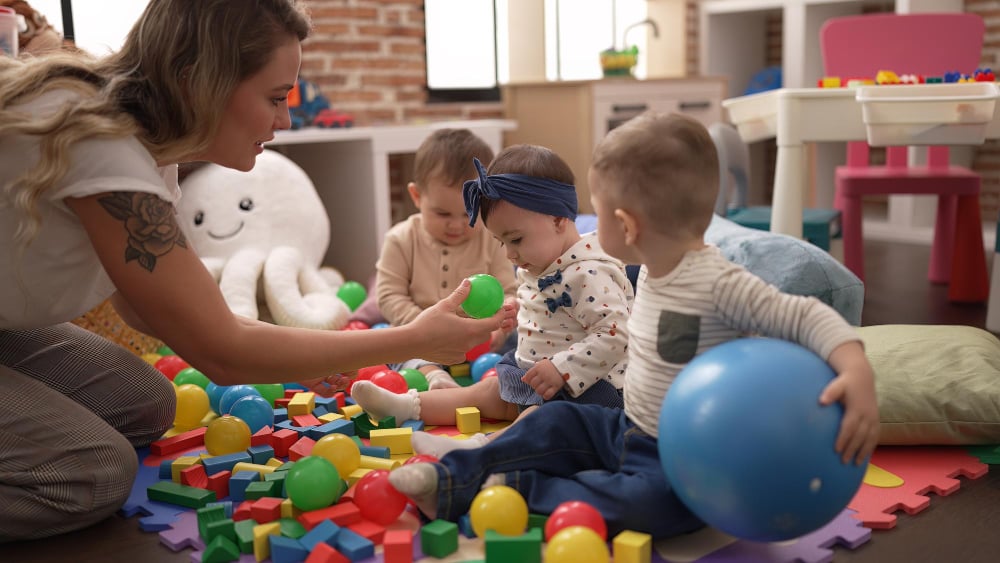
Childcare programs can mark the day with developmentally appropriate activities that center respect, leadership and history. Try storytime featuring books about women leaders, simple art projects where children draw someone they admire, circle-time prompts about kindness and fairness, and cooperative games that celebrate teamwork. Invite families to take part with a home conversation prompt or an open-door sharing session. For practical, classroom-ready ideas and book lists, see Women’s History Month in Childcare: Activities, Books, and Circle Time.
How can training support women caregivers?
Recognizing the invaluable role of women in childcare, ChildCareEd trainings hope to empower and upskill women caregivers. These trainings provide comprehensive education and professional development opportunities tailored to the unique needs of childcare providers. From #early-childhood-education techniques to child development psychology and #safety protocols, these programs equip caregivers with the knowledge and skills necessary to excel in their roles.
ChildCareEd training goes beyond technical skills, emphasizing nurturing relationships, inclusive classroom practices, and holistic child development. By investing in professional growth, these programs enhance the quality of care and help elevate the status of caregiving as a profession. For practical strategies on inclusive communication, see our article Teaching Sign Language Through Songs, Games, and Play.
Furthermore, ChildCareEd trainings promote gender equality by creating pathways for women to pursue leadership roles and entrepreneurship in the childcare sector. By breaking down barriers and empowering women to thrive in their careers, these initiatives contribute to a more equitable and inclusive society.
Which trainings are available to child care providers?
- Emergent Learning & Development Buy Now $24.00
- In the National Association for the Education of Young Children’s signature document defining best practices for children, #developmentally appropriate experiences and practices are the key ingredients for high-quality #early-learning #classrooms. In this course, we help you identify the learning objectives for children ages 3-5 years old and help you understand the relationships between quality #early-learning classroom experiences and emergent skills and development.
- Brighter Futures: Social Emotional Development Buy Now $16.00
- Compassion and kindness are just a few of the positive social and emotional qualities we hope to instill in all our children. But how does one teach these valuable life skills? To help answer this question, we have developed this course to describe the stages of emotional development and discuss appropriate interactions with young children.
- Keeping Them Safe: Infants & Toddlers Buy Now $24.00
- We as caregivers are responsible to create #safe-environments for our youngest children so that they have the freedom to explore the world around them. We created this course to help #teachers and providers understand how to minimize safety risks and prevent the spread of germs and biting incidents in the #early-childhood setting, as well as identifying the possible signs of #abuse and #neglect.
How can we honor women caregivers and continue progress?
On International Women's Day, let us celebrate the remarkable contributions of women in childcare and reaffirm our commitment to supporting and empowering them. Women caregivers play a vital role in shaping the next generation and fostering vibrant, inclusive communities. ChildCareEd supports training, mentorship, and community partnerships so women can access the tools and resources they need to excel. For a concise history of the day's origins and global observance, see International Women's Day | Wikigender.
- 45 Hour Child Growth and Development
- 45 Hour Preschool Methods and Materials
- Tracking Progress, Shaping Futures: Observation & Assessment Skills
- Teacher Mentoring in ECE
- 45 Hour Infant and Toddler Methods and Materials
- Pediatric RSV First Aid & CPR/AED
- 45 Hour School Age Methods and Materials
- Texas Director Credential Renewal
- Texas Director Credential
- Guardería Infantil Parte 1: Capacitación y Certificación
- Celebrating International Women's Day
- CDA Certification en Español: Recursos y Consejos para Educadores Bilingües
- 🩺 Cumplimiento de Salud e Inmunización en Cuidado Infantil de Nevada ✔️
- 🚌 ¿Qué Significan las Regulaciones de Transporte de Illinois para las Excursiones Infantiles? 🚦
- Curso de Comunicación de 9 Horas de Maryland
- ¿Cuáles son las mejores actividades del Día de la Tierra para niños en casa o en el aula?
- 10 Ejemplos de Cómo la Cultura Influye en el Desarrollo Infantil
- ¿Cómo solicito la licencia para una guardería en California?
- Reglas de Cuidado Infantil en Carolina del Norte para Centros y Hogares de Cuidado Infantil Familiar
- Normas de Licenciamiento de Cuidado Infantil en Virginia para Centros Diurnos Infantiles y Hogares Diurnos Familiares
- Proporciones de Cuidado Infantil y Tamaños de Grupo por Edad en Carolina del Norte (Guía Rápida para Centros y Hogares)
- Cómo Celebrar el Día Nacional del Kindergarten
- Lista para Guardería en Casa en Illinois: Cómo Iniciar una Guardería en el Hogar
- Cómo Trabajar en el Cuidado Infantil en Carolina del Norte: Requisitos y Pasos
- Cómo Trabajar en el Cuidado Infantil en California: Requisitos y Pasos
- Cómo Trabajar en el Cuidado Infantil en Virginia: Requisitos y Pasos
- Requisitos para Guarderías en Casa en Georgia
- Celebrando la amistad en el cuidado infantil durante el Día de los Mejores Amigos
