Friendship shifts—new classmates, falling outs, moving homes—are common but emotionally powerful events for young children. If you want practical, classroom-ready strategies that help children process loss, rebuild connections, and practice repair, start with targeted training like You’re Not My Friend Anymore: Learning Conflict Resolution  Buy Now $16.00 and community-focused practice in Supporting Social Learning: Creating Classrooms that Care Buy Now $35.00. These courses provide short scripts, lesson ideas, and staff coaching language that translate directly into everyday routines—helping you earn training hours while strengthening real classroom practice.
Why does this matter for my classroom and program?
Friendship changes affect attention, behavior, and wellbeing. For an overview of the role friendships play in early learning and concrete strategies to build peer connections, see Building Social Foundations. Children experiencing a lost or shifting friendship may withdraw, act out, or cling—behaviors that reduce learning time and increase staff stress. Teaching friendship as skill-building (joining, repairing, asking, negotiating) reduces conflict, supports #empathy, and improves classroom climate. For directors, intentional friendship teaching lowers repeated incidents and strengthens family partnerships. state requirements vary - check your state licensing agency. If you want content tied to staff development, Brighter Futures: Social Emotional Development Buy Now $16.00 connects social-emotional theory to practical classroom routines you can adopt program-wide.
How do I explain and normalize friendship changes to children?
Use simple, honest language and normalization: say things like “Friends sometimes play different games and that can feel sad.” Offer short story times, puppetry, or social stories to name feelings and show common solutions. Create a predictable small-group script: 1) name the feeling, 2) name the problem, 3) offer one fix (e.g., "Can I have a turn when you finish?"), 4) try a repair. Role-play these steps in low-stakes moments so children rehearse repair before emotions run high. Teachers can find ready-to-use repair scripts and role-play scenes as part of You’re Not My Friend Anymore Buy Now $16.00. Embed these practices into transitions and morning meetings so children experience repeatable, manageable opportunities to practice joining and repairing.
What classroom design and routines help friendships survive changes?
Environment shapes relationships. Arrange the room to increase peer opportunities: low shelves with duplicate materials, invitation stations for two, and rotating buddy jobs. Implement short cooperative tasks (5–15 minutes) so children succeed together. Try weekly “friendship invitations” where a child is given a role to invite another to a small cooperative project. For inclusion and individualized supports—visual scripts, peer buddies, or simplified choices—see strategies in Planning for Every Child: Responsive Strategies in Action Buy Now $55.00. Small design changes and predictable roles reduce exclusion, broaden friendship options, and increase resilience when relationships shift.
You can also intentionally organize mixed-age groupings: multi-age classroom strategies often let older children model problem-solving and mentor younger peers, expanding natural opportunities for collaboration and sustained friendships.
How do I coach repair and avoid common mistakes?
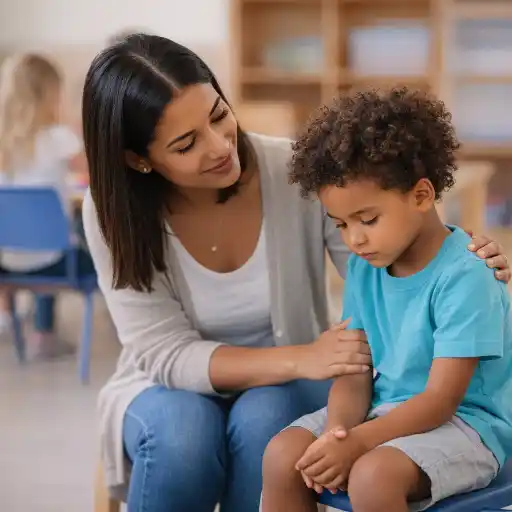
Coach briefly and restoratively: stop escalation, comfort the upset child, name the problem, offer two simple choices, and coach a small repair (“Can you put the blocks back?” or “Say, ‘I’m sorry — are you okay?’”). Common mistakes to avoid:
- Fixing the problem for children instead of coaching repair.
- Long lectures—children need short scripts and lots of repetition.
- Forcing sharing—teach offers, trades, and timed turns instead.
- Ignoring individual adaptations—some children need visual cues or peer partners to succeed.
Praise specific repairs immediately; reinforcement helps reconciliation stick. If conflicts are persistent, use targeted practice during guided play and partner with families using consistent language and home scripts. For program-level guidance on building these skills across classrooms, consider Creating Environments that Nurture Growth and Community Buy Now $55.00.
How can I make this approach inclusive for children with diverse needs?
Plan multiple entry points into friendship: watching first, helping a friend, or taking a role. Use visual join-cards, timers for turn-taking, and peer buddies who are coached to invite and scaffold. Prime children before free play by rehearsing scripts and offering roles. Document one or two individualized strategies in your lesson notes and share them with families. For deeper planning tools and adaptations, the course Planning for Every Child Buy Now $55.00 offers assessment-to-plan steps that translate to concrete supports.
Why it matters — short case for action
Intentional friendship teaching turns unstable moments into learning opportunities. When teachers treat peer relationships as teachable skills, children gain usable scripts, families feel supported, and classrooms become calmer places for learning. Investing a few minutes daily—role-plays, a friendship challenge, or a buddy job—yields measurable social gains in weeks and stronger relationships over months.
Quick checklist and practical first steps
- Pick one joining script and one repair script; practice them daily at circle time.
- Design one cooperative station with paired materials each week.
- Set up a rotating buddy system and prime children before play.
- Use visuals and timers for turn-taking and inclusion.
- Train staff briefly using a targeted course—try You’re Not My Friend Anymore Buy Now $16.00 or Supporting Social Learning Buy Now $35.00 to get ready-to-use scripts and coaching language.
FAQ — Fast answers for busy providers
- Q: How soon will I see change? A: Expect small wins in weeks; consistent daily practice yields more stable change in months.
- Q: What if exclusion repeats? A: Prime the excluded child, teach peers inclusion scripts, rotate partners, and use a buddy system.
- Q: Do these strategies work with toddlers? A: Yes—shorter scripts, more modeling, and adult scaffolding work best for younger children.
- Q: Where can I get scripts and lesson plans? A: ChildCareEd course pages include printable scripts and lesson templates (see You’re Not My Friend Anymore Buy Now $16.00).
Conclusion
Friendship changes are inevitable but also teachable. Start with short scripts, supportive environments, and brief coaching moments. Use targeted professional development—like You’re Not My Friend Anymore Buy Now $16.00, Supporting Social Learning Buy Now $35.00, Brighter Futures Buy Now $16.00, Planning for Every Child Buy Now $55.00, or Creating Environments that Nurture Growth and Community Buy Now $55.00 to deepen staff skills. When providers plan for friendship deliberately, classrooms become kinder, calmer, and better places for every child to grow their #friendship skills, feel seen, and learn to repair when things go wrong.
- CDA Home Visitor Subject Area 3 Part 3 Birth to 5
- Pediatric RSV First Aid & CPR/AED
- CDA Bridge Bundle: Family Child Care without Portfolio Review
- CDA Bridge Bundle: Infant/Toddler without Portfolio Review
- CDA Bridge Bundle: Preschool without Portfolio Review
- Emergent Learning & Development
- Texas Director Credential
- Anxiety: Signs & Strategies
- Supporting Children with Hearing Loss
- Building Social Foundations
- How to Foster Friendship Skills Through Guided Play
- CDA Certification en Español: Recursos y Consejos para Educadores Bilingües
- 🌟Will You Be My Friend? Celebrating National Friendship Day in Early Childhood Classrooms
- 💛🧩 ¿Cómo puedo hacer que mi enseñanza sea inclusiva para los niños con autismo?
- Proporciones de Cuidado Infantil y Tamaños de Grupo por Edad en Virginia (Guía Rápida para Centros y Hogares)
- Team-Building Activities for Daycare: Helping Children Learn Together
- What Should California Child Care Providers Watch For in Preschool Social Skills?
- Best Friends Day: Helping Children Learn Kindness and Friendship
- Celebrando la amistad en el cuidado infantil durante el Día de los Mejores Amigos
- How can we teach kindness and friendship in our classroom?
- How Can We Teach the Forgotten Skill of Being a Good Friend to Young Children?
- How Can Providers Support Children Through Friendship Changes?
- Team-Building Games for Preschoolers That Teach Cooperation
- Preschool Team-Building Activities for Better Communication and Friendship
- How Can Child Care Providers Prevent and Respond to Bullying?
- How Can Child Care Providers Teach Friendship Skills Through Everyday Classroom Activities?
- How Can Child Care Providers Help Children Build Healthy Friendship Skills?
- How Can You Welcome a New Child After the Class Has Already Bonded?
- When Does Exclusion in an After-School Group Become a Pattern?
