In this article you will find simple, step-by-step ideas to make your early care program more welcoming and usable for every child. We use five big ideas here: #inclusion, #children, #educators, #classroom, and #families. The tips are for directors and child care providers. State requirements vary - check your state licensing agency.
What is inclusion and why does it matter for my program?
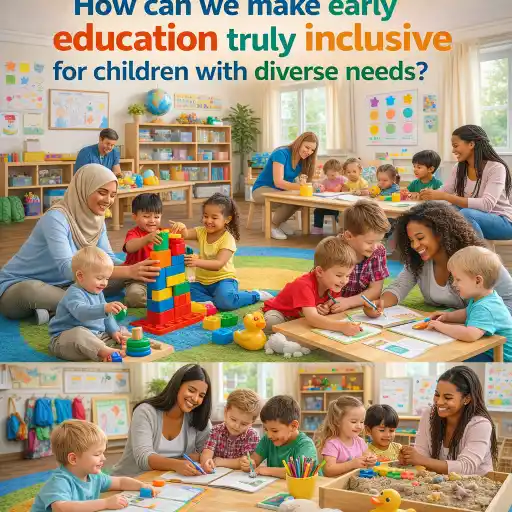
Inclusion means every child belongs and can join daily activities. When we plan for all learners, children feel safe and learn more. The ChildCareEd guide on inclusive practices explains how simple changes help many kids at once. Big studies, like the OECD report, show inclusion boosts learning and social skills for all children.
Why it matters:
- 🙂 Children build friendships, #empathy, and confidence.
- 📘 Programs see better behavior and more learning time.
- 🤝 Families trust programs that welcome their child’s needs.
What simple classroom changes help children join in right away?

Start small. Try 1–3 changes and watch how kids respond. For many quick ideas see ChildCareEd’s classroom tips.
- 🟢 Use clear routines and pictures
- Post a picture schedule for the day.
- Use a "first/then" card for transitions.
- 🔵 Make the space easy to use
- Low shelves, clear pathways, quiet corner with soft seating.
- Include sensory tools like fidgets or headphones (if allowed).
- 🟣 Adapt materials and choices
- Offer thick crayons, larger blocks, or trays to keep pieces together.
- Give two activity choices so children feel some control.
- 🔸 Label with pictures and words so all #children and #families understand.
For more room ideas and activity changes see ChildCareEd’s Adapting Activities article.
How should I teach and support children with different learning needs every day?
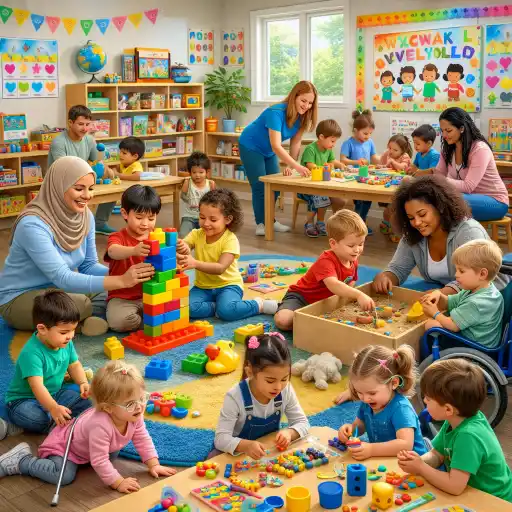
Use a few steady routines so children know what to expect. Many teachers find these methods helpful:
- 🎯 Plan with Universal Design for Learning (UDL)
Offer several ways to show learning: talk, draw, build. Learn more at the CAST UDL Guidelines and ChildCareEd’s UDL resources.
- 📚 Break tasks into small steps
Teach 1–3 steps, model the task, then let the child try. Use pictures and timers.
- 🧩 Use positive behavior supports
Find the reason a behavior happens and teach a new skill instead. See the CSEFEL brief on Positive Behavior Support: CSEFEL What Works Brief #10.
- 🔁 Track and change
Keep short notes on what helps each child. Share strategies at staff meetings so everyone uses the same supports.
If a child has an IFSP or IEP, work with families and specialists to use the same goals at care and at home. See ChildCareEd’s info on IDEA categories: Understanding IDEA Categories. Also remember: state requirements vary - check your state licensing agency.
How do I partner with families and avoid common mistakes?
Families are partners. Good steps are simple and respectful.
- 🤝 Listen first
Ask: “What helps your child at home?” and write down 1–2 goals to try together.
- 📣 Communicate clearly
Send a quick daily note with one success. Offer materials in the family’s language when possible.
- 🧩 Invite specialists
With permission, coordinate with therapists and schools so supports match across settings. The CDC Early Intervention page explains referral steps and services.
- ❌ Common mistakes to avoid
- Expecting the child to change first — instead, change the activity or environment.
- Too many visuals at once — use 1–2 consistent images.
- Leaving families out — invite them to share hopes and routines.
Conclusion — What should my team try this week?
Try this 3-step start-up plan as a team:
- 🟢 Pick one space change (quiet corner, low shelf, or visual schedule).
- 🔵 Pick one teaching change (short steps, UDL choice, or a two-choice option).
- 🟣 Pick one family step (one daily positive note or a quick family survey).
Keep notes for 1–2 weeks, then meet to share what worked. For free lessons and short trainings, see ChildCareEd courses like Recognize, Respond, Respect  Buy Now $55.00 and Inclusive Montessori Buy Now $16.00.
If you're deciding whether Montessori practices fit your program, read our comparison of Montessori education and traditional preschool to weigh differences in pedagogy and how they affect inclusive practice.
Quick FAQ:
- Q: How fast should I try changes? A: One change for 1–2 weeks is a good start.
- Q: Who pays for big adaptations? A: Check local grants, inclusion funds, or state supports.
- Q: What if staff feel unsure? A: Use short trainings and practice one strategy together.
Thank you for the steady work you do. Small, kind changes make your program a place where every child and family belongs. For more research and practical tools visit ChildCareEd.
- 45 Hour Child Growth and Development
- 45 Hour Preschool Methods and Materials
- 45 hour Growth and Development Birth-age 12 ONLINE
- Birth to Five CDA Credential with Portfolio Review
- Equity in Action with Head Start
- 45 Hour School Age Methods and Materials
- CDA Bridge Bundle: Family Child Care without Portfolio Review
- Texas Director Credential
- Daycare Near Me: A Parent's Necessity
- From Challenges to Triumphs: Strategies for Childcare Educators in New York
- CDA Certification en Español: Recursos y Consejos para Educadores Bilingües
- How Can Online ECE Training Transform Your Understanding of Child Development?
- 💛🧩 ¿Cómo puedo hacer que mi enseñanza sea inclusiva para los niños con autismo?
- ¿Cómo incluir a niños con necesidades especiales en cuidado infantil? Guía práctica y sencilla
- Proporciones de Cuidado Infantil y Tamaños de Grupo por Edad en Maryland (Guía Rápida para Centros y Hogares)
- How can we make early education truly inclusive for children with diverse needs?
- How can we help Georgia families feel heard, valued, and included in child care?
- What can the National Mall teach us about building a classroom where every child has a voice?
- Canciones, juegos y preguntas de círculo para niños
- How can Michigan PreK classrooms support inclusion and children with special needs?
- How can I make my early childhood classroom truly inclusive?
- How can we host a Costume & Character Day that truly builds imagination and learning?
- How can we create classrooms where every child feels represented?
- How can child care programs use culturally responsive activities to support young children?
- How Can I Build a Diverse and Inclusive Classroom Library?
- What Will the Future of Early Childhood Education and Care Look Like?
