Building good relationships with families helps children feel safe and learn. This short guide gives simple, practical steps for directors and providers in California. Use the tips each day and share them with your team. Remember: state requirements vary - check your state licensing agency.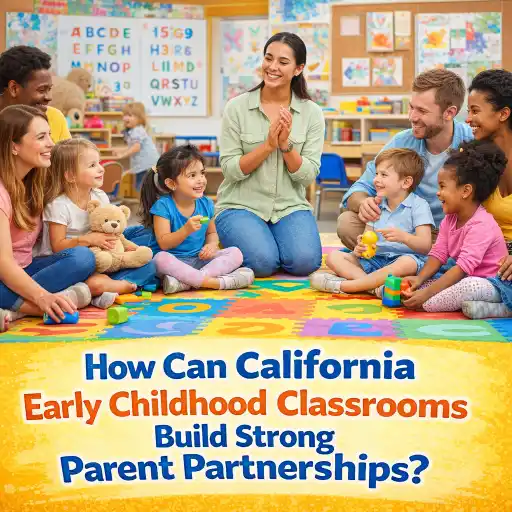
How can I make a welcoming first impression with families?
- 👋 Greet each family by name. A friendly hello shows respect and belonging. See ideas in How to Build Strong Relationships with Families in Child Care.
- 📄 Give a one-page welcome sheet with hours, contact info, and how you share updates. Offer translations when possible. ChildCareEd has sample enrollment packets and welcome tools as part of Community and Family Engagement resources.
- 📸 Create a small family photo wall or a cubby with a family picture. It helps children settle and shows parents you value their #families.
- 🤝 Offer a quick orientation: ask about sleep, food, and comfort items. Use the script ideas in How Can New California Daycare Providers Build Trust with Families?.
- 🚪Use a short goodbye routine, so drop-off is clear and calm.
Small, steady actions make many tiny deposits of #trust. Train all staff to use the same words and routines. For more tools, look at the free Family Conferencing and pre-conference forms on ChildCareEd.
What communication routines build trust every day?
- 📱 Quick drop-off check-in: say one positive thing and one short fact about the day.
- ✉️ Daily 3-bullet note: mood, a highlight, and one thing parents can try at home. Use ideas from Beyond the Daily Report.
- 📷 Photos or short videos (with permission) to show learning, not just routines. ChildCareEd suggests sharing “learning stories” to show #communication that matters.
- 🗓️ Weekly summary: 3 bullets about what children learned and one easy activity families can do at home.
- 🔁 Ask each family how they like to get news (paper, app, text) and follow their choice.
Common mistakes and how to avoid them:
- 🚫 Waiting until a problem appears. Fix: make positive contacts from day one.
- 🚫 Only sharing logistics (meals, naps). Fix: share learning and strengths. See Beyond the Daily Report.
- 🚫 Using one method for everyone. Fix: adapt to each family’s needs.
Good communication builds #partnerships. Consider training like Let’s Talk: Effective Communication  Buy Now $24.00 or Family (or Parent) Conferencing Buy Now $24.00 on ChildCareEd to help staff feel confident.
Why do parent partnerships matter for children and programs?
- 🔍 Better child outcomes: When teachers and families share goals, children show stronger social and learning skills. See research summaries in research on parent engagement.
- 🧰 More family support: Parents share routines, health needs, and home context. That helps teachers plan strong learning and safety routines. The CDC’s Learn the Signs. Act Early. Resources can guide conversations about development.
- 🏫 Stronger program culture: Programs that value relationships do better. Read about organizational supports in Improving Family Engagement.
Why it matters: families who feel heard stay engaged. Engaged families help children settle, reduce behavior challenges, and support learning at home. For California programs, tools like Families, Communities, and Classrooms Buy Now $55.00 on ChildCareEd show how to include diverse family voices in daily practice.
How can California programs support lasting partnerships and meet rules?
California has resources and rules you should know. Follow these practical steps:
- 📚 Use state-aligned training: Take ChildCareEd courses such as Community and Family Engagement in Childcare Buy Now $24.00 or Families, Communities, and Classrooms Buy Now $55.00. These build staff skills and can support licensing expectations.
- 📜 Check licensing: Review California Family Child Care and center rules. See guidance linked in ChildCareEd’s resource list in Family Conferencing resources. State requirements vary - check your state licensing agency.
- 🤝 Build organizational supports: Make time for staff to plan family outreach. Research shows programs with relationship-focused systems have stronger family partnerships; see Improving Family Engagement.
- 🔗 Partner with community groups: Use local agencies like First 5 and WestEd for family programs and workshops. See First 5 work in First 5 California and examples from WestEd. For practical, state-focused examples you can adapt to your program, see Welcoming All Families in Georgia.
- 🧾 Keep good records: Use Parent-Teacher Conference forms and family communication notes from ChildCareEd’s free resources (free resources).
When your program supports staff, follows rules, and uses community resources, your #California program can build strong, lasting family #partnerships.
For practical strategies on building classroom community and strengthening parent–teacher relationships, see Creating Community.
Conclusion
Start with small, steady steps. Try these today:
- 👋 Greet families by name and share a one-page welcome sheet.
- ✉️ Send a short daily note and a weekly learning summary.
- 🤝 Use a strengths-first script for hard talks and set a follow-up date.
- 📚 Train staff with ChildCareEd courses and use free family tools.
- 📌 Check state rules and community resources. State requirements vary - check your state licensing agency.
Strong family work takes time, but every small act builds #trust and better outcomes for children. You are not alone—use the tools, trainings, and free resources linked here to grow your team’s skills and your program’s family partnerships.
Clear, two-way communication is the heart of good partnerships. Try routines that are simple and repeatable.Strong partnerships help kids and programs in three big ways: First, days matter. A warm welcome makes families trust you faster. Try these steps each morning:
- 45 Hour Child Growth and Development
- 45 Hour Preschool Methods and Materials
- Easy Steps to Resume and Interview Success
- Injury Prevention: Their Safety Is In Your Hands
- 45 Hour Infant and Toddler Methods and Materials
- Pediatric RSV First Aid & CPR/AED
- 45 Hour School Age Methods and Materials
- Texas Director Credential Renewal
- Texas Director Credential
- Creating Community
- Building Quality Early Childhood Education Programs
- New Year, Fewer Tantrums: Tips for Building Strong Parent-Educator Partnerships in 2025
- CDA Certification en Español: Recursos y Consejos para Educadores Bilingües
- 👶 ¿Cuáles son las proporciones y grupos requeridos en Dakota del Norte? 🏫
- Curso de Comunicación de 9 Horas de Maryland
- 10 Ejemplos de Cómo la Cultura Influye en el Desarrollo Infantil
- Cómo Trabajar en el Cuidado Infantil en Carolina del Norte: Requisitos y Pasos
- Cómo Ser Maestra de Preescolar en California
- How can positive guidance make indoor transitions calm in California early childhood classrooms?
- How Can New California Daycare Providers Build Trust with Families?
- How can California early childhood classrooms build strong parent partnerships?
- What Did California Educators Take Away from the 2026 CAAEYC Conference in Pasadena?
- Pasadena Playbook: Fresh Classroom Ideas Inspired by California’s 2026 Early Childhood Education Conference
- How is California's TK expansion reshaping private preschool and family child care — and how can providers adapt?
- Cómo simplificar la capacitación para sus empleados de daycare
- How can California providers turn “community” into stronger family partnerships?
- Can California’s Universal TK Expansion Make the Early Learning Pipeline Stronger?
