Why is #outdoor-play important, even in a small space?
Outdoor time helps children:
- Move their bodies and build strong muscles
- Practice balance, jumping, and coordination
- Get fresh air and lower stress
- Explore nature (even a tiny bit!)
- Learn social skills like taking turns and sharing
ChildCareEd shares more about the value of outdoor time here: The Importance of Outdoor Play in Early Childhood Education
How do you set up a small outdoor space for success?
A small space works best when it feels simple and organized. 
Try these setup tips:
- Create “zones” using cones, chalk lines, or small bins
Example zones: movement, #sensory, art, and quiet. - Use vertical space
Hang a shower curtain ring with scarves, clip up ribbons, or use a low wall for chalk. - Choose stackable items
Nesting cups, buckets, and foam blocks are easy to store. - Plan for quick cleanup
Use a rolling cart or one “outdoor bin” with supplies.
Safety basics for small areas:
- Keep walkways clear (fewer tripping hazards)
- Check for hot surfaces (metal, blacktop)
- Set simple rules like “Feet stay on the ground” and “One at a time.”
For more #safety reminders, this ChildCareEd article is helpful: Creating Safe Outdoor Play Environments for Children: Understanding Hazards and Precautions
What are the best outdoor play ideas for small spaces?
Here are activities that work well when you don’t have much room. Many use items you already have.
1) How can you do big movements without running?
Try “movement cards” or quick movement games:
- Jump 5 times
- Tiptoe to the fence and back
- Do 3 big arm circles
- March like a band
Tip: Use a timer for 30–60 seconds per move. Kids stay engaged, and the space stays calmer.
2) How can you create an easy chalk obstacle course?
Sidewalk chalk is perfect for small spaces.
Draw:
- A zigzag line to walk on
- Circles to hop in
- A “river” to jump over
- A square to “ #freeze” in
Make it even better with questions:
- “Can you hop like a bunny?”
- “Can you walk backward slowly?”
3) How can you set up a ball activity that stays contained?
Use a wall, fence, or big cardboard box as a target.
Try:
- Throw and clap (throw a soft ball up, clap once, catch)
- Wall bounce (bounce to a partner)
- Bucket toss (toss beanbags or rolled socks into buckets)
Space-saving tip: Use soft balls or foam balls to lower risk.
4) How can you do water play without a water table?
You only need a bin or bucket.
Ideas:
- Paint with water on a fence using a brush
- Wash plastic toys with sponges
- “Pour station” with cups and funnels
Small-space rule: Keep water play in one corner on a #mat or towel for easy cleanup.
5) How can you do nature play if you don’t have grass or trees?
Bring nature to you:
- Put a few rocks, leaves, and sticks into a sensory bin
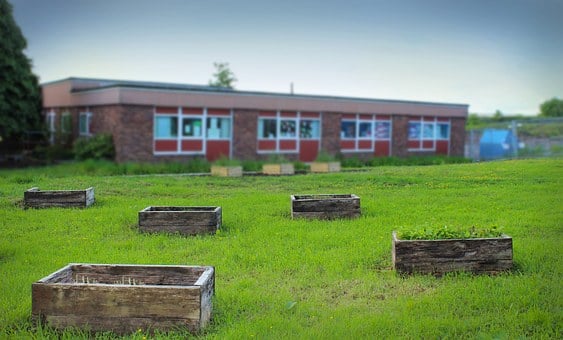
- Start a small container garden (herbs in pots)
- Go on a “mini nature hunt”:
- Find something rough
- Find something smooth
- Find something green
If you want a quick reminder of outdoor benefits to share with #staff or families, use this ChildCareEd free resource: Outdoor play benefits for #preschool. Buy Now $0.00
6) How can you do outdoor art in a tight area?
Outdoor art can be simple and low-messy:
- Chalk murals on the ground
- Paint with water (brush + water on concrete)
- Tape paper to a fence and use crayons or markers
To manage space:
- Give each child one “art spot” (a taped square on the ground)
- Use a small clipboard or firm cardboard under paper
7) How can you do #sensory-play that fits in one bin?
One small bin can hold lots of #learning.
Fill with:
- Sand, dirt, or shredded paper
- Scoops, cups, toy cars, small animals
Keep it tidy:
- Set the bin on a tray or towel
- Teach: “Items stay in the bin”
8) How can you #plan group games in a small space?
Choose games with clear boundaries:
- Follow the Leader (slow steps, big steps, tiptoe)
- Freeze Dance (small movements)
- Simon Says (hands on head, touch toes)
These games build listening skills and self-control.
9) How can you support dramatic play outside without large equipment?
Dramatic play does not need a playhouse.
Try:
- A cardboard box “car”
- Scarves as capes
- A “delivery game” with a basket and #pretend food
- Stuffed animals having a “picnic” on a blanket
Outdoor #pretend-play is also great for #language growth.
10) How can you rotate materials to keep small spaces interesting?
Small spaces get boring faster if nothing changes. Rotation helps.
Simple rotation plan:
- Week 1: Chalk + balls + bubbles
- Week 2: Water bin + pouring + painting with water
- Week 3: Nature bin + scavenger hunt + dramatic play props
- Week 4: Obstacle course + music + movement cards
One small change (like adding new cups to the water bin) can feel exciting.
What are common mistakes to avoid in small outdoor spaces?
Small spaces can still be safe and fun—but these mistakes can cause problems:
Avoid:
- Too many toys out at once (more mess, more arguing)
- Activities that require long-running paths
- Putting “quiet play” next to “active play” (it #leads to conflict)
- Ignoring shade, hot surfaces, or crowding
- Waiting until children are “wild” to go outside (short outdoor breaks earlier can prevent this)
Helpful reminder: In small spaces, clear routines matter even more than big equipment.
How can #early #educators learn more about outdoor learning and play?
If you want deeper training on setting up outdoor spaces and planning play, these ChildCareEd courses are directly related:
- Creating the Natural Outdoor Classroom
 Buy Now $16.00
 - CDA: Creating the Outdoor Classroom Buy Now $16.00
- The Best Promotion is Play Buy Now $24.00
What is one related ChildCareEd article to read next?
For more ideas on learning #outdoors, read: The Natural Classroom
Where can you get more outdoor play ideas from ChildCareEd?
For quick activity ideas and tips you can save and share, follow ChildCareEd on Pinterest
Pick 2–3 ideas from this list, try them for a week, and rotate. Even a small outdoor space can become a place where children move, learn, and feel joyful.
- Creating the Natural Outdoor Classroom
- 1,2,3, Eyes on Me: Classroom Safety
- Emergent Learning & Development
- 45-Hour Infant and Toddler Curriculum
- Creating Environments that Nurture Growth and Community
- Playful Spaces for Infants & Toddlers
- CDA Subject Area 1
- Family Child Care: Building, Premises, and Outdoor Safety
- Mindful Supervision: Balancing Safety & Independence in Montessori
- Moving About the Classroom: Effective Transitions for Everyday
- ❄️ ¿Qué actividades al aire libre funcionan bien para los niños de Illinois en cada estación? 🌷🍂
- ¿Cuáles son las mejores actividades del Día de la Tierra para niños en casa o en el aula?
- Which Georgia Parks and Nature Centers Are Best for Preschool Field Trip Adventures?
- How can we teach children through play?
- Can Toddlers Do STEM in the Sandbox at Minnesota Daycares?
- What are play-based learning approaches?
- How can New York childcare programs help children in the concrete jungle fall in love with nature?
- How can learning environments support children's development?
- How Can We Teach Preschoolers Through Play?
- Indoor and Outdoor Activities for School-Age Children
- How Can Michigan Providers Prevent Summer Learning Loss in Young Children?
- How can we plan fun, safe outdoor activities for school-age daycare programs?
- Why Should Early Childhood Programs Prioritize Outdoor Play?
- How can I plant a classroom garden with preschoolers?
- How can small playgrounds be transformed into engaging learning environments using natural materials?
- Hello, Fall! Cozy Activities to Help Babies Explore the Season
- Your Classroom Is Teaching Too: How the Environment Supports Children’s Learning
- How Can Child Care Providers Make Outdoor Learning Meaningful, Safe, and Inclusive?
- Why Is Outdoor Play Essential for Healthy Child Development?
- Why Is Outdoor Play Important in Early Childhood Education?
