Young children in Texas need safe places to play and learn — even when the weather changes fast. This article gives clear, practical steps child care providers and directors can use to prepare classrooms, yards, staff, and families for weather emergencies and for safe, active play. You will find checklists, training suggestions, and links to ready-to-use resources from ChildCareEd an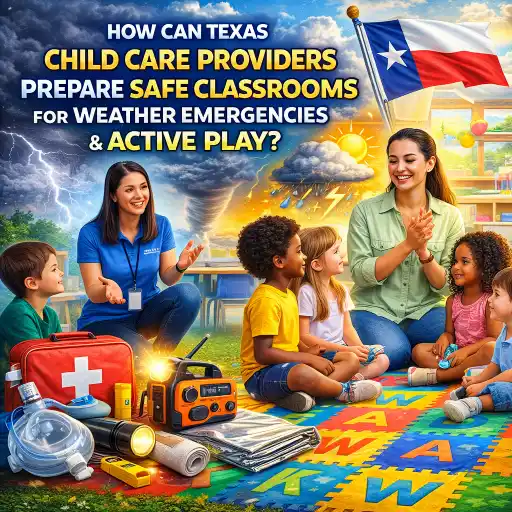 d public agencies. Remember: state requirements vary - check your state licensing agency.
Why it matters:
1. Outdoor play helps kids grow strong, learn to take risks safely, and burn off energy. See the CDC on outdoor play benefits: CDC Outdoor Play and Safety. 2. Texas weather can turn quickly (heat, storms, lightning, flash floods). A good plan protects children, staff, and your program.
Keywords: in your #Texas program, keep #safety first when checking #weather for #outdoorplay with #children.
1) What should be in a weather-ready emergency plan for my center?
- 📝 Create a clear emergency operations plan (EOP):
- Include evacuation, shelter-in-place, and lockdown steps. For a full guide, see Emergency and Disaster Preparedness
 Buy Now
 $55.00$45.00. - List roles: who carries the roster, who takes the first-aid kit, who checks headcounts.
- Include evacuation, shelter-in-place, and lockdown steps. For a full guide, see Emergency and Disaster Preparedness
- 📦 Pack and place kits (Go-Kits):
- Follow the Texas Ready checklist for supplies like water, meds, and documents: Texas Ready: Disaster Supply Checklist.
- Keep a classroom grab bag by each exit with a roster, meds, a phone list, and a flashlight.
- 📣 Communication plan:
- Post-primary and secondary reunification sites and how families will be notified. ChildCareEd has templates and forms to use: Emergency Checklist Buy Now $0.00.
- 🔁 Review and practice:
- Run drills for storms, heat events, and lightning. Use the ChildCareEd drill guidance: Emergency and Disaster Preparedness Course Buy Now
$55.00$45.00.
- Run drills for storms, heat events, and lightning. Use the ChildCareEd drill guidance: Emergency and Disaster Preparedness Course
Tip: Keep the plan short (1–2 pages) so staff can find what to do immediately. Post a one-page flow chart of phones and exits.
2) How can we keep children safe during Texas heat, storms, and lightning while still offering active play?
- 🌡️ Heat safety steps:
- Check the heat index before each outdoor time and use a weather chart: Daycare Weather Chart Buy Now $0.00.
- Offer water often, plan shade breaks, shorten outdoor time at peak heat, and move vigorous play to cooler parts of the day. See ChildCareEd's heat tips: Preparing for Extreme Heat. For step-by-step emergency responses and staff training on recognizing and treating heat-related illness, see How Can You Stay Safe During Extreme Heat.
- Watch for signs of heat illness: dizziness, nausea, heavy sweating or very red skin. If seen, cool the child and call for help.
- ⛈️ Storms and lightning rules:
- If you hear thunder or see lightning, go inside immediately. NOAA and OSHA advise: "When thunder roars, go indoors." (See NOAA/OSHA guidance).
- Do a calm, quick headcount, line up children, and move indoors. Practice this move so it becomes routine.
- Use the ChildCareEd Texas weather tips: Texas Weather & Outdoor Time.
- 😷 Air quality and smoke:
- On smoky or poor air days, shorten or skip outdoor play. The CDC has a HeatRisk and air-quality tool to check local conditions: CDC Heat Health.
- 🎯 Keep active play safe indoors:
- Swap running games for movement stations: dance, yoga, obstacle paths, or ball toss. ChildCareEd has indoor activity ideas for bad weather: Indoor Activities for Inclement Weather Buy Now $24.00.
- Swap running games for movement stations: dance, yoga, obstacle paths, or ball toss. ChildCareEd has indoor activity ideas for bad weather: Indoor Activities for Inclement Weather
Quick decision tool: use a traffic-light plan—Green = go, Yellow = shorter/time-limited with shade and water, Red = stay inside.
3) How should classrooms and outdoor spaces be set up for safe active play and active supervision?
- 👀 Design for visibility:
- Keep shelves low, clear walking paths, and move tall plants or furniture that block sightlines. Use the Active Supervision checklist from ChildCareEd.
- 🧭 Zone the yard and use counts:
- Divide outdoor areas into numbered zones and assign staff to a zone. Use frequent headcounts—at transitions, entrances/exits, and before/after water play.
- Example routine: count at line-up (1), door (2), and on return from play (3).
- 🔧 Check equipment and surfaces daily:
- Walk the play area for hot metal, puddles, holes, or broken parts. Follow a playground safety checklist like ChildCareEd's: Hazard Mapping Buy Now $0.00.
- 🧑🤝🧑 Staff placement and routines:
- Position staff so they can move quickly to any child. Use short pre-outdoor huddles: who covers which zone, who has kit.
- Limit distractions (phones, paperwork) during supervision times. Make a policy and a scheduled admin time away from children.
- 🎯 Provide calm active-play options:
- Offer stations (balance, throwing, sensory) so children rotate and don’t all run at once. This lowers heat risk and keeps play safer.
4) What drills, training, and supplies do staff need to respond quickly and calmly?
Practice builds confidence. Use short trainings, drills, and checklists so every staff member knows their job in a weather emergency or injury.
- 🎓 Required and helpful trainings:
- Make sure staff complete Texas-required trainings (24 pre-service hours and other state trainings). See ChildCareEd’s Texas training page: Required Trainings for Texas.
- Ensure at least some staff are certified in CPR and First Aid and practice using an AED. ChildCareEd outlines CPR/First Aid options: CPR & First Aid Training.
- 🚨 Drill schedule and documentation:
- Run monthly fire drills and more frequent storm/evacuation practice. Document date, time, participants, time to complete, and lessons learned. Update your plan after each drill.
- 📋 Use checklists and quick forms:
- Use ready templates for incident reports, near-miss logs, and weather checks. ChildCareEd provides forms and the Emergency Plan Form when you take their online course: Emergency and Disaster Preparedness Course Buy Now
$55.00$45.00.
- Use ready templates for incident reports, near-miss logs, and weather checks. ChildCareEd provides forms and the Emergency Plan Form when you take their online course: Emergency and Disaster Preparedness Course
- 🧰 Supplies to keep ready:
- Go-bag per classroom: roster, meds, water, snack, first-aid, flashlight, batteries, important docs, and family contact list. Check kits quarterly.
- 🤝 Support and review:
- After any emergency or drill, meet briefly with staff: 1 praise + 1 improvement tip. Review near-misses and update hazard maps (Hazard Mapping Buy Now $0.00).
Conclusion
Preparing for Texas weather means short routines, visible plans, and steady practice. Use zone maps, weather charts, Go-Kits, and short drills so staff act quickly and calmly. Prioritize hydration, shade, and, when needed, moving play indoors. For ready-made tools, training, and checklists, explore ChildCareEd resources such as Texas Weather & Outdoor Time, Preparing for Extreme Heat, and the Emergency and Disaster Preparedness Buy Now $55.00$45.00 course.
Quick next steps (1–2 hours):
- Post a one-page weather & action chart by the office.
- Prepare/refresh one classroom Go-Kit and check meds.
- Hold a 5-minute huddle and practice the “if we hear thunder” move-in routine.
Common mistakes to avoid:
- ❌ Not checking the weather again before the afternoon outdoor time. ✅ Fix: check twice daily and use a posted chart.
- ❌ Skipping drills because "there’s no time." ✅ Fix: run brief 2–3 minute drills and document them.
- ❌ Letting staff be distracted during outdoor supervision. ✅ Fix: Schedule admin tasks away from playtimes and post supervision zones.
FAQ (short):
- Q: How often should we count children? A: At every transition, door, and zone change.
- Q: Who decides to cancel outdoor time? A: The director or the designated weather lead using your posted plan — state requirements vary - check your state licensing agency.
- Q: What if power fails on a hot day? A: Move to a shaded room, use water and cooling towels, and follow your EOP for possible relocation (see Texas Ready kit). TexasReady suggests planning for 72-hour supplies.
- Q: Where to get extra help? A: Contact local emergency responders to review your EOP and invite them to observe drills. ChildCareEd recommends local partnerships in their emergency planning guide.
You are doing important work. Small, repeated steps—short drills, clear zones, weather charts, and quick Go-Kits—keep children safe and let them enjoy active play, even in Texas weather. For more tools and printable checklists, visit ChildCareEd’s resource library: ChildCareEd.
Every program needs a short, easy-to-follow plan that staff can use in minutes. Use the steps below to build or update your plan. Link to ChildCareEd tools to make the job simple. Texas heat and storms are common. Use simple rules so children stay cool, dry, and safe while still getting movement and play. Good space setup and active supervision stop many problems before they start. Make sightlines, zones, and routines clear so staff can watch and join play without stress.- Positive Attention: Interactions and Supervision of Infants and Toddlers: For Workforce Solutions
- Engaging Indoor Activities for Inclement Weather
- Play Safe, Think Big: Literacy Through Play
- 24 Hour Texas Pre-Service
- Effective Supervision in Child Care: For Workforce Solutions
- The Best Promotion is Play
- Texas Director Credential
- 10 Hour Health and Safety Orientation Training
- Staying Compliant in the Lone Star State: Avoiding Common Licensing Pitfalls
- 🍼📋 ¿Qué necesitas para trabajar en el cuidado infantil en Texas?
- 👧 ¿Cómo iniciar y abrir una guardería en Texas? Lo que necesitas saber
- Recursos en Español sobre el Sueño Seguro del Bebé
- 10 Ejemplos de Cómo la Cultura Influye en el Desarrollo Infantil
- Capacitación en Salud y Seguridad Preventiva en Línea para Proveedores de Cuidado Infantil
- Cómo Solicitar una Licencia de Guardería en Texas
- Proporciones de Cuidado Infantil y Tamaños de Grupo por Edad en Maryland (Guía Rápida para Centros y Hogares)
- Proporciones de Cuidado Infantil y Tamaños de Grupo por Edad en Nueva Jersey (Guía Rápida para Centros y Hogares)
- Proporciones de Cuidado Infantil y Tamaños de Grupo por Edad en Virginia (Guía Rápida para Centros y Hogares)
- Lista para Guardería en Casa en Texas: Cómo Iniciar una Guardería en el Hogar
- Por Qué la Supervisión Activa Es Clave para la Seguridad en el Cuidado Infantil
- Consejos de Supervisión Activa para Salones de Preescolar y el Juego al Aire Libre
- Cómo Trabajar en el Cuidado Infantil en Wisconsin: Requisitos y Pasos
- Las Mejores Ideas de Excursiones para Guarderías en Texas
- How can we run safe water play and heat-safe summer activities for preschoolers in Texas?
- How Can Texas Child Care Providers Prepare Safe Classrooms for Weather Emergencies and Active Play?
- Canciones, juegos y preguntas de círculo para niños
- Cómo simplificar la capacitación para sus empleados de daycare
- Cómo Planificar Actividades al Aire Libre Seguras Durante el Calor y la Mala Calidad del Aire
