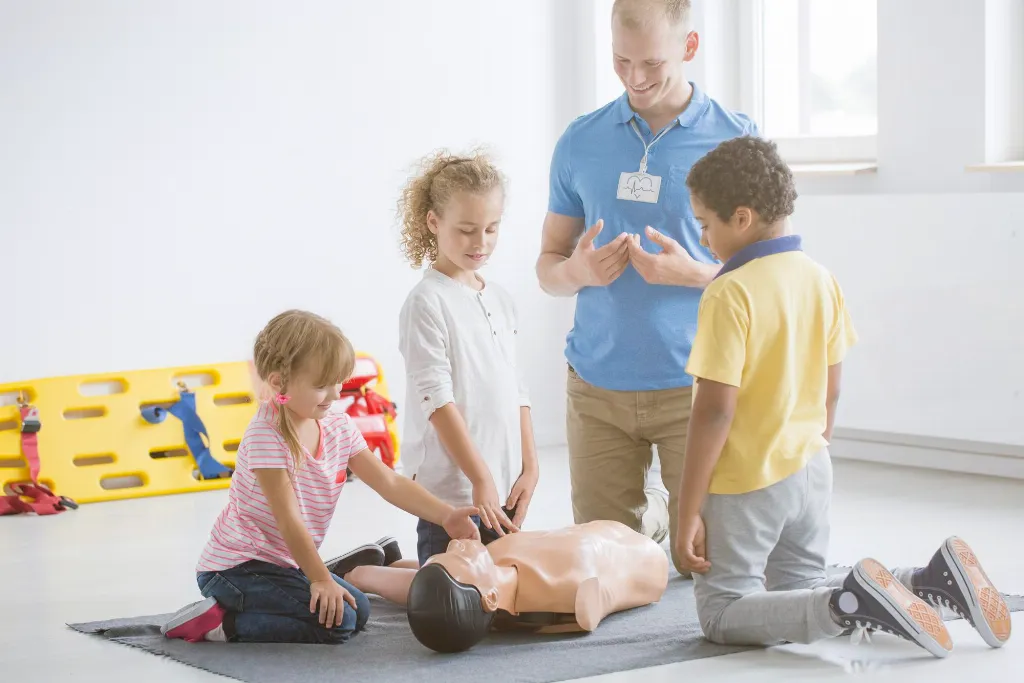
 Teaching first aid with pretend play helps children learn while they feel safe and curious. In this short guide you will find simple steps, ready ideas, and checklists to use in your program. Use role play to teach real skills like how to call for help, how to stay calm near an injury, and how to comfort someone who is hurt.
This article is written for child care providers and directors who want easy, practical ways to teach #firstaid with #roleplay so our #children are safer and staff get good #training for #safety.
Why does teaching first aid with role play matter?
Children learn best by doing. Role play makes first aid feel less scary. It also helps kids practice words and actions they can use in a real emergency. Role play builds empathy, so children learn to care for others and to tell an adult when help is needed.
Real skills from pretend: When children act out a scrape or a choking scenario, they practice steps like checking, calling, and comforting. Providers can follow guides such as Teaching First Aid Basics to Kids Through Activities for simple games and teach-back checks.
Social and emotional growth: Role play helps children learn to stay calm, use kind words, and work with friends. Resources like the Mini Medics ideas show how play supports empathy.
Staff readiness: Practicing scenarios helps staff respond faster and with confidence. For program-level training, look at ChildCareEd’s Pediatric Blended First Aid & CPR Buy Now $85.00$80.00 course to make sure caregivers know the steps for infant and child emergencies.
Family trust: When families see you teach first aid, they feel more confident that you are prepared. Share plans and brief notes with families after lessons.
Memory and repetition: Short, repeated role play (10–20 minutes) helps skills stick. The Red Cross and CDC also promote age-appropriate practice and preparedness for kids and families, see Red Cross kid-friendly activities and CDC safety recommendations.
How do I set up safe, effective role-play scenarios?
Follow these simple steps. Keep it short, safe, and fun.
Plan the scenario:
- 🎭 Choose an age-appropriate theme: scraped knee, bumped head, or calling 911. Use ideas from playful scenario guides.
- 🧸 Use props: stuffed animals, toy phones, fake bandages, and a mock first aid kit. The ChildCareEd article on building a first aid kit has a checklist you can simplify for kids.
- 👥 Assign roles: patient, helper, caller, and caregiver. Rotate so each child practices different tasks.
Teach the steps before you play:
- 🔢 Use a simple sequence: Check (Is the person breathing?), Call (tell an adult or practice dialing), Care (comfort and bandage a scrape). Use the "Check, Call, Care" idea from many child-friendly resources like KidsHealth on 911.
- 🎵 Try a short song or rhyme to help memory. Kids remember words better when they sing them.
Run the role play:
- ✅ Keep it short (10–15 minutes).
- 🫶 Encourage calm voices and gentle touch. Praise effort. Offer a sticker or a "Mini Medic" badge for participation.
- 🔁 Repeat the scenario later with small changes to build confidence.
Debrief after play:
- 💬 Ask children what they did and why. Use teach-back: "Show me how you would call for help."
- 📸 Document key takeaways for staff notes and family updates.
How do I teach first aid safely and follow rules (and avoid common mistakes)?
Staff training and supervision:
- 🩺 Ensure at least one staff member is certified in pediatric first aid/CPR. ChildCareEd offers in-person and blended classes: class listings.
- 🔒 Supervise role play at all times. Never let children practice invasive or adult-only techniques. Use soft props and toy equipment only.
Get family consent and communicate:
- 📧 Send a short note to families saying what you will teach and why.
- 📝 Ask about medical concerns so you avoid triggering topics (for example, a child with a recent injury).
Avoid these common mistakes:
- ❌ Skipping consent or not telling families about drills.
- ❌ Using real sharp tools or showing adult-only procedures.
- ❌ Practicing too long or lecturing instead of doing—young children need short, active practice.
Use safe props and limits:
- 🧰 Use a child-friendly first aid kit and soft dolls. Refer to the ChildCareEd first aid kit list for supplies to keep on hand: First Aid Kits for Child Care Providers.
- 🧴 Never simulate choking with real food. Use role-play words and rescue dolls only, and focus on calling for help.
Practice drills wisely: schedule short, age-appropriate drills (fire, choking awareness, calling 911). The Red Cross and CDC give good family-facing tools to adapt for class activities: Red Cross family preparedness, CDC safety guidance.
How do I check learning and make first aid stick over time?
Checking learning helps you know what children remember and what to repeat. Use fun, simple checks.
Teach-back: Ask the child to show or tell a small step back to you. For example:
- 🎤 "Show me how you would tell an adult someone is hurt."
- 🩹 "Pretend your teddy has a scrape. How would you clean and cover it?"
Quick quizzes and games:
- 🧩 Use 1-2 question cards or a 3-step poster: Check, Call, Care. Make it a game like "First Aid Simon Says."
- 🏅 Give small rewards like stickers or a "Mini Medic" certificate to celebrate practice.
Repeat and rotate:
- 🔄 Practice short role plays every 2–4 weeks. Change roles so all children learn various steps.
- 📆 Tie drills to seasonal hazards (water safety in summer, fire drills year-round).
Document and share:
- 📝 Keep a simple log of what you practiced and who participated. Share highlights with families to reinforce learning at home.
When to escalate: Teach clear signs to call 911. Use child-friendly language and practice dialing in supervised role play. KidsHealth has a good guide on teaching 911 skills: Teaching Your Child How to Use 911. Also adapt Girl Scouts' simple 911 role-play activity: Brownie First Aid Badge Activity.
FAQ
Q: At what age can kids learn first aid? A: Preschoolers can learn to tell an adult; elementary children can role play bandaging and calling 911.
Q: How often to practice? A: Short practice every 2–4 weeks helps memory.
Q: Who should teach? A: Trained staff or a certified guest. Make sure staff trainings are up to date.
For more classroom-ready activities and printable tools, check ChildCareEd’s resource pages and course listings like DAP for Preschool resources and the Blended First Aid & CPR course Buy Now $85.00$80.00.
Conclusion
Role play is a low-cost, high-impact way to teach first aid. Use short scenarios, safe props, and clear steps to help children practice checking, calling, and caring. Keep staff trained, follow state rules (remember: state requirements vary - check your state licensing agency), and repeat lessons often.
Celebrate every small success so children and staff feel proud and ready. Teaching #firstaid by #roleplay helps keep our #children safer and makes #training for staff part of everyday #safety practice.
- Adult/Child/Infant CPR AED and Adult First Aid Blended
- Adult Only CPR AED and Adult First Aid Blended
- Pediatric Blended First Aid & CPR/AED Adult, Child, Infant
- Pediatric RSV First Aid & CPR/AED
- Pediatric In-Person First Aid & CPR/AED Adult, Child, Infant
- Adult First Aid Only - Blended
- Texas Director Credential
- CPR for childcare providers: what to know
- First Aid and CPR Certification: What to Expect from Your Training Course
- Summer Safety: Daycare Providers and Parents Need First Aid and CPR Training
- Getting Ready for the New School Year: Prioritizing Safety with First Aid and CPR Training
- Basic Health and Safety Training: The Essential Guide for New Child Care
- ¿Cuáles son las mejores actividades del Día de la Tierra para niños en casa o en el aula?
- ¿Cómo puedo usar escenarios de juego de roles de primeros auxilios en mi aula?
- ¿Cómo pueden los equipos de cuidado infantil practicar habilidades rápidas de primeros auxilios en situaciones reales?
- Teaching Preschoolers Simple First Aid Skills
- First Aid Lessons for Kids: Simple Skills They Can Learn
- What Does Toy Story 5 Teach Us About the Power of Imaginative Play?
- Can Superhero Day Capes and Pretend Play Teach Children to Help Others?
- First Aid Scenarios for Child Care Staff: 10 “What Would You Do Next?” Challenges
- Help or Step Back? First Aid Scenarios That Teach Students Their Safety Limits
- First Aid Games for Adults: 10 Fun Ways to Test Your Child Care Team’s Emergency Skills
