Introduction
You work hard to keep kids safe and happy. A clear illness #policy helps everyone know what to do when children or staff get sick. Good rules keep the group healthy, lower stress, and make decisions simple on busy days. State requirements vary - check your state licensing agency.
Why it matters: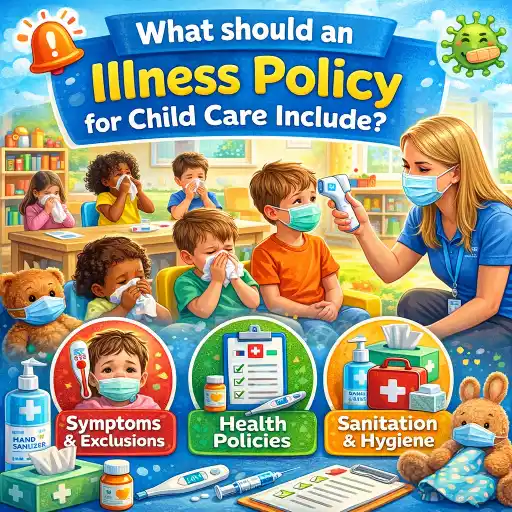
1. Fewer germs means fewer absences for families and staff. 2. Clear rules build trust with parents and protect your #children and #staff. 3. A written policy makes licensing visits and daily choices easier for everyone.
Use short, kind language so families understand. ChildCareEd has helpful templates and guides like the Illness Exclusion Quick Reference Chart Buy Now $0.00 and the course Prevention and Control of Infectious Diseases  Buy Now $16.00 to help you start.
What should an illness policy include?
Answer: Make a short, clear list that staff and families can follow every day. Aim for 6 groups of information:
- 📝 Basic rules (one-paragraph summary). Example: “If a child can’t join regular activities, they should stay home.” See ChildCareEd guidance in What child care policies does every program need?.
- 🩺 Symptoms that require staying home (fever, vomiting, diarrhea, uncontrolled cough, new rash, eye drainage). Use the Illness Exclusion Quick Reference Chart Buy Now $0.00 as part of your toolkit.
- 🔁 Return rules (for example: fever-free for 24 hours without medicine; no vomiting for 24 hours). Cite local health rules and the CDC guidance When Students or Staff are Sick.
- 💊 Medication steps (signed orders, labeled bottle, staff training). Use the Medication Administration Template Buy Now $0.00 to make this easy.
- 📣 How to report illness (who families call, what info to share: symptoms, start date, tests, doctor notes).
- 🧼 Prevention steps (handwashing, cleaning, isolation area for sick children). See Infection Control Practices and CDC prevention tips Protecting Against Infections.
Make the policy easy: 1–2 pages, bold headlines, and a one-page family handout. Translate into families’ languages when possible.
When should a child stay home — and when can they return?
Answer: Use simple checks and clear time rules so staff can decide quickly.
1. Quick rule for staff: Ask three questions at drop-off:
- 🙂 Can the child play, eat, and rest like usual?
- 👩⚕️ Do they need one-on-one care that staff can’t give?
- 🤒 Could they easily spread germs to others today?
If the answer is “no” to the first or “yes” to the other two, ask families to keep the child home. This quick check follows the ChildCareEd tip in Daycare illness guide: when to keep your child home.
Common exclusion examples (use your local rules too):
- 🌡️ Fever: keep home until fever-free 24 hours without medicine.
- 🤢 Vomiting: stay home until 24 hours after the last episode and can keep fluids down.
- 💩 Diarrhea: stay home until stools improve and no accidents for 24 hours.
- 👀 Pink eye with thick drainage: exclude until 24 hours after starting antibiotics or until a doctor clears it (policies vary).
- 🩺 Contagious diagnoses: follow health department or state guidance (for details see the Minnesota disease exclusions example at Specific Disease Exclusion Guidelines). For specific information on mpox (monkeypox) symptoms, transmission, and steps to protect children in your care, see the CDC mpox guidance for child care.
Return rules can change during outbreaks. Follow CDC advice When Students or Staff are Sick and remember: state requirements vary - check your state licensing agency.
How do we write, share, and document the policy so it works?
Answer: Follow a short process and keep records. Use numbers so teams can follow a clear path.
- 📄 Draft: Start with a one-page family handout + a longer staff policy. Use ChildCareEd templates like Illness Exclusion Quick Reference Chart Buy Now $0.00 and the Medication Administration Template Buy Now $0.00.
- 👥 Review: Ask staff and 2–3 families for feedback. Check with your health consultant or local health department.
- 📢 Share: Give families the one-page handout at enrollment, post it at the door, and email a copy. Put the full policy in your staff binder and online if you have a parent portal.
- 🗂️ Document: Keep clear records each time you send a child home or accept a doctor’s note. Record: date, symptoms, action taken, parent notified. This helps in licensing reviews and outbreak tracking (see ChildCareEd recordkeeping ideas in What child care policies does every program need?).
- 🔁 Train: Teach the policy in staff orientation and refresh it yearly. Include the course Illness, Medication, and Allergies in Child Care Buy Now $32.00 for staff who give meds.
Tip: Numbered steps and sample scripts make conversations easier. Keep the language kind, not punitive, so families feel supported.
How do we handle outbreaks and talk with families without conflict?
Answer: Use a calm plan, partner with public health, and share facts. Good communication keeps trust strong.
Outbreak steps (simple 1–2–3):
- 📞 Notify: Contact your local health department early. They can advise what to tell families. See Minnesota guidance on Communicating with Parents During an Outbreak.
- 🧯 Increase cleaning: Clean high-touch surfaces and mouthed toys more often. Follow CDC cleaning and infection-control ideas at Protecting Against Infections.
- 📣 Share a clear message: Say what happened, what you are doing, and what families should watch for. Have templates ready and ask public health to review parent letters.
Common mistakes — and how to avoid them:
- ❌ Not sharing the policy at enrollment — fix: give the one-page handout and require a signed receipt.
- ❌ Asking for doctor notes for every cold — fix: use clear return rules (overusing notes can burden families).
- ❌ Unclear staff rules about working sick — fix: write staff expectations and remind them to stay home when ill.
FAQ
- Q: Do we need a doctor’s note to return? A: Not usually. Save notes for unclear or reportable illnesses. Follow your state rule.
- Q: How long keep illness records? A: Follow your state licensing rule; many programs keep records for 3–5 years. See ChildCareEd recordkeeping tips.
- Q: Should staff wear PPE when caring for a sick child? A: Use gloves and masks as the health department or CDC advises. Staff should know how to use PPE safely.
- Q: Who decides if a child is too sick? A: The program director or lead teacher using your written policy and the arrival health check.
- Q: Where can I get forms and trainings? A: ChildCareEd offers templates and courses like Prevention and Control of Infectious Diseases Buy Now $16.00.
Conclusion
Good illness policies are short, kind, and clear. They tell families what to do, protect the #children and #staff, and help your program run smoothly. Use templates from ChildCareEd, follow CDC and your state health department guidance, and practice your plan with staff. When everyone knows the steps, sickness is easier to manage and families feel supported.
Remember: state requirements vary - check your state licensing agency. For more tools, see the Illness Exclusion Quick Reference Chart Buy Now $0.00 and training at ChildCareEd.
- 45 Hour Child Growth and Development
- How To Keep A Healthy Class: Six Tips for Germ Control
- Administering Basic Health and Safety ONLINE
- 45 Hour Preschool Methods and Materials
- Bienvenido! Welcoming All Families
- Pediatric RSV First Aid & CPR/AED
- 45 Hour School Age Methods and Materials
- Texas Director Credential
- Shoo, Germs! Don't Bother Me!
- Ah-Choo!
- CDA Certification en Español: Recursos y Consejos para Educadores Bilingües
- Lista para Guardería en Casa en California: Cómo Iniciar una Guardería en el Hogar
- How can childcare programs prevent the spread of illness?
- How can child care programs prevent the spread of illness?
- How can childcare settings prevent the spread of illness?
- How should childcare programs clean, sanitize, and disinfect spaces to keep children and staff safe?
- Sick or Not Sick? How Do We Make Exclusion Decisions in Child Care?
- How do I write clear policies and a parent handbook for my child care program?
- What Massachusetts EEC Regulations Do Child Care Providers Need to Follow?
- What Do You Need to Open an After-School Program? Licensing, Training, and Staffing Explained
- How Can Childcare Programs Create Clear Policies That Families Understand and Trust?
- How Can Child Care Programs Manage Sick-Child Exclusion Policies Fairly and Effectively?
- How Can Child Care Providers Recognize Signs of Illness and Respond Safely?
- What Should Daycare Illness Policies Include to Protect Children, Staff, and Families?
- When Should a Sick Child Be Sent Home From Daycare?
- How Long Should a Child Stay Home After Vomiting?
- When Should a Sick Child Be Sent Home From Daycare?
- What Should Parents and Providers Ask Before a Child Returns to Child Care After Illness?
