Working in child care means you plan many small moments that add up to a safe day. This article helps Oklahoma directors and providers build simple, everyday routines that meet rules, protect kids, and make staff life easier. You will see clear steps, helpful l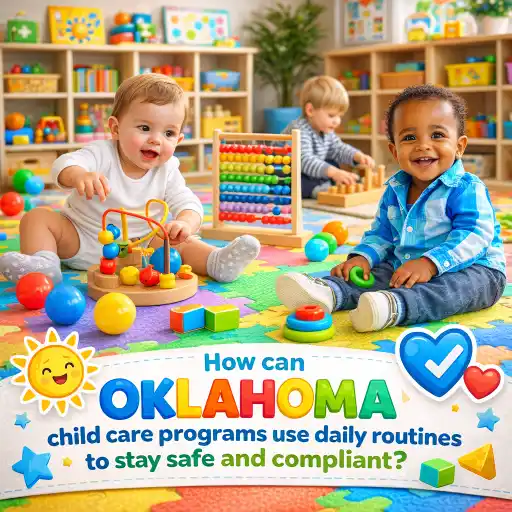 inks, and quick lists you can use in your classroom. Remember: state requirements vary - check your state licensing agency. This short guide focuses on practical tips you can use today for your #Oklahoma program, to support #compliance, #safety, #routines, and the #children in your care.
Why does following Oklahoma rules and using consistent routines matter?
Why it matters:
1) Protects kids: Strong daily routines lower accidents and illness. For national best practices, see Caring for Our Children and Oklahoma licensing pages.
2) Keeps your license in good standing: OKDHS has clear rules for licensing and safety. Read the basics at the Licensing Requirements page and the main Child Care Licensing overview.
3) Builds trust with families: When families see routines and records, they feel confident. Use short notes at drop-off and share rules clearly.
What Oklahoma licensing rules should I keep top of mind every day?
Short answer: supervision, staff qualifications, safe sleep, ratios, health checks, cleaning, and records.
- Supervision & ratios
• Oklahoma lists program types and ratio expectations—review the Licensing Requirements. Use active supervision strategies from ChildCareEd for everyday practice: Active Supervision tips.
- Staff training & credentials
• Make sure staff meet training rules and keep certificates. OKDHS updates include annual safe sleep training—see the Rule Impact Statement for recent changes. Use courses like those listed on ChildCareEd Oklahoma courses to help staff meet requirements.
- Health, cleaning & food safety
• OKDHS and national guidance require routines for cleaning, diapering, and illness checks. See CDC cleaning and diapering guidance: Cleaning & Disinfecting and Diapering steps.
- Records & communication
• Keep daily health checks, incident reports, and training files. ChildCareEd offers practical record templates and tips: Daily health checks.
How can I design safe daily routines that meet rules and keep kids calm?
Follow these easy steps to build routines that both protect children and match licensing expectations.
- Start with a predictable schedule
• Create a daily pattern with predictable arrival, free play, meals, outdoor time, rest, and departures. Use a visual schedule so children know what comes next—see visuals in ChildCareEd's transitions article: Transitions & routines.
- Use active supervision and room setup
• Place adults where they can see and reach kids. Arrange rooms to remove blind spots and keep climbing and water areas well supervised. Active supervision steps are explained at Active Supervision.
- Include health steps inside routines
• Add handwashing moments: before meals, after diapering, after outdoor play. CDC handwashing guidance is clear and simple: Handwashing basics.
- Make transitions short and consistent
• Use countdowns, songs, or a picture cue to warn children. These small cues reduce stress and help staff keep ratios during shifts and transitions.
- Plan for infants and safe sleep
• Oklahoma now emphasizes safe sleep training for anyone caring for infants—check the Rule Impact Statement and use a local safe-sleep training like ChildCareEd's Success in Safety for Babies Buy Now $35.00.
What cleaning, illness checks, and records should be part of daily routines?
Daily health and cleaning tasks protect children and meet licensing checks. Make these tasks short, clear, and part of every day.
- Daily cleaning checklist
1) 🧼 Clean high-touch surfaces daily (tables, doorknobs, toys). 2) 🧽 Sanitize mouthed toys and bottles after use. Follow CDC cleaning steps: How to Clean & Disinfect.
- Handwashing routines
1) 👋 Teach kids 20-second handwashing for key moments. 2) Use sanitizer with 60% alcohol only when soap and water are not available. See CDC handwashing guidance: About Handwashing.
- Diapering and toileting steps
• Follow the CDC diapering steps: prepare supplies, wear gloves if your policy requires, wipe front-to-back, dispose of, clean the surface, and wash hands. See detailed steps at Diapering Steps.
- Daily health checks and documentation
• At drop-off, glance for fever, unusual tiredness, vomiting, diarrhea, or rash. Use a short daily note: date/time, observations, action taken, parent notified. ChildCareEd provides a practical guide: Daily health checks. For seasonal outreach and family-facing materials that reinforce these checks, see our October is Children's Health Month page.
- When someone is sick
• Isolate gently, keep the child supervised, call the family, and follow your exclusion policy. For outbreak and prevention steps, see the CDC early care guidance: Preventing Infectious Diseases. For guidance on recognizing and preventing mpox (monkeypox) in children and practical steps to protect them in your program, see the CDC mpox resource: CDC resource for monkeypox.
How do I train staff, document compliance, and avoid common mistakes?
Good training, clear records, and simple checklists make compliance manageable.
- Train in short, focused sessions
• Use local scholarships and courses: Oklahoma offers the Scholars program to support coursework (see Training Scholarships), and ChildCareEd offers short courses on safety and routines like Everyday Safety
 Buy Now $55.00 and Safeguarding Young Lives Buy Now $24.00.
 - Document simply and often
• Keep one binder or digital file for: daily health checks, incident reports, training records, staff certifications, and cleaning logs. Numbered lists and short forms make reviews fast for licensors.
- Use QRIS and quality supports
• Learn where your program sits in QRIS and use the Find Your Level page to plan higher-quality steps that also support compliance.
- Common mistakes & how to avoid them
- ❗ Skipping daily checks. Fix: Schedule a morning check-in with a person each day.
- ❗ Poor records. Fix: use a one-line format: date • observation • action • parent notified.
- ❗ Letting blind spots grow. Fix: rearrange shelves and assign staff zones.
- ❗ Relying on memory for training. Fix: keep certificates in one file and set calendar reminders for renewals.
Conclusion and quick FAQ
Conclusion:
1) Pick 3 easy habits to start this week: a short morning health check, a visual schedule for transitions, and a daily cleaning log. 2) Use short trainings and clear forms so staff can follow steps without extra stress. 3) Keep communication with families honest and kind.
Quick FAQ:
- Q: How often should safe sleep training be done? A: Oklahoma's updates ask for safe sleep training before caring for infants and annually—see the Rule Impact Statement.
- Q: What cleaning rules do I follow? A: Use CDC cleaning and disinfecting guidance for ECE settings: CDC cleaning.
- Q: Where do I get quick staff training? A: ChildCareEd has short courses, and Oklahoma lists scholarship options: OK courses and OK training scholars.
- Q: Who enforces rules? A: OKDHS Child Care Services licenses and monitors programs—see Child Care Licensing. State rules differ—state requirements vary - check your state licensing agency.
Thank you for the work you do every day. Small, steady routines keep children safer and help your program meet Oklahoma's rules with confidence.
- 45 Hour Child Growth and Development
- 45 Hour Infant and Toddler Methods and Materials
- Pediatric RSV First Aid & CPR/AED
- 45 Hour School Age Methods and Materials
- CDA Bridge Bundle: Family Child Care without Portfolio Review
- Texas Director Credential
- Every Moment Matters: Schedules and Transitions
- Everyday Safety: Creating Healthy Environments
- CDA Certification en Español: Recursos y Consejos para Educadores Bilingües
- How to Start a Daycare in Oklahoma
- Recursos en Español sobre el Sueño Seguro del Bebé
- Capacitación en Salud y Seguridad Preventiva en Línea para Proveedores de Cuidado Infantil
- Normas de Licenciamiento de Cuidado Infantil en Virginia para Centros Diurnos Infantiles y Hogares Diurnos Familiares
- Proporciones de Cuidado Infantil y Tamaños de Grupo por Edad en Virginia (Guía Rápida para Centros y Hogares)
- What training bundles are available in Oklahoma and how do they help providers?
- How can Oklahoma child care programs use daily routines to stay safe and compliant?
- Can ChildCareEd Make Oklahoma Child Care Training Easier for Your Program?
- What's new for child care in Oklahoma and what should providers do?
- How can observation guide daily activities in Oklahoma child care programs?
- How Can Oklahoma Early Childhood Educators Use Classroom Management Strategies to Support Young Learners?
- How Do I Get Started Becoming an Early Childhood Teacher in Oklahoma?
- How many annual training hours do Oklahoma child care providers need and how can ChildCareEd help?
- How can Oklahoma child care providers stay ready with CPR and AED skills?
- How do I open a day care in Oklahoma and start my child care business?
- How do I start a home daycare business?
- Canciones, juegos y preguntas de círculo para niños
- Cómo simplificar la capacitación para sus empleados de daycare
- How can Oklahoma providers turn cribs into confident infant care during the state's child care access push?
